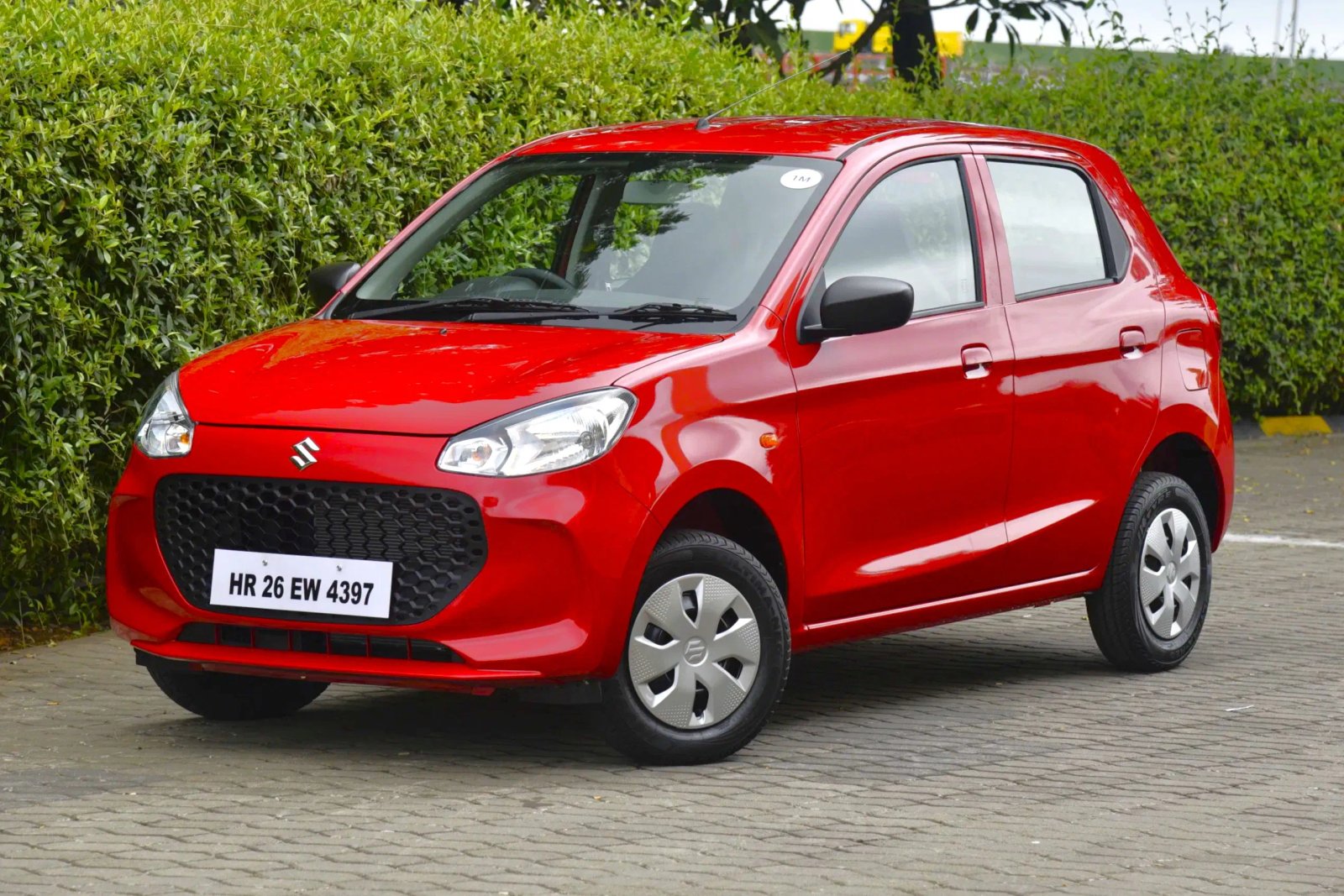
Maruti Suzuki has recorded a strong surge in demand for entry-level cars. Following Maruti Suzuki’s recent Q3 FY2026 earnings call, Rahul Bharti, Executive Officer – Corporate Affairs, stated “Small cars were earlier in a negative growth zone. They have moved from red into black and healthy black, and that swing is actually larger than what we are seeing in bigger cars.”
- Maruti Suzuki indicates greater volume of two-wheeler owners upgrading to entry-level cars
- 5,64,669 cars sold in Q3 FY2026; Maruti Suzuki’s highest quarterly domestic sales so far
- Annual manufacturing capacity to be increased by around 5 lakh units to quell high demand
First-time buyers and GST reform majorly contributed to demand uptick
First-time buyer share increased from 40 percent to 47 percent
Among the key drivers behind the rebound in Maruti Suzuki’s entry-level car demand are first-time buyers. According to Maruti Suzuki, the share of first-time car buyers has risen to around 47 percent, up from about 40 percent earlier.
Bharti described this as a “very healthy sign” and said anecdotal indicators point to a renewed upgrade cycle from two-wheelers to cars. “We are seeing a lot of helmets in our showrooms, which indicates that two-wheeler owners are upgrading to small and compact cars,” he said.
Rejigged GST structure boosted affordability
Maruti Suzuki also attributed much of the small car demand revival to improved affordability following the 2025 GST reform. Small cars – sub-4m in length and powered by petrol engines under 1,200cc and diesel engines under 1,500cc – fall under the 18 percent GST slab, down from the prior 28 percent tax rate.
Small cars sold by Maruti Suzuki saw price cuts of up to Rs 1.3 lakh after the GST reform went into effect in September 2025. Importantly, the S-Presso replaced the Alto K10 as the cheapest car currently on sale in India. These hefty GST price cuts have helped bring entry-level customers back into the market.
Maruti Suzuki has also held prices steady so far, supporting demand even as input costs remain volatile. Bharti said pricing remains under review, with the current order book still being serviced and any potential price revisions to be evaluated in the coming weeks.
Strong sales and financial performance
Entry-level cars comprised over 12 percent of total sales
The renewed entry-level car demand helped Maruti Suzuki achieve record sales in the prior quarter. Maruti Suzuki sold 5,64,669 cars domestically during Q3 FY2026, up from 466,993 units year-on-year (YoY). Small cars accounted for 68,328 units of the incremental volume during the quarter.
Maruti Suzuki reported a 4.1 percent YoY increase in net profit to Rs 3,879 crore, while revenue surged 28.7 percent to a record Rs 49,904 crore – the fastest growth in over three years – helped by its highest-ever quarterly domestic sales. For the April-December period of FY2026, Maruti Suzuki posted its highest-ever nine-month sales volume, net sales and net profit.
Capacity expansion to help meet swelling demand
Roughly 5 lakh units to be added to annual capacity
The sharp rebound in demand, particularly for entry-level cars, has prompted Maruti Suzuki to accelerate capacity expansion plans. The carmaker is preparing to add around 5 lakh units of annual manufacturing capacity over the next year through two new plants and a greenfield facility in Gujarat.
This includes a second plant at Kharkoda that’s scheduled to be operational by April 2026, and a fourth manufacturing line at Maruti Suzuki’s Gujarat plant. Each will add around 250,000 units of annual capacity.
Dealer inventories have also fallen to historically low levels of three to four days, while the order book stands at around 175,000 vehicles, strongly indicating that Maruti Suzuki is currently supply-constrained rather than demand-constrained.