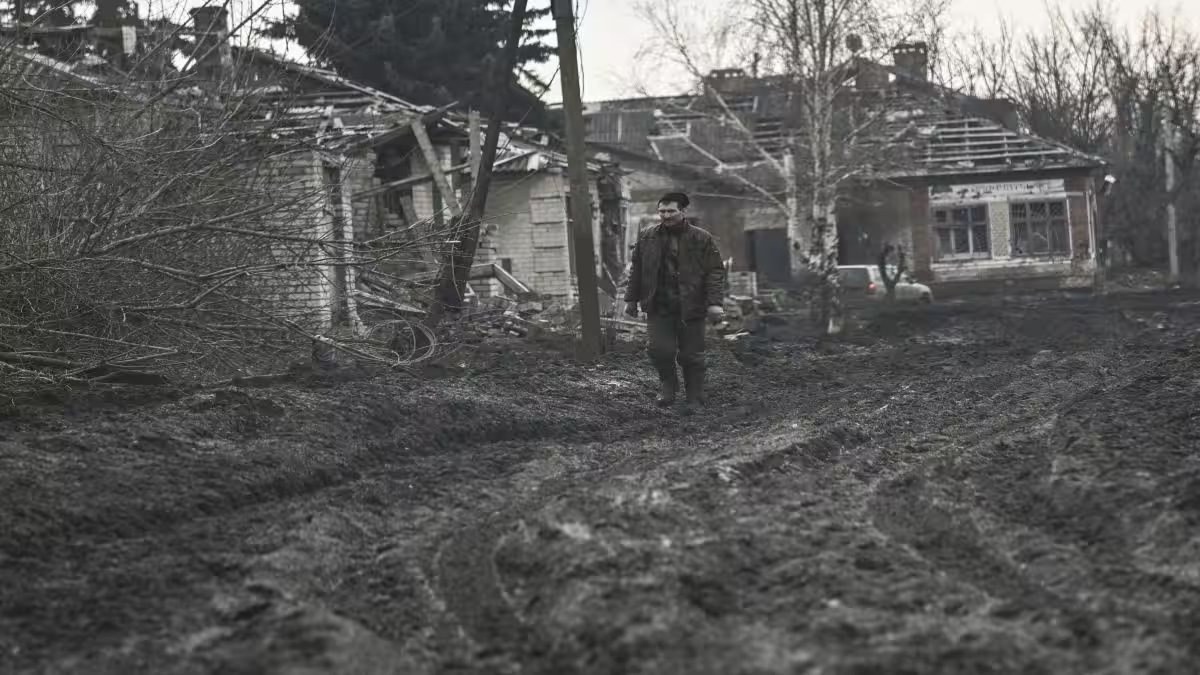
Russia has signalled that it will agree to a ceasefire in Ukraine only if Kyiv withdraws all its troops from the Donbas region, insisting that any remaining Ukrainian-held areas be placed under the control of its National Guard.
Russia signalled on Friday that any ceasefire in Ukraine would be possible only if Kyiv’s forces fully withdraw from the Donbas region, with Moscow insisting that Ukrainian-held areas be placed under the control of Russia’s National Guard.
Kremlin foreign policy aide Yury Ushakov told Kommersant that a truce could occur “only after the withdrawal of Ukrainian troops”, warning that if this does not happen through negotiations, Russia would seek to seize the remaining territory by force.
Although Moscow already holds all of Luhansk and about 80 per cent of Donetsk, Ukraine still controls key fortified cities such as Sloviansk and Kramatorsk. Ushakov said that under a potential settlement, only units of the National Guard — not the regular Russian army — would be stationed in the Ukrainian-held parts of Donbas, outlining a scenario in which Russian police and internal security forces maintain order.
Russia’s National Guard is a 400,000-strong internal security force that has been active in Ukraine since the start of the 2022 invasion. In 2023, it was granted legal authority to procure and use heavy weapons, including tanks and artillery.
Economically, supporters of the idea argue that the Donbas — long an industrial and resource-rich region with significant pre-war manufacturing hubs — could gain from an internationally supported economic corridor. Some within the US administration believe that offering trade incentives might help “cool down” the conflict environment and create conditions in which Moscow could accept a freeze.
Analysts, however, caution that such zones do not automatically neutralise geopolitical disputes. Similar efforts in contested territories have rarely worked without firm security guarantees already in place. In this case, Russian forces remain deeply entrenched, and Moscow has shown little indication that it would surrender control or agree to Western-managed economic arrangements near its front lines.
For Ukraine, the risk is substantial: pulling back troops could leave room for fresh Russian advances into the very areas proposed for the economic zone, undermining the entire initiative. The US appears to be assuming that Moscow would hold back — something the Kremlin has made no public commitment to.
End of Article