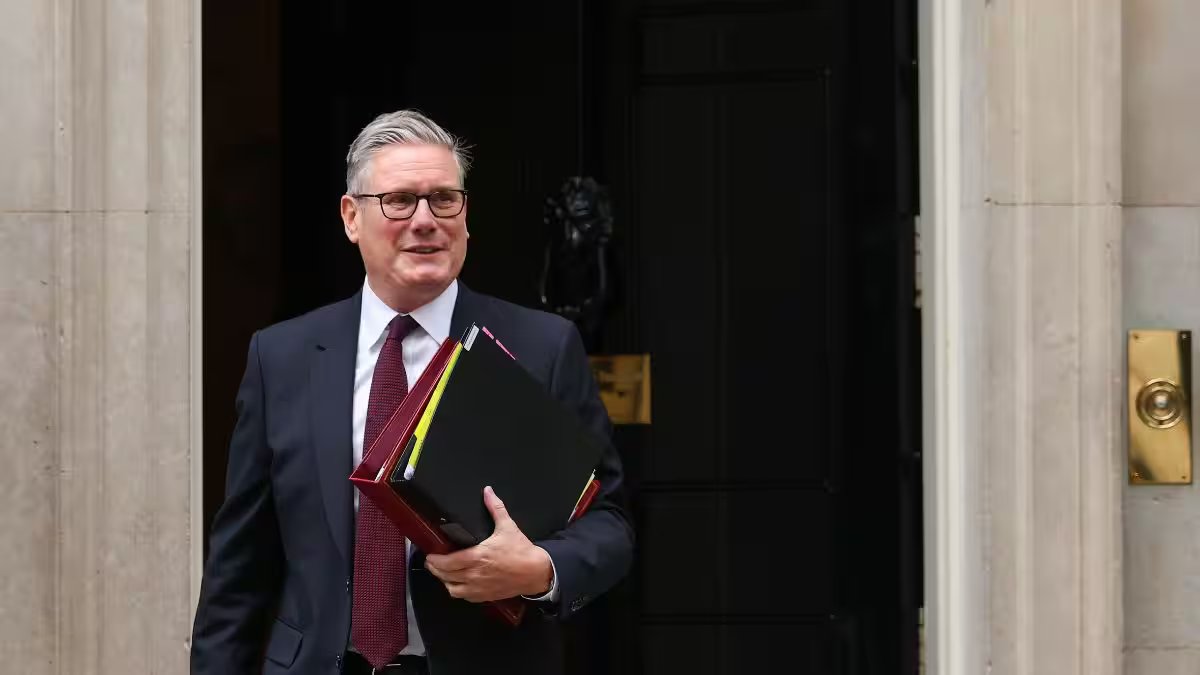
In his New Year’s address, British Prime Minister Sir Keir Starmer admitted frustration about the slow pace of delivery of his government’s promises. The slow pace of economic recovery has mounted pressure on him and there is a threat of leadership challenge within the Labour Party.
In his New Year’s address, British Prime Minister Sir Keir Starmer admitted frustration about the slow pace of economic recovery but stressed it will pick up pace in 2026 and standards of living as well as public healthcare and law and order will also improve.
Starmer’s remarks have come at a time when pressure has mounted on over the slow pace of delivery of his government’s promises. For many weeks, there have also been reports that
he could face a leadership challenge within the Labour Party.
Starmer said the situation has “tough in Britain for a while” and “life is still harder than it should be” for many. But he went on to list steps that his government has taken so far and promised a better turnaround in 2026.
Starmer said that more police will be on the streets by March to tackle law and order incidents, energy bills will be down, the number of new health hubs will be up in April, more funding will be made available for local communities, and rail fares, prescription charges, and fuel duty will not rise.
ALSO READ:
UK faces worst living standards growth, highest inflation growth in West, says IMF
In defence of his record, Starmer said the challenges were decades in the making and renewal could not have been an overnight job.
“But putting our country back on a stable footing will become our strength. Strength that means we can support you with the cost of living. Rail fares, prescription charges, fuel duty. All frozen. £150 cut from your energy bills. A boost once again to the National Minimum Wage. A major cut to the cost of childcare. We are getting Britain back on track. By staying the course, we will defeat the decline and division offered by others,” Starmer further said.
Many of Starmer’s promises are rooted in the
Budget unveiled in November, but that budget also raised taxes for millions of people to unprecedented levels that attracted widespread criticism. Over the next five years, taxes will rise to an all-time high of 38 per cent of the GDP. And, as a direct result of the Budget, more than 1.7 million workers will likely either enter the taxable bracket or move into a newer tax bracket.
‘Looming recession’: Expert on British economy in 2026
Even as
economic metrics have begun to improve in recent months, the improvement has not been fast enough to mean the economy is out of the woods. In fact, experts have warned that the British economy is likely headed into a recession.
The latest quarterly growth data —GDP grew 0.1 per cent in the July-September quarter— suggests that the British economy is “grinding to a halt” and 2026 could very well bring recession, according to Lindsay James, investment strategist at wealth manager Quilter.
James noted that the Budget does not have any measures to boost growth and formal forecasts have already confirmed zero impact.
“Instead, the government is going to have to hope that previous measures taken to date begin to bear fruit, or that geopolitical challenges calm down enough that global trade can rebound. Unfortunately, neither seems particularly encouraging right now and as such the first half of next year is likely to be more of the same, if not worse with the spectre of recession beginning to loom,” said James in an analysis carried by International Advisers.
End of Article