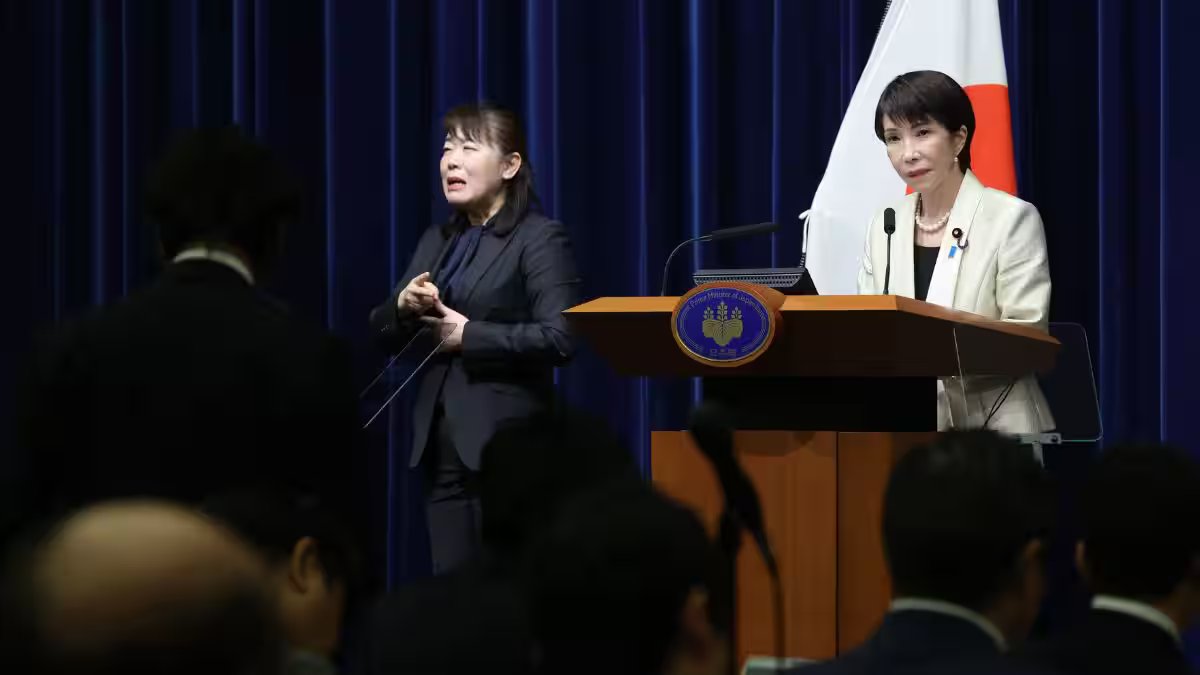
Takaichi, 64, became Japan’s first woman premier in October and won a two-thirds majority for her party in the snap lower house elections on February 8.
Japan’s Sanae Takaichi was formally reappointed as prime minister on Wednesday, ten days after securing a decisive landslide victory in national elections.
The 64-year-old leader, who made history in October as Japan’s first female prime minister, led her party to a two-thirds majority in the snap lower house polls held on February 8.
Takaichi has vowed to strengthen Japan’s defence posture to safeguard its territory and maritime interests, a stance that could heighten tensions with Beijing while also prioritising efforts to revive the struggling economy.
expressed hopes of deepening her relationship with U.S. President Donald Trump and strengthen cooperation between the two countries in rare earths development and other areas of economic security when she visits Washington next month.
Takaichi, at a news conference late Wednesday, expressed hopes to strengthen cooperation with the U.S., especially in economic security, as tensions between Tokyo and Beijing have risen over the last few months.
Takaichi, elected as Japan’s first female leader in October, was reappointed by Parliament as prime minister earlier in the day and formed her second Cabinet, following a landslide election win last week.
Her goals include an increase in military power, more government spending and ultra-conservative social policies.
Takaichi aims to use the mandate she got in the election to boost her ruling Liberal Democratic Party as it looks to capitalise on a two-thirds supermajority in the lower house, the more powerful of Japan’s two parliamentary chambers.
The power of a supermajority
Having two-thirds control of the 465-seat lower house allows Takaichi’s party to dominate top posts in house committees and push through bills rejected by the upper house, the chamber where the LDP-led ruling coalition lacks a majority.
Takaichi wants to bolster Japan’s military capability and arms sales, tighten immigration policies, push male-only imperial succession rules and preserve a criticised tradition that pressures women into abandoning their surnames.
Her ambition to revise the US-drafted postwar pacifist Constitution might have to wait, for now, as she is facing pressure to deal with rising prices, a declining population and worries about military security.
A hawk on China
Takaichi in November suggested possible Japanese action if China makes a military move against Taiwan, the self-governing island that Beijing claims as its own. That has led to Beijing’s diplomatic and economic reprisals.
Many Japanese, frustrated by China’s growing assertiveness, welcomed her comments on Taiwan.
Emboldened by the big election win, Takaichi could take a more hawkish stance with China, experts say.
Takaichi, soon after the election, said she is working to gain support for a visit to Tokyo’s controversial Yasukuni Shrine. Visits to the shrine are seen by Japan’s neighbours as evidence of a lack of remorse for Japan’s wartime past.
With inputs from agencies
End of Article