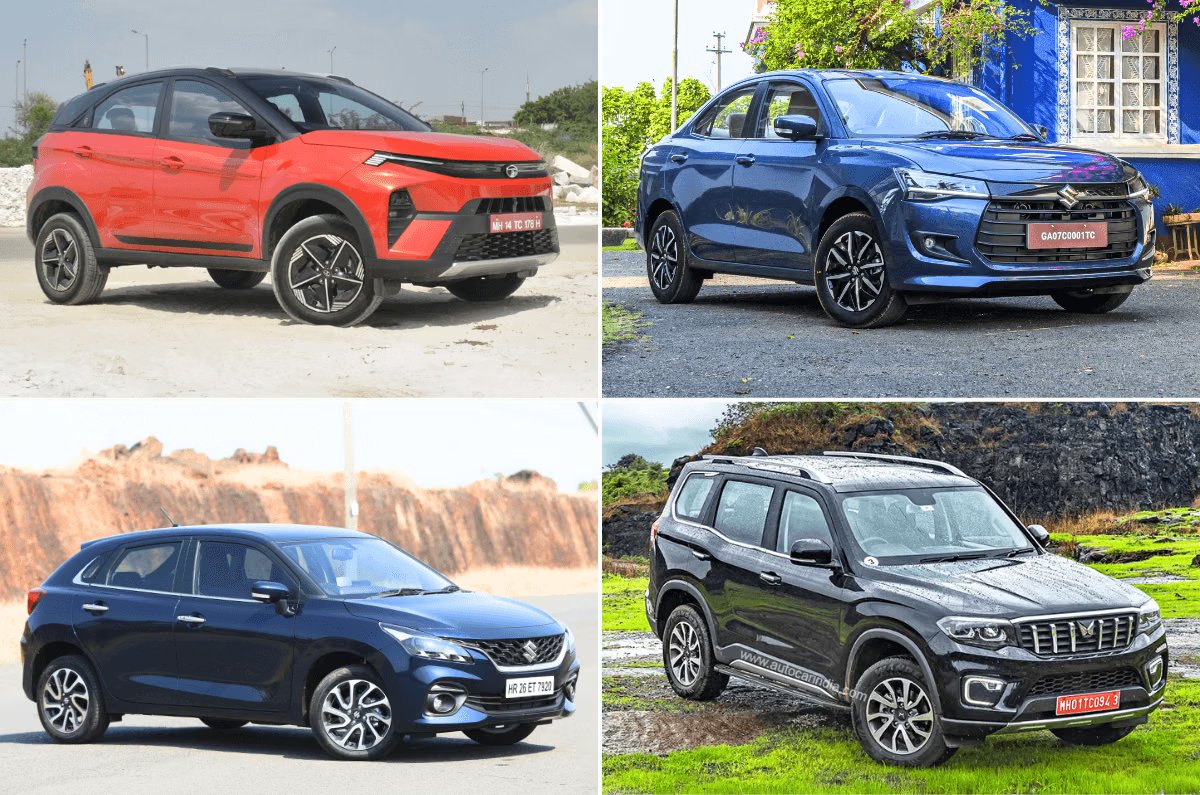
In the first month of 2026, the Indian passenger vehicle market witnessed wholesales of about 4,50,000 units, marking the highest-ever January performance and the second-highest monthly tally on record. Offerings from Maruti, Tata, Mahindra and Hyundai featured in the list of the top 10 best-selling vehicles, including six SUVs, two hatchbacks, a sedan and an MPV. Let’s take a closer look at how each car manufacturer fared.
- Demand rebound seen after the revised GST rates went into effect
- Maruti led the sales charts in January 2026, followed by Tata and Mahindra
Brand-wise sales performance
Maruti reported its best January sales yet
With a wholesale of 236,963 units, up 12 percent from 212,251 units a year earlier, Maruti Suzuki reported its highest-ever January figure. Out of these, domestic sales stood at 178,300, while exports hit an all-time monthly high of 51,020. Tata Motors recorded dealer dispatches of 70,222 units in January 2026, up 46.1 percent year-over-year. They were backed by sustained demand for Nexon, which was the most sold model last month, and Punch.
Mahindra registered wholesale of 63,510 units, up 25.4 percent on a YoY basis, driven by the Scorpio Classic and Scorpio N (combined). Hyundai dispatched 59,107 units, up 9.5 percent, in January 2026; the Hyundai Creta continued to remain its bestselling model. Toyota recorded a 17 percent year-over-year increase to 30,630 units. Hyundai’s sister brand Kia recorded 10.3 percent sales growth to 27,603 units.
| Top 10 best-selling models in January 2026 | ||
| Make and model | Body type | Units |
| Tata Nexon | SUV | 23,365 |
| Maruti Swift Dzire | Sedan | 19,629 |
| Tata Punch | SUV | 19,257 |
| Hyundai Creta | SUV | 17,921 |
| Maruti Ertiga | MPV | 17,892 |
| Maruti Swift | Hatchback | 17,806 |
| Maruti Brezza | SUV | 17,486 |
| Maruti Baleno | Hatchback | 16,782 |
| Mahindra Scorpio* | SUV | 15,542 |
| Maruti Victoris | SUV | 15,240 |
*includes Scorpio N and Scorpio Classic models.
Sustained demand after festive season
Improved affordability, steady financing availability
Instead of a one-off festive spike, last month’s sales reflect a continuation of the demand rebound seen after the revised GST rates on cars, which came into effect on September 22, 2025. While wholesale growth was already robust in the October-December quarter, January has carried that momentum forward, aided by factors like improved affordability and steady financing availability.
The strong January performance suggests India’s PV demand has moved beyond festival-led buying and into a more stable phase. With inventories in check and order books healthy, growth in the coming months is likely to be driven more by new launches and segment demand than by pricing alone.
With inputs from Darshan Nakhwa, Uday Singh.