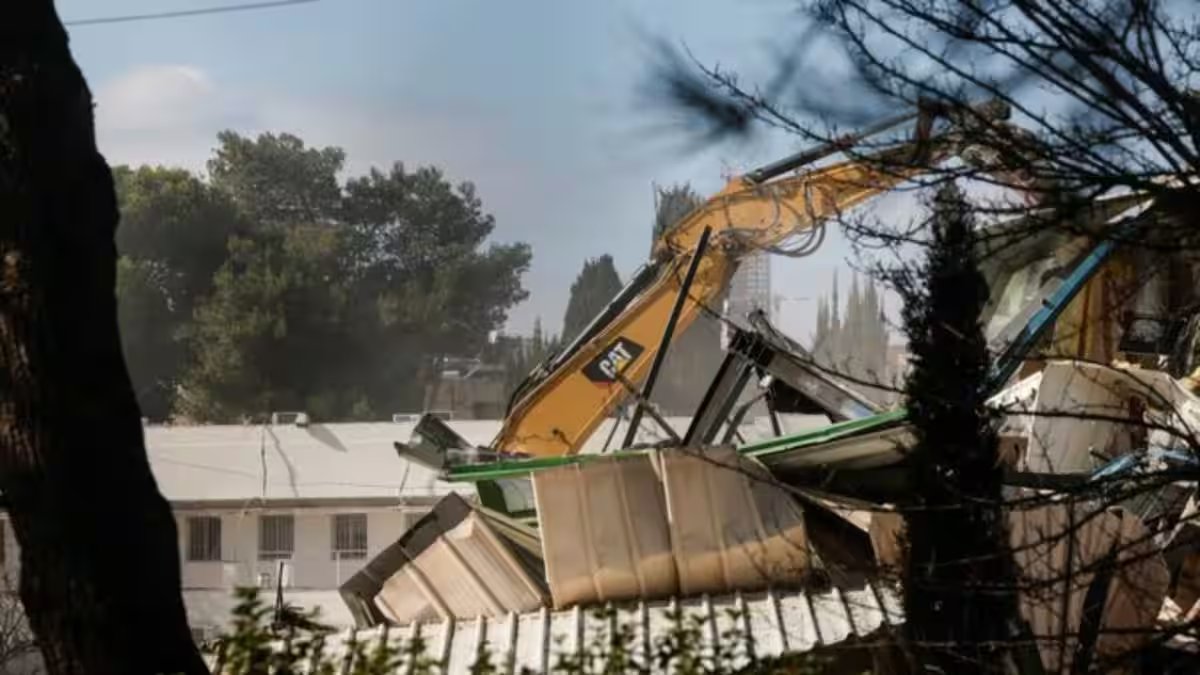
Israeli authorities have begun demolishing UNRWA’s headquarters in East Jerusalem after passing a law banning the agency’s operations. The move has drawn sharp criticism from the UN, which calls it a violation of international law and diplomatic norms.
Israeli crews on Tuesday began bulldozing the headquarters of the United Nations Relief and Works Agency for Palestinian Refugees (UNRWA) in the Sheikh Jarrah neighbourhood of East Jerusalem, escalating a long-running dispute between Israel and the United Nations agency that provides critical services to Palestinians across the region.
The demolition follows recent Israeli legislation that bans Unrwa from operating in what the government defines as Israeli territory, including East Jerusalem.
National Security Minister Itamar Ben-Gvir called the action a “historic day” as crews moved in with heavy machinery to begin razing parts of the compound. Israeli forces also evicted remaining staff and confiscated their devices from the site.
UNRWA—which runs schools, health clinics and provides food and other aid to millions of Palestinian refugees in Gaza, the West Bank, and neighbouring countries—condemned the bulldozing as a serious breach of international norms.
In a statement posted on X, the agency said, “This is an unprecedented attack not only against UNRWA and its premises. It constitutes a serious violation of international law and the privileges and immunities of the United Nations.”
Israel’s justification and UNRWA’s response
The Israeli government has long accused UNRWA of bias and alleged links to militant groups, including Hamas—claims the agency has strongly denied. Jerusalem authorities maintain the demolition is legal under the new law that banned UNRWA operations and assert that the site no longer enjoys international immunity. Israel also argues that its actions comply with both domestic and international law.
UNRWA, established in 1949 to assist Palestinian refugees, continues to provide essential services even as political tensions have made its work more difficult.
The compound in East Jerusalem had already ceased regular operations after staff were ordered to leave last year. Nevertheless, UN officials and international observers have warned that demolishing its headquarters sets a troubling precedent for humanitarian work in conflict zones.
The demolition has sparked concern beyond Israel and the Palestinian territories.
UN agencies and diplomatic missions have reiterated the importance of upholding the protections typically afforded to United Nations property and personnel—protections that have been enshrined in international law for decades. Critics argue that targeting such facilities risks undermining humanitarian efforts at a time when millions of Palestinians continue to depend on aid for basic needs like food, education and healthcare.
End of Article