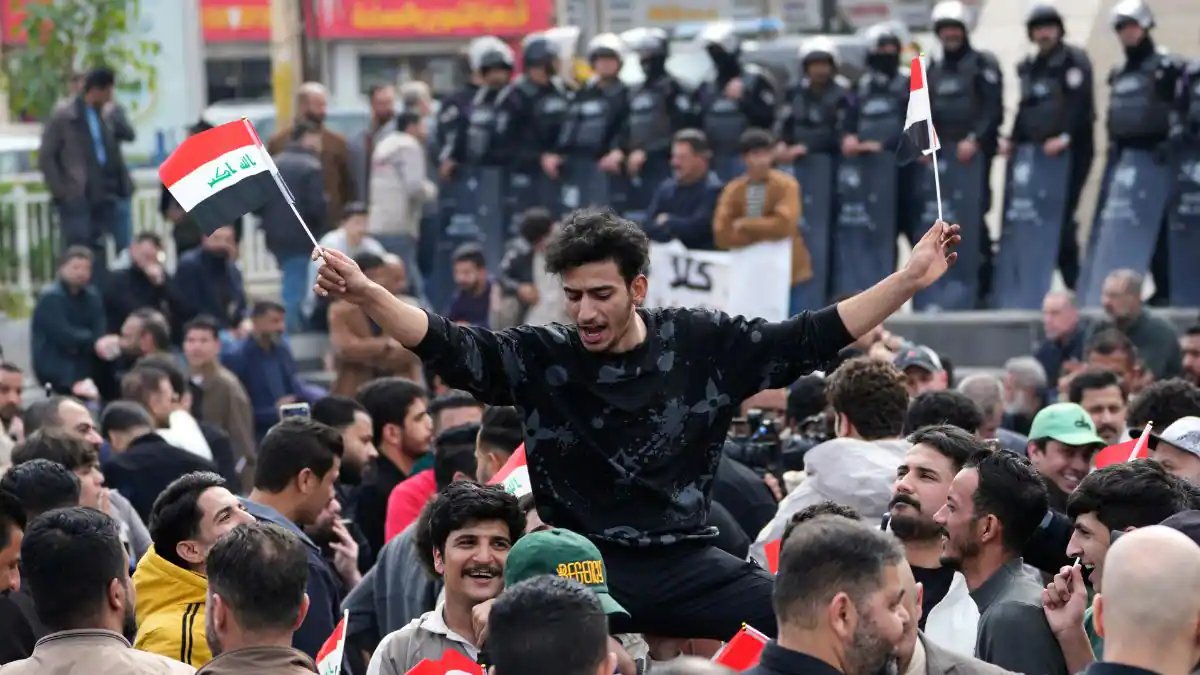
Hundreds of traders protested in Baghdad against Iraq’s new customs tariffs, saying higher fees are disrupting trade, raising prices for citizens and triggering strikes as the government seeks to cut debt and oil dependence.
Hundreds of traders and owners of customs clearance firms staged protests in central Baghdad on Sunday, urging the Iraqi government to withdraw newly introduced customs duties that they say have driven up costs and disrupted commercial activity.
The revised tariffs which came into force on January 1 were introduced as part of government efforts to curb rising public debt and reduce dependence on oil revenues amid falling crude prices.
Iraq is grappling with debt exceeding 90 trillion Iraqi dinars ($69 billion), while oil continues to account for around 90% of state revenue, highlighting the country’s limited progress in economic diversification.
Traders argue that the new levies which reach as high as 30% in some categories place an excessive burden on businesses. Legal challenges have been filed seeking to overturn or scale back the measures, with Iraq’s Federal Supreme Court scheduled to deliver a ruling on Wednesday.
On Sunday, demonstrators assembled outside the General Customs Directorate, chanting against corruption and opposing the new charges.
Haider al-Safi, who runs a transport and customs clearance company, said costs had surged dramatically. He noted that fees per container had risen from roughly 3 million dinars to as much as 14 million in some cases, while duties on infant milk had climbed from about 495,000 dinars to nearly 3 million.
According to al-Safi, the higher tariffs have created congestion at the Umm Qasr port in southern Iraq. He added that electric vehicles, previously exempt from customs duties, are now subject to a 15% charge.
Wholesale trader Mohammed Samir said the impact would ultimately fall on ordinary citizens. He argued that people on fixed or limited incomes including government employees struggling with daily expenses, rent, and school fees would bear the brunt through higher market prices.
Protesters also alleged that powerful groups were helping secure the release of goods in exchange for reduced unofficial payments, describing the practice as entrenched corruption. Many traders, they said, are now considering diverting imports through the Kurdistan region, where customs charges are lower.
The demonstrations coincided with a wider strike by shopkeepers across Baghdad, with markets and stores shut in several areas. In key commercial districts, closed shops displayed banners reading: “Customs fees are killing citizens.”
With inputs from agencies
End of Article



Roulette’s reliance on probability is fascinating – seemingly random, yet mathematically predictable! Seeing platforms like jlj apk blend tradition with tech for Filipino players is smart. Access via app or web-convenience matters! 🤔