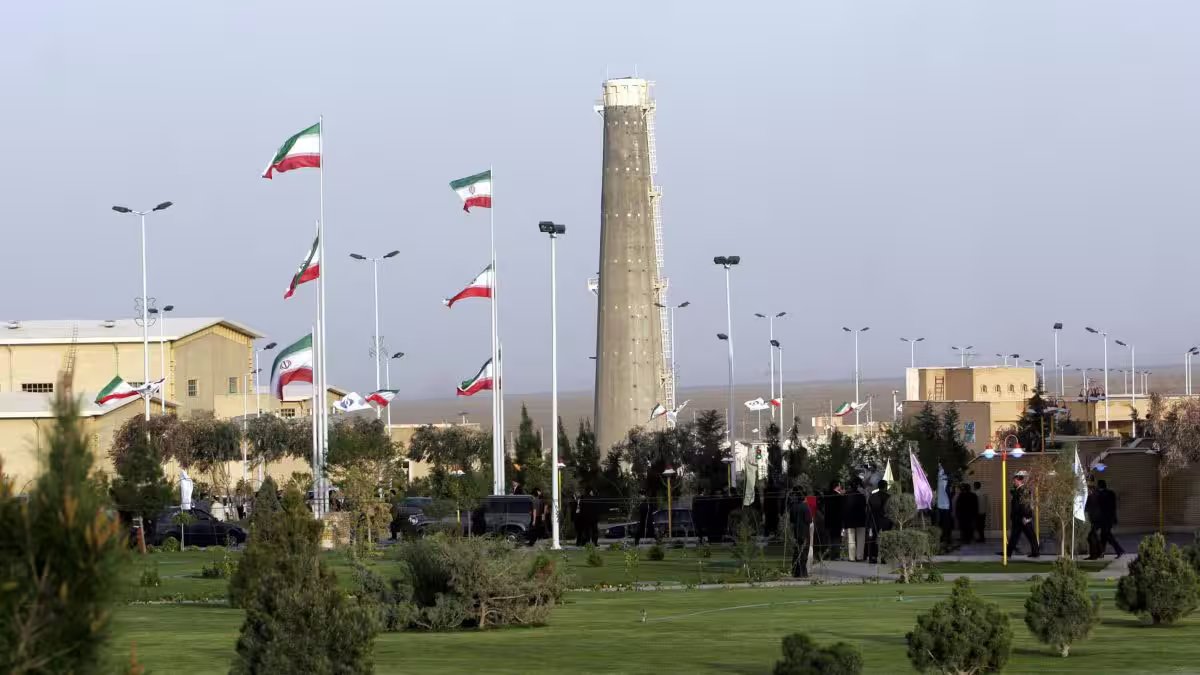
Iran’s army chief Amir Hatami has warned the US and Israel against any attack, asserting that Iran’s nuclear expertise cannot be wiped out, even as tensions rise following Washington’s expanded military deployments in the Gulf.
Iranian Army Chief Amir Hatami said Iran’s nuclear expertise cannot be wiped out, responding to US President Donald Trump’s remarks that Tehran may seek a deal to avoid American military strikes.
Hatami also warned the US and Israel against launching any attack, saying Iran’s armed forces were on high alert amid Washington’s expanded military deployments in the Gulf.
“If the enemy makes a mistake, it will undoubtedly endanger its own security, the security of the region, and the security of the Zionist regime,” Hatami said, according to Iran’s official IRNA news agency.
He added that Iran’s forces were at “full defensive and military readiness”.
US naval deployment raises confrontation fears
Hatami’s remarks came after the US sent a naval strike group to the Middle East led by the aircraft carrier USS Abraham Lincoln. Trump has threatened military action following a deadly crackdown by Iranian authorities on weeks of anti-government protests.
The deployment has fuelled fears of a direct confrontation. Iran has warned it would retaliate with missile strikes on US bases, naval assets and allies, including Israel, if attacked.
On Friday, Trump said he expected Iran to pursue negotiations over its nuclear and missile programmes rather than face US military action.
Iranian Foreign Minister Abbas Araghchi earlier said Tehran was open to nuclear talks but stressed that its missile and defence capabilities were “not negotiable”.
‘Nuclear technology cannot be eliminated’
The US carried out strikes on key Iranian nuclear sites in June, briefly joining Israel’s 12-day conflict with Iran. Israeli attacks also targeted military facilities and killed senior officers and nuclear scientists.
However, Hatami insisted Iran’s nuclear know-how remains intact. “Iran’s nuclear technology cannot be eliminated, even if scientists and sons of this nation are martyred,” he said.
Strait of Hormuz drills and IRGC designation
On Friday, US Central Command said Iran’s Islamic Revolutionary Guard Corps would conduct a two-day live-fire naval exercise in the Strait of Hormuz, a vital route for global energy supplies. CENTCOM warned the IRGC against “unsafe and unprofessional behaviour” near US forces.
The US designated the IRGC a terrorist organisation in 2019, a move the European Union followed on Thursday. Iran criticised the EU decision and said it would respond.
Protests and deadly crackdown
Nationwide protests over rising living costs erupted in Iran on December 28 and later expanded into broader anti-government demonstrations, peaking on January 8 and 9.
Iranian authorities said the protests turned violent and accused the US and Israel of fomenting unrest. Officials have put the death toll at 3,117.
However, the US-based Human Rights Activists News Agency said it has confirmed 6,563 deaths, including more than 6,000 protesters and 124 children. The protests have since subsided.
Leadership calls for public engagement
On Saturday, President Masoud Pezeshkian urged the government to address public grievances.
“We must work with the people and for the people,” he said in a speech broadcast on state television, stressing that justice and fairness were key to national stability.
The same day, Supreme Leader Ayatollah Ali Khamenei visited the shrine of Ruhollah Khomeini in southern Tehran. State media said the visit marked the 47th anniversary of the 1979 Islamic Revolution.
End of Article