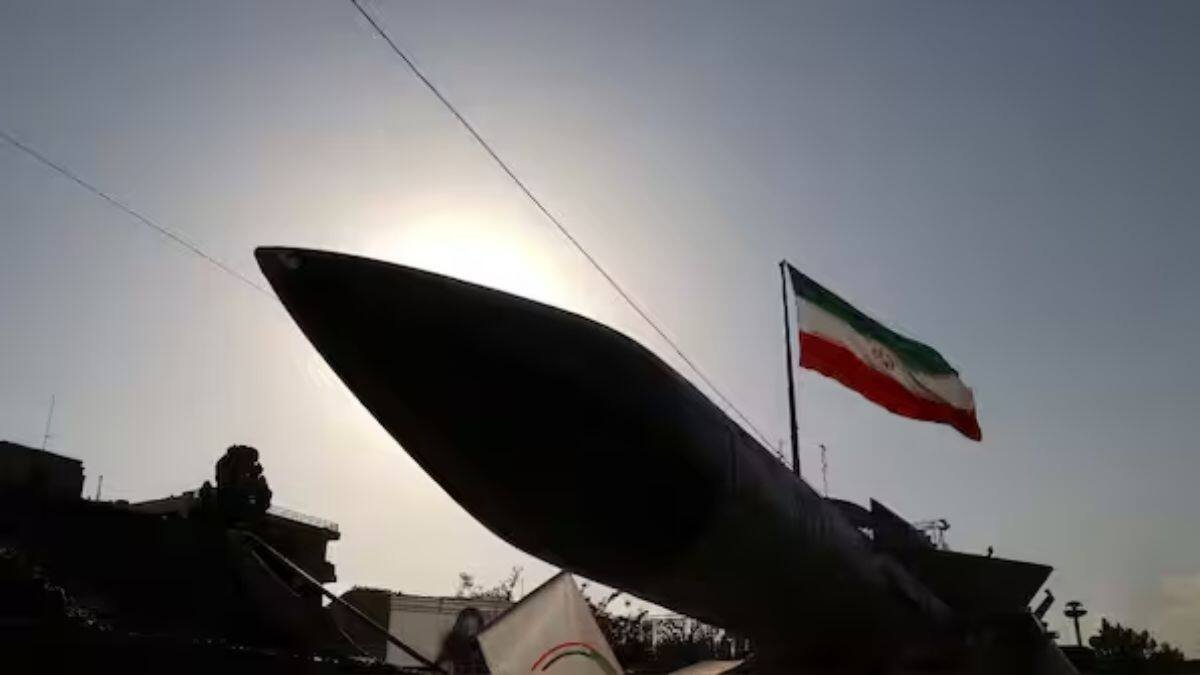
Satellite imagery reveals Iran is prioritising the repair of its ballistic missile sites over nuclear facilities while using new roofing structures to conceal salvage operations from US and Israeli surveillance.
New high-resolution satellite imagery shows a sharp increase in Iranian military construction activity following joint US-Israeli airstrikes last June that severely damaged the country’s strategic infrastructure. Tehran is moving to recover remaining elements of its nuclear programme while placing particular emphasis on rebuilding its ballistic missile forces, viewed as a key safeguard against future US military action, according to a New York Times analysis of satellite imagery suggests.
The findings come at a delicate moment for regional security as the West Asia continues to grapple with heightened military uncertainty and stalled diplomatic efforts aimed at reviving nuclear talks. While the scale of Iran’s reconstruction efforts remains unclear, analysts say the activity indicates a calculated attempt to rebuild deterrence without triggering an immediate escalation with Washington and its allies.
Missiles over nukes: A strategic rebalancing
Analysis of imagery from approximately two dozen locations indicates a clear hierarchy in Iran’s reconstruction efforts. While major nuclear installations at Natanz and Isfahan show signs of stabilisation, the pace of work at ballistic missile facilities has been far more aggressive. Intelligence analysts said that at least 12 missile production plants and testing sites including the Parchin military complex and the Shahroud facility have returned to near-operational status.
At the Shahroud testing grounds, satellite snapshots from January and early February 2026 show cleared roads and melted snow on rooftops, a telltale sign of internal heating and active machinery. Experts suggested this “missile-first” strategy is a pragmatic move by the Iranian leadership.
Facing a massive US naval armada currently stationed in the region, Tehran views its ballistic missiles as its only immediate “snap-back” capability to threaten regional US assets and Israeli population centers, should President Trump follow through on threats of further military action.
The “roofing” strategy: Blinding the watchdog
Perhaps most concerning to international observers is the localised construction at the Natanz and Isfahan nuclear sites. Satellite photos from Planet Labs PBC show that Iran has recently installed large, permanent roofs over the rubble of the Pilot Fuel Enrichment Plant at Natanz and several buildings at the Isfahan Nuclear Technology Center.
These structures are not viewed as functional repairs but as “tactical blinds.” By covering the damaged halls, Iran is effectively blocking the overhead surveillance that the International Atomic Energy Agency (IAEA) and Western intelligence rely on, particularly as Tehran continues to bar physical inspections.
Hardening the underground frontier
Beyond surface-level salvage, the images show a determined effort to “future-proof” Iran’s remaining nuclear ambitions. At “Pickaxe Mountain” located just south of the Natanz perimeter, excavation work has accelerated. Piles of spoil and dirt suggest that Iran is digging deeper than ever before, potentially creating an ultra-hardened facility buried 100 meters underground, a depth that would challenge even the most advanced American bunker-buster munitions.
Simultaneously, at the Isfahan facility, tunnels that were previously packed with dirt as a defensive measure are being cleared and reinforced with new blast walls. This combination of surface concealment and underground expansion suggests that while the June 2025 strikes “significantly degraded” the program, the Iranian regime remains committed to maintaining its nuclear infrastructure as a long-term strategic insurance policy, even as it sits across the table from US envoys in Oman for high-stakes negotiations.
End of Article