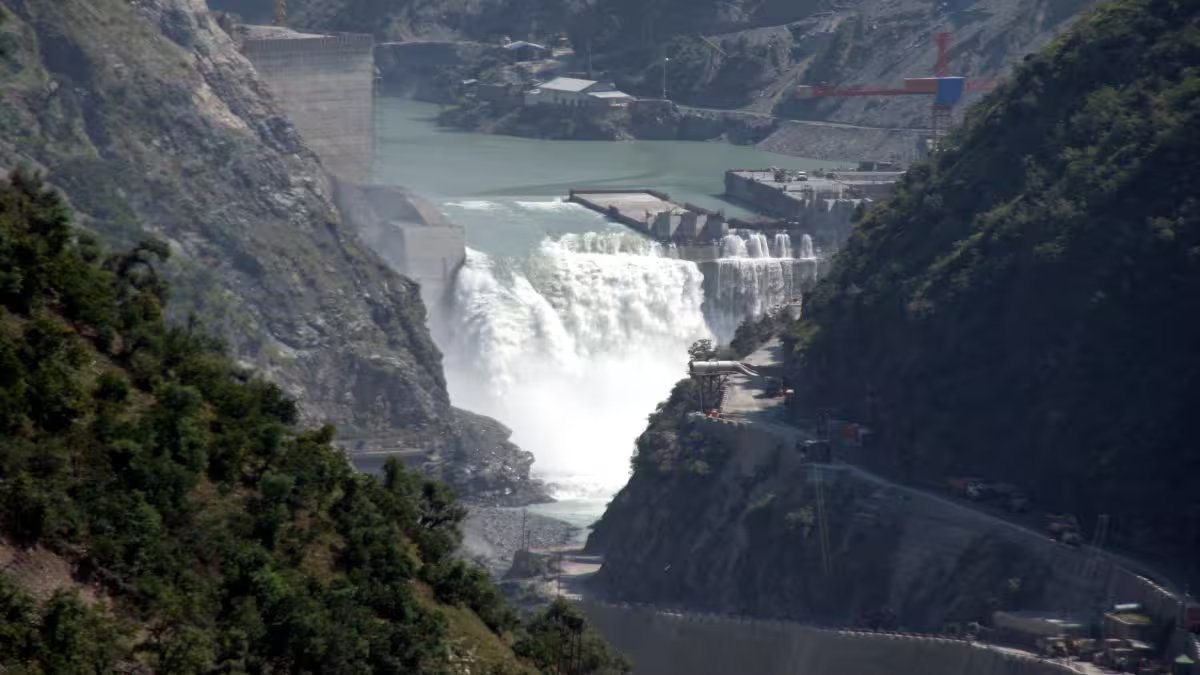
The Union environment ministry has cleared the 260 MW Dulhasti State-II hydropower project on the Chenab river in Jammu and Kashmir’s Kishtwar district, following the Indus Waters Treaty being placed in abeyance. The project aims to harness the river’s hydro potential and comes two months after approval for the larger 1,856 MW Sawalkot project on the same river.
Clearance has been granted for a strategically significant hydropower project after the Indus Waters Treaty (IWT) was placed in abeyance. A panel of the Union environment ministry has approved the 260 MW Dulhasti State-II hydropower project on the Chenab river in Jammu and Kashmir’s Kishtwar district, The Times of India reported.
The approval was given by the ministry’s Expert Appraisal Committee on hydropower projects. It comes barely two months after clearance was accorded to the much larger 1,856 MW Sawalkot hydroelectric project on the same river in Ramban district.
Focus on harnessing Chenab’s hydropower potential
Both projects aim to tap the hydropower potential of the Chenab, one of the three western rivers — along with the Indus and Jhelum — whose waters largely flow into Pakistan. Under the IWT, India has the right to use these waters for non-consumptive purposes, including hydropower generation.
Estimated to cost around Rs 3,200 crore, Dulhasti State-II is an extension of the existing 390 MW Dulhasti State-I project, which has been operational since 2007. Under the new plan, water will be diverted from Stage-I through a separate tunnel to generate additional power.
The project will require the acquisition of over eight hectares of private land from two villages — Benzwar and Palmer — in Kishtwar district.
Despite an estimated hydropower potential of nearly 20,000 MW from its western rivers, India has so far developed only about 3,482 MW of capacity in Jammu and Kashmir. This has largely been attributed to treaty-related constraints and the lack of adequate storage infrastructure.
The Indus Waters Treaty, signed in 1960 between India and Pakistan with World Bank mediation, allocated unrestricted use of the eastern rivers — Ravi, Beas and Sutlej — to India. Pakistan was granted primary rights over the western rivers — Indus, Jhelum and Chenab. While India retained limited rights over the western rivers, it has historically underutilised its legal share.
Treaty put in abeyance after Pahalgam terror attack
In 2025, following the deadly Pahalgam terror attack in Jammu and Kashmir carried out by Pakistan-backed terrorists, the Indian government placed the treaty “in abeyance”. This paused India’s treaty obligations without formally withdrawing from the agreement. Routine mechanisms such as meetings of the Permanent Indus Commission and hydrological data sharing were halted.
New Delhi has maintained that the treaty will remain in abeyance until Pakistan takes credible and irreversible action against cross-border terrorism, arguing that changed security realities warrant a re-examination of the decades-old water-sharing framework.
End of Article