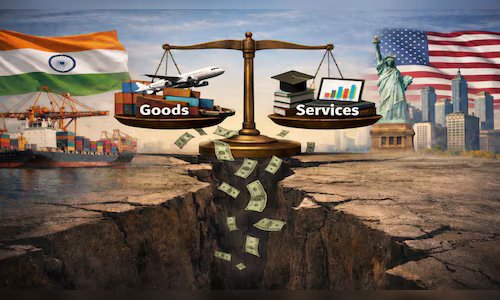
Ajay Srivastava of GTRI said that including services flows would widen India’s overall dollar outflow to the US. He estimated that the gap could increase by 10 to $15 billion once services are included alongside goods trade.
“If we forget about exports and imports of goods and services for a moment, then how much we pay to the US firms who are operating in India or otherwise — Indian students, they pay $25 billion to the US, $15 billion as tuition fee and $10 billion as living expenses. US tech giants like Amazon and Google earn about $15 to $20 billion revenue from India. US banks and consulting firms like BCG or Citibank earn about $10 to $15 billion from India,” he said, adding that if these fows and defence purchases are counted, India may already be paying over $120 to $130 billion to the US.
Also Read | India unlikely to fully stop Russian oil purchases, says former foreign secretary
Srivastava said India may already be paying more than $120 to $130 billion to the US, when all flows are considered. He said these challenges support the view that India runs a surplus in overall dollar flows.
On energy imports, former HPCL Chairman MK Surana said India should look beyond crude oil and include gas and petroleum products in trade discussions. He said LNG imports could be a key area, noting India imports close to half of its LNG needs.
He said India imports around $13–14 billion of LNG annually, and this may increase as natural gas use expands. He also said LPG imports and ethane supplies from the US could grow as petrochemical capacity expands.
“Many of the petrochemical plants, which are coming, can be mixed feed plants, where Ethane can be used as an input material for converting into polyethylene or those types of products, ethylene and polyethylene products. So, I think those are some of the areas which can be looked into, apart from the crude oil,” said Surana.
However, Srivastava said the US supply may not be enough to meet global demand. He said the US will never be able to supply the full oil demand of countries such as India, Europe, and South Korea combined, even with support from Venezuela. “The US doesn’t have so much spare oil. And Venezuela, their wells produce less than a million barrels per day, and they are not in a position to supply so much of the demand,” he said.
Also Read | US tariff relief could bring textile orders back to India from Bangladesh
On pricing, Surana said energy purchases will remain commercial decisions. He said companies will buy based on competitiveness and freight costs, rather than policy direction alone. He said US oil can be competitive in some cases, depending on crude quality and refinery configuration.
On trade agreement structure, Srivastava said clauses such as best endeavour may be used, but may still leave room for disputes depending on interpretation.
Surana added that oil sourcing will remain diversified. He said companies will need to justify any shift in sourcing based on cost and operational factors.
The final structure of the India-US trade agreement will decide whether services payments and private sector flows are included along with goods trade.
For the full interview, watch the accompanying video
Catch all the latest updates from the stock market here