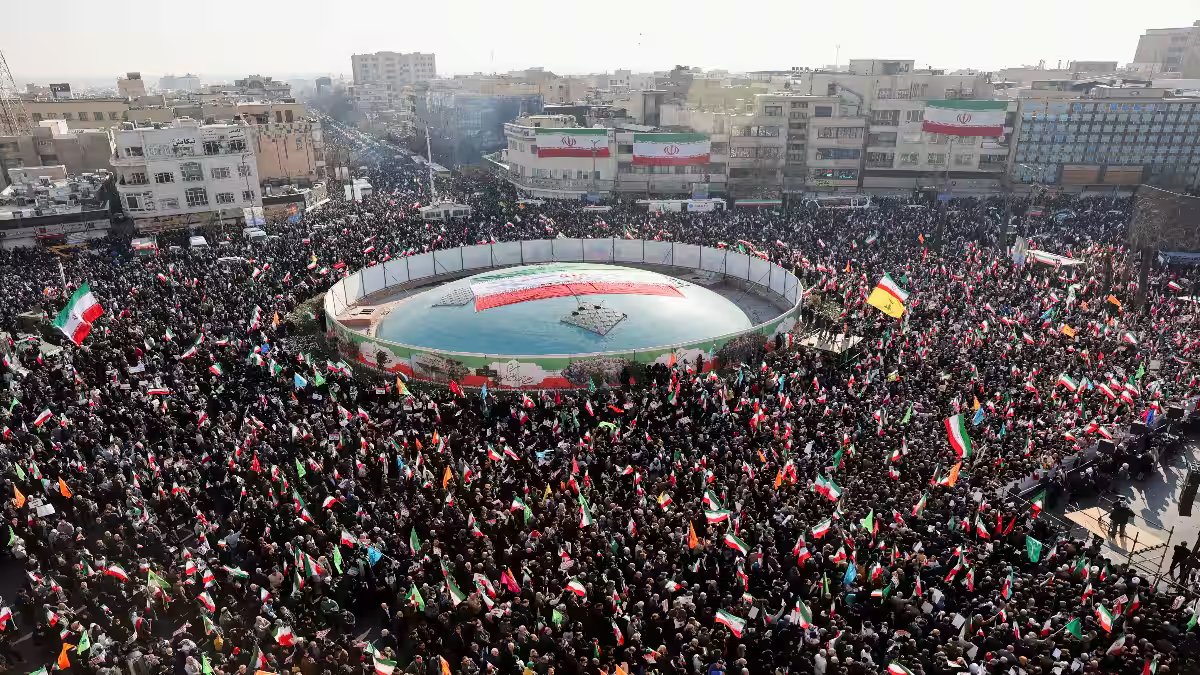
More than 5,000 people have reportedly died in Iran’s nationwide crackdown on protests, activists said Friday, as the country endures its longest internet blackout in history, now entering its third week.
At least 5,002 people have been killed in Iran’s nationwide crackdown on protests, activists said Friday, warning that many more could be dead as the country endures its most extensive internet blackout in history, now lasting over two weeks, The Associated Press reported.
Authorities cut off internet access on January 8, making independent verification extremely difficult. The US-based Human Rights Activists News Agency reported that 4,716 of the dead were demonstrators, 203 were government-affiliated personnel, 43 were children, and 40 were civilians not participating in the protests.
The group also said more than 26,800 people have been detained in the widening crackdown. In contrast, Iran’s government, in its first official toll, claimed 3,117 fatalities, labeling some of the dead as “terrorists” while listing civilians and security forces separately.
Rising tensions with the United States
The crackdown comes amid escalating tensions between the US and Iran, with an American aircraft carrier group moving toward the Middle East. President Donald Trump described the deployment as an “armada,” saying the fleet is heading toward Iran “just in case” military action becomes necessary.
Analysts note that the buildup could give Trump the option to carry out strikes, though he has so far refrained, likely under pressure from regional leaders. The UK Defense Ministry also confirmed that its joint Eurofighter Typhoon squadron with Qatar has been deployed to the Gulf amid rising regional tensions.
Historical context and legal charges
Trump’s red lines over the killing of peaceful demonstrators and Iran conducting mass executions remain points of concern. Some detainees have been charged as “mohareb,” or “enemies of God,” a designation historically used to justify mass executions, including in 1988 when at least 5,000 people were reportedly killed. Analysts note that the ongoing arrests and charges echo some of the most violent periods in Iran’s recent history, recalling unrest dating back to the 1979 Islamic Revolution.
Iranian authorities have restricted journalists’ access to affected areas, instead broadcasting claims on state television portraying protesters as “rioters” allegedly influenced by the United States and Israel, without offering supporting evidence.
On Friday, to mark the annual “Day of the Guardian,” state television aired the Revolutionary Guard showcasing military drones, including Shahid drones that have also been used by Russia in Ukraine. A masked security official issued a veiled threat to Israel, declaring, “We are closer to you than you think.”
With inputs from AP
End of Article