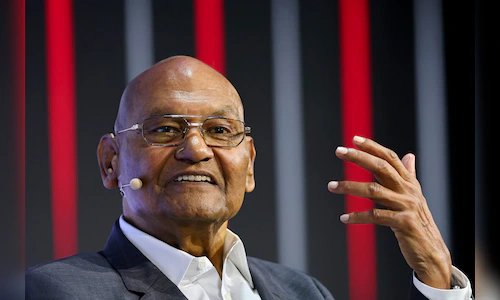
In a post on X, Agarwal emphasised that India’s import dependence on oil and gas makes it susceptible to price volatility and supply disruptions, particularly in the face of conflicts in resource-rich regions like Iran.
As tensions escalated and fears regarding the closure of the Strait of Hormuz grew, a chokepoint through which roughly 20% of the world’s oil passes, Agarwal stressed the urgent need to prioritise domestic oil, gas and mineral production.
“A major geopolitical shock in a resource-rich region, like the ongoing conflict in Iran, makes India vulnerable because of its huge import dependence on natural resources from below the ground,” he wrote.
Agarwal’s call to action comes as India faces potential fuel shortages due to disruptions in the Strait of Hormuz, with the government exploring contingency measures like restricting fuel exports and increasing Russian crude imports.
“We need to immediately declare this sector a national priority, cut cumbersome processes and facilitate rapid increase in domestic production. We have such a progressive government that this can happen. Some risk has to be taken and we should take it. It will deliver massive returns in terms of jobs too. Young women are entering this sector in a big way. And there are talented Indians abroad who can do a ghar vapsi,” the chairman added.
A major geopolitical shock in a resource-rich region, like the ongoing conflict in Iran, makes India vulnerable because of its huge import dependence in natural resources from below the ground.
We need to immediately declare this sector a national priority, cut cumbersome… pic.twitter.com/d7QrpZrdub— Anil Agarwal (@AnilAgarwal_Ved) March 3, 2026
Agarwal pointed out that India imports 90% of its oil, 66% of its LPG, and 50% of its LNG, with oil and gas accounting for a significant portion of the country’s import bill, around $176 billion annually. He warned that any sharp rise in prices would have far-reaching consequences, impacting macroeconomic indicators and ultimately affecting the common man.
Agarwal noted that gold remains India’s second-largest import at approximately $65 billion annually, observing that its demand and price typically surge during periods of global instability. He emphasised that the combined imports of oil, gas, and gold now represent nearly 30% of the nation’s total import bill.
“Government should exempt the sector from time-consuming regulations, including public hearing. The latter has already been done for critical minerals but needs to be done across the board for all processes and minerals,” he wrote.
He proposed that environmental clearances transition to a self-certification model, suggesting that once a company commits to the official rulebook, it should face no further procedural delays, only subsequent audits.
“Existing assets, most of which are owned by the government, should be utilised fully. At least 50% stake can be divested to proven people. Employees will get shareholding and a promise of no retrenchment.”
He asserted that India cannot afford to wait, as the world is currently more unsettled and uncertain than at any point in his memory. Highlighting that there are no permanent friends or partners in modern geopolitics, he argued, “Self-reliance is more than a desirable aspiration. It is an immediate economic and strategic imperative.”
To address potential fuel shortages if traffic through the Strait of Hormuz remains disrupted for weeks, India is considering a number of contingency measures, including restricting petrol and diesel exports, increasing crude purchases from Russia, and implementing demand-management measures such as LPG rationing, as per a report in the Economic Times (ET).
As per a report published in October 2025, Hardeep Singh Puri, Minister of Petroleum and Natural Gas, noted that India relies on imports for 88% of its crude oil and 51% of its gas requirements. He also mentioned that India imported approximately 300 million metric tonnes of crude and petroleum products during 2024–25, while exporting roughly 65 million metric tonnes.