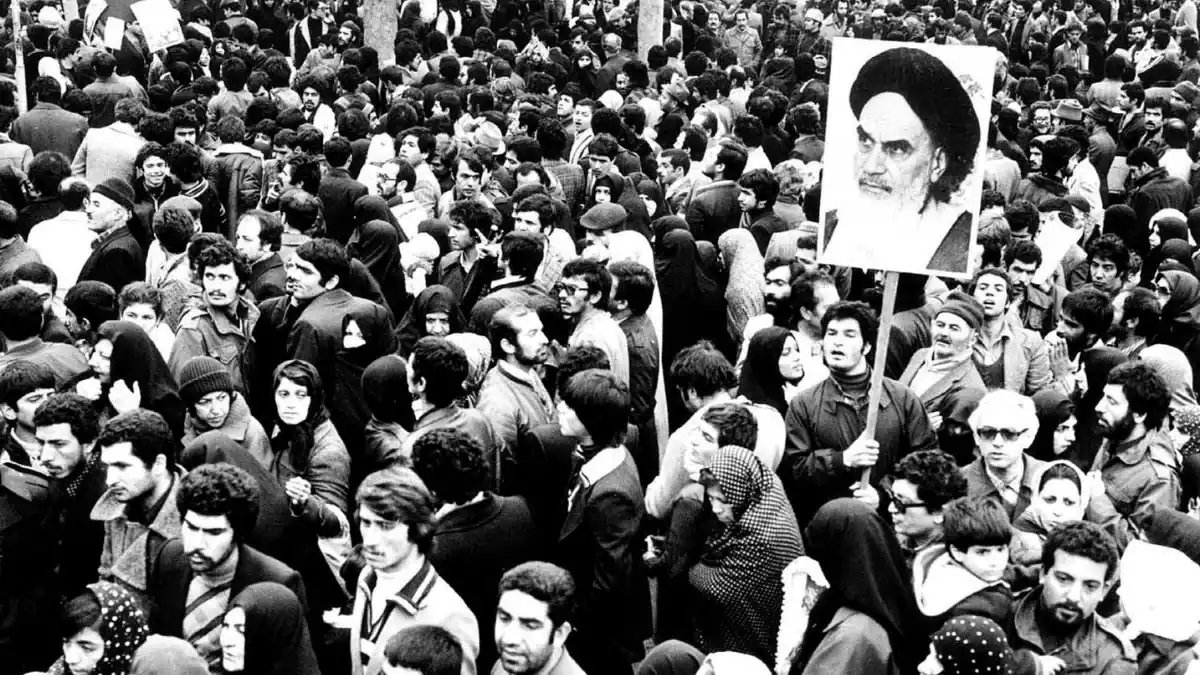
Iran’s political system today is rooted in the sweeping upheaval of 1979, when a revolution dismantled centuries of monarchical rule and replaced it with a political structure meant to hold apex authority with religion as a central pillar to that authority.
At the mecca of this system is the office of the Supreme Leader, the most powerful position in the Islamic Republic, exercising ultimate power over the military, judiciary and political institutions.
The continuing importance of this office became evident again this week when Iran’s clerical leadership moved quickly to select a new Supreme Leader after the death of Ayatollah Ali Khamenei during
an escalating conflict in West Asia.
Iran’s Assembly of Experts has formally
chosen Mojtaba Khamenei — son of the late leader — as the country’s third Supreme Leader.
“By a decisive vote, the Assembly of Experts, appointed Ayatollah Seyyed Mojtaba Hosseini Khamenei as the third Leader of the sacred system of the Islamic Republic of Iran,” the Assembly said in a statement issued just after midnight Tehran time on Monday.
But how did this system come about? We take a look…
Iran before the revolution
Prior to the revolution, Iran had experienced monarchic rule for roughly 2,500 years. The last monarch, Mohammad Reza Shah Pahlavi, governed the country from 1941 as the leader of the Pahlavi dynasty, which had assumed power in 1925.
The shah’s reign was marked by close ties with Western powers and a determined effort to transform Iran into a modern state.
His government launched ambitious development initiatives aimed at reshaping the economy and society. One of the most notable programmes was the “White Revolution,” announced in 1963.
The White Revolution introduced sweeping reforms that included land redistribution, infrastructure expansion, economic modernisation measures and the extension of voting rights.
The shah sought to legitimise these policies through referendums, presenting them as part of a national project to propel Iran toward rapid development.
At the same time, the reforms strengthened the monarch’s authority. Mohammad Reza Shah adopted the title Shahanshah — translated as “King of Kings” — and presided over grand celebrations marking the 2,500th anniversary of the Persian Empire.
These displays were intended to highlight Iran’s historical continuity and the monarchy’s central role in the nation’s identity.
However, despite the ambitious modernisation programme, dissatisfaction with the government steadily grew. Many Iranians viewed the shah’s rule as increasingly authoritarian.
Political opponents and activists who challenged the regime often faced persecution by SAVAK, the secret police widely associated with surveillance, detention and repression.
The political landscape also carried the legacy of earlier foreign intervention. In the early twentieth century, British involvement helped place the shah’s father on the throne in 1921.
Later, during the Second World War, British and Soviet forces compelled him to abdicate in favour of his son in 1941.
Another turning point came in 1953, when a CIA-assisted military coup played a decisive role in restoring Mohammad Reza Shah’s authority after he had briefly been pushed aside by the nationalist prime minister Mohammad Mosaddegh.
The episode left a lasting impression on Iranian politics and contributed to a perception that the monarchy relied on foreign support to maintain power.
Although the shah promoted nationalism and modernisation, the shadow of foreign involvement remained a source of resentment among many Iranians. Over time, diverse opposition movements began to emerge across the country.
The rise of opposition movements
Opposition to the shah came from a wide range of political and ideological groups. Liberal reformers, communists, pro-democracy activists and Islamist organisations all criticised the monarchy for different reasons.
Among the most influential figures in the emerging resistance was Grand Ayatollah Ruhollah Khomeini, a Shia cleric based in the religious centre of Qom, located south of Tehran.
Khomeini had built a reputation as a vocal critic of the shah’s policies and the government’s alignment with Western powers.
In 1964, after denouncing the shah for granting diplomatic privileges to the United States, Khomeini was forced into exile. Initially residing in Iraq and later moving to France, he remained politically active and continued to communicate with supporters inside Iran.
Despite his absence from the country, Khomeini and his clerical network maintained strong connections with segments of the population, particularly in traditional and rural communities.
By the late 1970s, opposition to the monarchy intensified significantly. The year 1978 witnessed a series of demonstrations and government crackdowns that escalated into a nationwide movement challenging the regime.
The unrest followed a recurring pattern: protests would erupt in a city, security forces would respond with violence, and the deaths of demonstrators would trigger further demonstrations elsewhere.
Early protests began in January in the city of Qom and later spread to Tabriz in February.
By March and May, demonstrations had appeared in dozens of urban centres, including Tehran. The scale and frequency of the protests revealed a growing national movement against the monarchy.
In August 1978, tragedy struck in the southwestern city of Abadan when arsonists set fire to a cinema, killing more than 400 people.
The perpetrators of the attack were never conclusively identified, but the incident intensified public outrage. Khomeini blamed the shah and SAVAK for the disaster, and many Iranians accepted this narrative.
Violence continued in September when security forces fired upon a large demonstration in Tehran marking the end of Ramadan. The confrontation resulted in numerous deaths plunging the crisis deeper.
At the same time, labour unrest spread across critical sectors of the economy. Workers in Iran’s oil industry, one of the country’s most vital economic pillars, joined protest strikes.
By October, a nationwide general strike had been declared, severely undermining the government’s ability to function.
The fall of the shah
Facing escalating turmoil, the shah attempted to regain control of the situation through political concessions.
He appointed a military government and addressed the nation directly, acknowledging mistakes made by his administration and suggesting a willingness to introduce democratic reforms.
However, these efforts did little to calm the unrest. From exile in France, Khomeini rejected the shah’s proposals and called on Iranians to continue resisting the monarchy.
As protests continued to spread and the government’s authority weakened, international support for the shah began to erode.
When the administration of
US President Jimmy Carter concluded that it could no longer sustain the monarch politically, the shah departed Iran in January 1979 for “medical treatment”.
His departure created a power vacuum which changed Iran and dramatically altered the political landscape.
Khomeini’s return & the birth of an Islamic Republic
On February 1, 1979, Khomeini returned to Iran after 15 years in exile. Millions of people lined the streets of Tehran to welcome him, demonstrating the depth of support he had acquired among large segments of the population.
The moment represented a pivotal turning point in the revolution. The enormous public turnout gave Khomeini a powerful political mandate that extended beyond formal institutions.
Within ten days of his arrival, revolutionary forces had taken control of the state apparatus. The monarchy was effectively dismantled, and the country began its transition toward an Islamic Republic.
Initially, many participants in the revolution believed that Khomeini would function primarily as a symbolic or spiritual guide while a coalition of political parties would govern the country.
However, the revolutionary leadership soon pursued a different course. Khomeini and his allies moved rapidly to establish a political system guided by Islamic principles and dominated by religious scholars who possessed expertise in Islamic law.
Over the course of 1979, the revolutionary authorities systematically marginalised competing political factions. Some opponents left the country, while others were gradually excluded from positions of influence.
Although different elements of civil society continued to exist and occasionally challenged the authorities, the overall structure of power increasingly concentrated in the hands of the clerical leadership.
The doctrine behind the Supreme Leader
A crucial element in this transformation was the introduction of a new political doctrine that justified clerical authority over the state.
Khomeini’s theory was rooted in the concept of Velayat-e Faqih, translated as “Guardianship of the Jurist.”
In his 1970 book Hokumat-e Islami (Islamic Government), he argued that in the absence of the Shia faith’s “Hidden Imam,” governance should be entrusted to a leading Islamic jurist.
This jurist, according to Khomeini’s interpretation, would ensure that society followed divine law and Islamic principles.
Before the revolution, the concept had not been widely accepted among Shia scholars. Yet the upheaval of the late 1970s allowed Khomeini to promote it as a framework capable of replacing what he described as Western-backed secular governance.
The revolutionary period also produced conditions that strengthened his authority.
Constitutionalising clerical authority
The office of the Supreme Leader was formally established through Iran’s 1979 constitution, which was approved in a national referendum.
Several provisions of the constitution defined the scope of the position and placed it at the top of the political hierarchy.
Article 5 declared that leadership of the state would rest with a “just and pious” Islamic jurist.
Article 57 placed the legislative, executive and judicial branches of government under the supervision of the Supreme Leader.
Article 110 granted the office sweeping powers, including command over the armed forces, authority to declare war and influence over key appointments within the judiciary and political institutions.
These provisions created a system in which the Supreme Leader held ultimate authority above the elected branches of government.
The revolutionary leadership also established institutions designed to protect the new order.
One of the most important was the Islamic Revolutionary Guard Corps (IRGC), created in May 1979 as a force dedicated to safeguarding the revolution and defending the new political system from internal threats.
Another key body was the Guardian Council, composed of twelve members. Half of the council’s members are appointed by the Supreme Leader, and the institution has the power to review legislation passed by parliament and determine whether candidates are eligible to run for political office.
Together, these institutions reinforced the central role of the Supreme Leader within Iran’s political architecture.
How power was consolidated further
Two major events soon helped solidify the revolutionary government’s position. The first was the Iran hostage crisis between 1979 and 1981. Student protesters who supported Khomeini seized the US Embassy in Tehran and held dozens of American diplomats captive.
The episode began as a protest aimed at pressuring the United States to return the exiled shah to Iran for prosecution.
However, with Khomeini’s eventual endorsement, the crisis continued for more than a year and dramatically altered Iran’s relationship with the outside world.
The confrontation projected an image of revolutionary defiance and demonstrated the regime’s willingness to challenge foreign powers.
Another defining moment occurred in September 1980 when Iraqi leader Saddam Hussein ordered his forces to invade Iran. The resulting conflict developed into an eight-year war that inflicted enormous human and economic losses on both countries.
For Iran, the war also reinforced national unity against an external enemy and only aided in entrenching the revolutionary leadership.
From Khomeini to Khamenei
Ayatollah Ruhollah Khomeini remained the central authority of the Islamic Republic until his death in 1989. After his passing, the Assembly of Experts selected Ayatollah Ali Khamenei as his successor.
During his long tenure, Khamenei maintained the ideological foundations established by the revolution while navigating numerous domestic and international challenges.
His leadership focused on strengthening Iran’s defence capabilities and expanding the role of institutions that enforce the authority of the Islamic Republic.
Among these were the Islamic Revolutionary Guard Corps and its paramilitary wing, the Basij. Revolutionary committees and religious networks also became key components of the system that supported the state’s authority.
Khamenei’s policies included a focus on economic self-reliance and a strategic shift toward partnerships with countries such as Russia and China. These relationships were viewed as a counterbalance to the influence of the United States and its allies.
Throughout his rule, Khamenei maintained strong opposition to the United States and Israel while also demonstrating pragmatism when necessary to ensure the survival and continuity of the regime.
Iran’s political leadership has long viewed the possibility of hostile action by foreign powers as a central concern. Fear of external intervention — particularly from the United States or Israel — has influenced both domestic policy and international strategy.
How Iran’s Supreme Leader system was tested
The system created by the revolution faced its most significant litmus test in the last few days as Ayatollah Ali Khamenei was killed in one of the first US-Israel strikes launched against Iran during the conflict.
The Assembly of Experts, a body consisting of 88 clerics responsible for selecting the Supreme Leader, convened under heightened security to determine his successor.
After deliberations, the assembly chose Mojtaba Khamenei, a cleric known to possess influence within Iran’s security establishment and business networks associated with his father.
The selection was widely seen as an effort to maintain continuity within the Islamic Republic’s leadership structure and to ensure stability within its institutions.
The appointment also indicated
that Iran’s political establishment remains firmly controlled by hardline factions. Analysts have suggested that the decision could influence the course of the ongoing confrontation with potential consequences extending beyond West Asia.
As the Supreme Leader, Mojtaba Khamenei now holds the final authority over all major state matters within the Islamic Republic.
In this sense, the upheaval of 1979 did more than overthrow a monarch.
It redefined the nature of absolute authority in Iran, creating a structure in which religious doctrine and state power are so deeply intertwined that separating the two would require a perfect storm.
Also Watch:
With inputs from agencies
End of Article