A mass shooting has rocked a small town of Canada on Tuesday (February 10), with Canadian Prime Minister Mark Carney saying he’s “devastated” hearing the news.
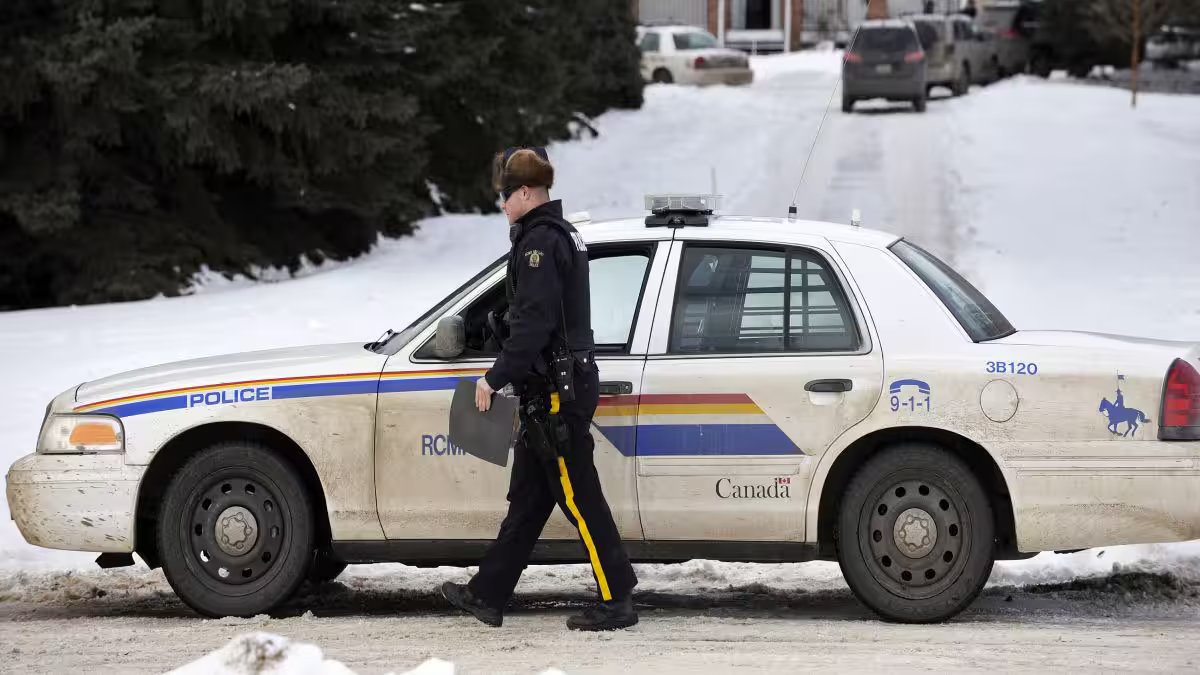
Ten people, including the perpetrator, have been killed in the shooting at a high school and a residential property in Canada’s Tumbler Ridge, British Columbia, a picturesque mountain valley town in the foothills of the Rockies. The Royal Canadian Mounted Police said more than 25 people have also been injured, including two who were airlifted to the hospital with life-threatening injuries, after the shooting at Tumbler Ridge Secondary School.
RCMP Superintendent Ken Floyd told reporters that investigators had identified a female suspect but would not release a name, and that the shooter’s motive remained unclear. The police added that the suspected shooter was found deceased at the school with “what appears to be a self-inflicted injury”.
This tragedy is the second-deadliest school shooting in Canada’s history. It also shines a spotlight on Canada’s strict gun laws.
What we know of Tuesday’s school shooting in Canada
On Tuesday afternoon, the police received an alert of an active shooter at
Tumbler Ridge Secondary School. The school has approximately 175 students from classes 7 to 12, and the town of Tumbler, located more than 1,000 kilometres north of Vancouver, boasts a population of around 2,400 people.
When the police arrived at the school, they began a search of the premises, finding six people shot dead. A seventh person with a gunshot wound died while en route to the hospital.
Separately, police found two more dead bodies at a residence in Tumbler Ridge. This residence is “believed to be connected to the incident,” police said.
The authorities also noted that an individual believed to be the shooter was also found deceased with what appears to be a self‑inflicted injury.
Darian Quist, a 12th grader at the school, has told CBC the moment when the shooting unfolded. He narrates that he got to his class around 1.30 pm when an alarm went off with lockdown instructions. “We got tables and barricaded the doors for over two hours,” he told CBC.
He went on to say, “The reality of it all is starting to set in… I believe I knew somebody, but everything is still very fresh.”
The incident has sent shockwaves across Canada. Tumbler Ridge Mayor Darryl Krakowka said the close-knit community would have to support each other after the mass shooting. “I will know every victim. I’ve been here 19 years, and we’re a small community,” he told CBC News. “I don’t call them residents. I call them family.”
Canadian Prime Minister Mark Carney also expressed his heartfelt remorse. “I join Canadians in grieving with those whose lives have been changed irreversibly today, and in gratitude for the courage and selflessness of the first responders who risked their lives to protect their fellow citizens.
“Our officials are in close contact with their counterparts to ensure the community is fully supported as best we can. The Government of Canada stands with all British Columbians as they confront this horrible tragedy.”
Carney has also cancelled his visit to Germany for the Munich Security Conference. Canadian opposition leader
Pierre Poilievre also expressed his grief on X. “I am devastated to learn that many innocent people have been killed and injured in a senseless act of violence at a local high school in Tumbler Ridge. Our prayers are with the families, students, teachers, first responders, and the entire community grieving this immense loss.”
Tuesday’s school shooting is extremely rare in Canada
Tuesday’s shooting at Tumbler Ridge Secondary School is one of the rare instances in Canada when an educational institution has come under attack. In fact, school shootings in Canada are extremely rare.
Prior to Tuesday, the deadliest school shooting in the North American nation occurred on December 6, 1989. Fourteen female students and a college employee were killed, and another 13 were injured, when 25-year-old Mark Lepine walked into a classroom of L’Ecole Polytechnique in Montreal, separated the men and the women, and then opened fire in the classroom. Later, he wandered the hallways of the school, dying by suicide shortly after his rampage.
But there have been other school shootings, too, in Canada. Professor Valery Fabrikant fired on his colleagues at Concordia University in Montreal on August 24, 1992. He killed four people and wounded one more.
Seven years later, in 1999, a 14-year-old boy opened fire inside the WR. Myers High School in Taber, Alberta. The shooting left 17-year-old student Jason Lang dead, and another student was seriously injured. The shooter, who could not be identified because of his age, was sentenced to three years in secure custody and another seven years of probation.
In September 2006, a woman was killed during a shooting rampage at Montreal’s Dawson College. Another 19 people were injured — several seriously — in the shooting. The shooter, 25-year-old Kimveer Gill, shot himself after a shootout began with police at the college.
A year later, in May, gunshots reverberated in Toronto’s WC Jeffreys Collegiate Institute. Fifteen-year-old Jordan Manners was found in a hallway with a single gunshot wound to the chest. He later died in the hospital. Two teens were charged with first-degree murder and were later acquitted.
Two other shooting incidents were reported in Canadian schools. One in 2013 at Les Racines de vie Montessori, Gatineau, Quebec, and the other at La Loche High School, Saskatchewan, in January 2016.
A spotlight on Canada’s gun laws
Tuesday’s tragedy has also put a spotlight on Canada’s gun laws. The country has much stricter gun laws than the US, but Canadians are allowed to own firearms, provided they have a licence. Restricted or prohibited firearms, like handguns, must also be registered.
According to Canadian laws, an individual can only acquire a gun licence after the age of 18 and must pass a firearms safety course. Moreover, every gun holder’s licence has to be renewed after five years.
Children aged 12-17 can get a minor’s licence, allowing them to borrow non-restricted firearms like most rifles or shotguns for hunting or shooting competitions, and buy ammunition.
In 2020,
gun laws were further tightened when then Prime Minister Justin Trudeau announced a ban on more than 1,500 makes and models of “military-style assault weapons,” including the AR-15 and the Ruger Mini-14, following a mass shooting in Portapique, Nova Scotia.
And in December 2024, Trudeau’s government imposed a raft of additional measures, adding hundreds of gun models and variants to the country’s banned weapons list.
While more recent figures aren’t available, data from 2020 reveal that there were approximately 1.1 million registered handguns in the country. A 2017 Small Arms Survey estimated there were 12.7 million firearms in civilian possession in Canada, and there are an estimated 34.7 firearms per 100 people.
RCMP data also shows that applications for handguns were up three per cent last year for those aged 20 to 29, and 2.5 per cent for people 30 and older. That translated into almost 60,000 new gun owners last year — close to 7,500 of them under the age of 30.
But despite the strict gun laws, there have been 286 shooting deaths in 2024.
With inputs from agencies
End of Article