As Israel and the US continue their war against Iran, prominent Indian diplomats shared their take on how India should react to the ongoing crisis in West Asia.
As Israel and the US continue their war against Iran, prominent Indian diplomats shared their take on how India should react to the ongoing crisis in West Asia. At the
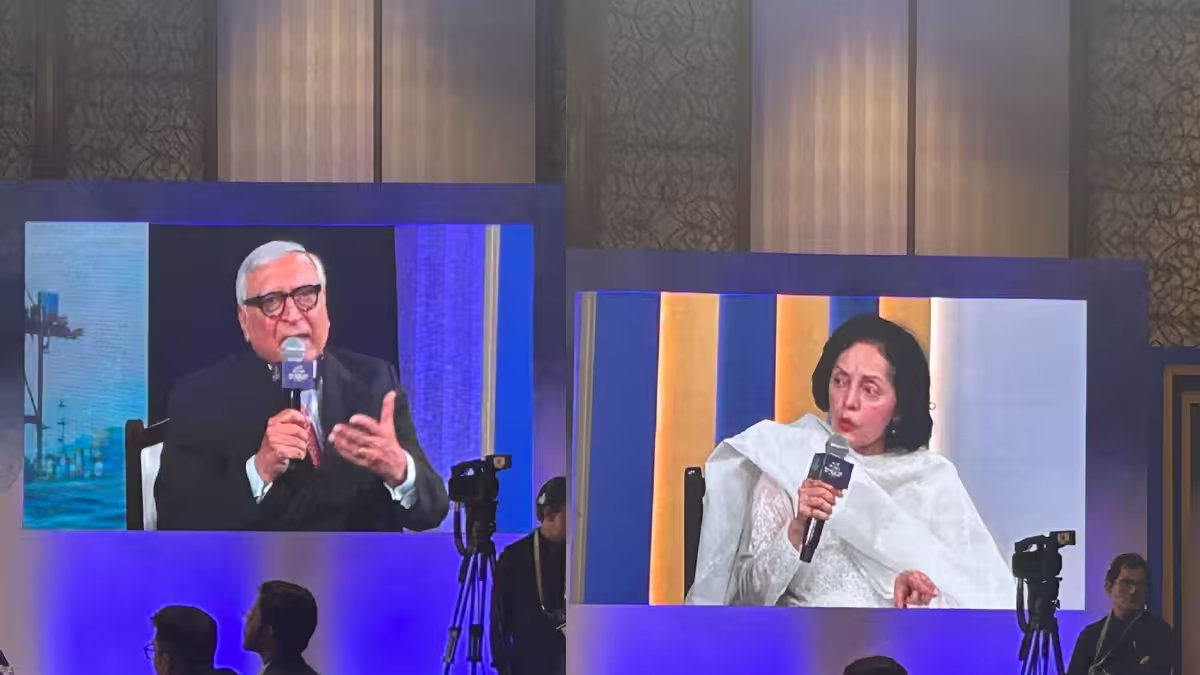
_News18 Rising Bharat Summit 2026_, India’s most seasoned foreign policy architects, Ruchira Kamboj, Taranjit Singh Sandhu, and Kanwal Sibal reflected on how India should respond to the brewing tensions.
Since Saturday, New Delhi has been balancing on a diplomatic tightrope since it shares long ties with both
Iran, Israel and the United States, the three parties involved in the ongoing conflict. During the session, the three diplomats agreed that the situation is “complicated and has to be tackled carefully”.
During the panel discussion, Sibal, the former Foreign Secretary of India, admitted that “strategically, Iran is well placed, but we should focus on the stability of Iran. The veteran Indian diplomat maintained that the US is “doing grave mistake” and India should express concern over the matter.
Meanwhile, India’s former Permanent Representative to the United Nations, Ruchira Kamboj, said India would have “national interest in mind”, when reacting to the situation. She mentioned that India believes in “issue-based decision-taking and not automatic alignment.”
‘Quite diplomacy in important’: Sandhu
When asked about the turbulent policies of US President
Donald Trump, Sandhu, the former Indian envoy to the United States, laid out the ground reality. “The reality is that whoever is the president of the US is not decided by India,” he said.
He admitted that while in diplomacy, the “art of talking is important, and diplomacy also plays a crucial role.” Kamboj noted that whatever the situation is, India needs to be clear on its stance soon, since the matter will be discussed at the United Nations General Assembly (UNGA).
Overall, the three diplomats agree that “serious concern will be expressed” by New Delhi on the conflict. The veterans maintained that restraint from India is a reflection of a self-confident “Aatmanirbhar” Bharat that acts as a stabilising force rather than a reactive participant.
‘Abstention or hedging’?
One of the matters discussed during the panel discussion was India’s tendency to abstain from voting. Kamboj admitted that India’s abstentions have gone up 44 per cent, and yes votes are at a historic low. “This indicates India is taking a selective and nuanced approach to global issues in a multipolar world,” she said.
However, the former Indian envoy to the UN admitted that the tendency to abstain is a “broad trend with other nations as well”. She took the examples of how countries like Brazil, Indonesia and South Africa have been adapting in the post-Russia-Ukraine war world. She described the move as “calibrated ambiguity in a polarised world”.
The session concluded with a powerful recognition of the “Rise of Bharat” in global governance, where the nation’s Digital Public Infrastructure and economic resilience have lent it the authority of a “civilisational state,” finally reclaiming its rightful place on the world stage.
End of Article