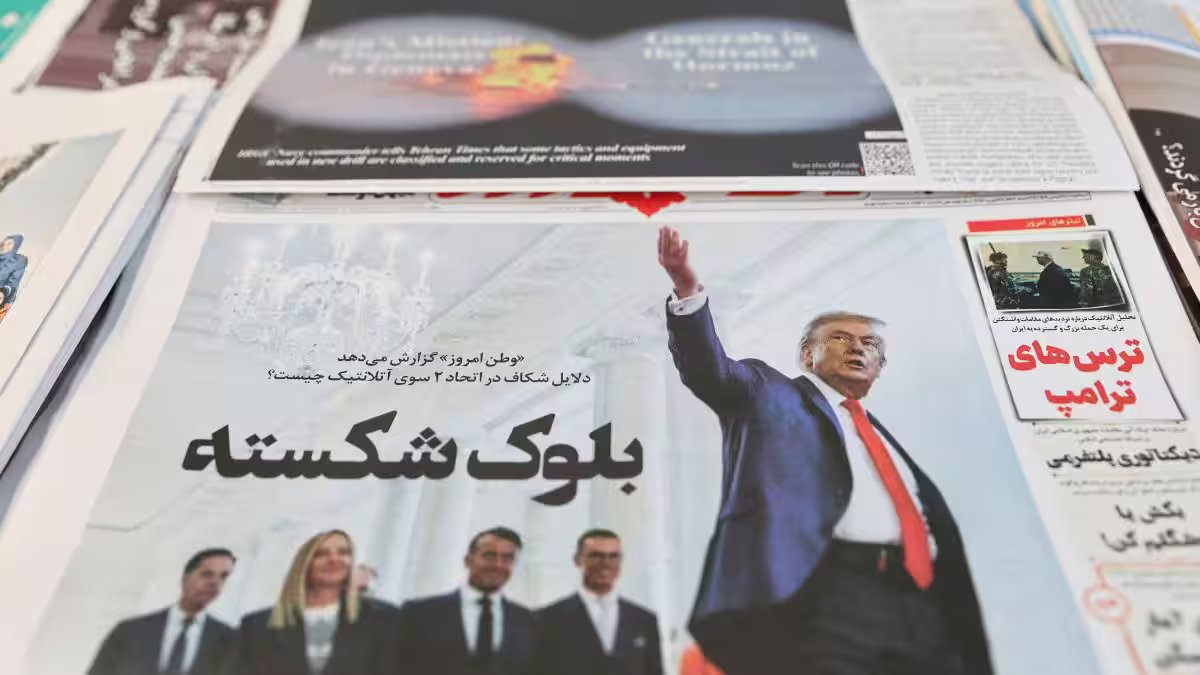
Iran and the United States are simultaneously engaging in nuclear talks as well as preparing for the possibility that negotiations could fail and trigger direct confrontation.
Washington has signalled that military options are being actively weighed, and Tehran is taking sweeping measures across its armed forces, nuclear infrastructure and internal security apparatus.
How are US-Iran nuclear talks faring?
Indirect discussions between Iranian officials and US representatives in Geneva have produced what Tehran describes as an understanding on broad “guiding principles” for a potential nuclear arrangement.
Iran’s foreign minister, Abbas Araqchi, said the exchanges with Washington’s envoys had clarified the framework of what might be possible, even as he stressed that this did not amount to a concluded agreement.
On Friday, he indicated that Iran was preparing a draft counterproposal for review by senior officials in Tehran, and suggested that further engagement could take place within days.
Araqchi said diplomacy remained viable and that a settlement could be reached “in a very short period of time”, while also cautioning that any military action would complicate or derail negotiations.
He told US television network MS Now that
neither side had demanded a complete halt to uranium enrichment nor offered to suspend enrichment entirely during the Geneva talks.
Instead, he said the discussions centred on mechanisms to ensure that Iran’s nuclear activities, including enrichment, remained exclusively peaceful on a permanent basis.
According to Araqchi, these would involve technical and political confidence-building steps, paired with actions linked to sanctions. He did not provide details of the specific measures under consideration.
The White House responded by reiterating Washington’s long-standing position that Iran cannot possess nuclear weapons or the ability to build them, and that enrichment is not acceptable under a future deal.
Donald Trump has said
he is considering limited strikes if Tehran fails to conclude a deal within a short deadline and has warned of severe consequences if negotiations collapse.
The backdrop to this pressure campaign includes US and Israeli air strikes on Iranian nuclear and military facilities in mid-2025, followed by renewed threats in early this year as Tehran responded to widespread protests with lethal force.
Trump has also claimed that US threats prevented planned mass executions in Iran. Tehran has rejected his assertions, publishing its own casualty list and challenging the accuracy of foreign claims.
US-based rights group HRANA
has separately released higher figures for deaths linked to the unrest totalling 7,114, while acknowledging that another 11,700 cases remain under review.
Amid this rhetoric, the United Nations has also warned that rising tensions and military deployments increase the risk of miscalculation. A UN spokesperson has called on both governments to prioritise diplomacy and restraint to prevent the dispute from tipping into open conflict.
How is Iran preparing for a US strike?
Restructuring its military posture
Iran’s leadership is repositioning its armed forces and adjusting command structures in anticipation of potential US strikes designed to disrupt decision-making at the top.
The Islamic Revolutionary Guard Corps has announced the revival of its so-called “mosaic defence” doctrine, a concept intended to decentralise authority so that field commanders can act independently if communications with senior leadership are severed, reported The Wall Street Journal.
This approach is meant to reduce the vulnerability of the command chain during sustained or surprise attacks.
Conducting military drills near US naval assets
Iran is also conducting highly visible military deployments intended to demonstrate its capacity to retaliate against US interests and disrupt vital maritime routes.
Naval units of the Revolutionary Guard have been positioned in the
Strait of Hormuz, the narrow passage linking the Persian Gulf to the Indian Ocean that carries roughly one-fifth of global oil shipments.
State-linked media outlets have broadcast footage showing cruise missiles fired from mobile launchers along the coast and from fast boats operating in the strait, with oil tankers visible in the background.
Revolutionary Guard naval commanders have said the waterway is under constant monitoring. The deployment is going on with the presence of US naval forces in nearby waters, including the USS Abraham Lincoln, which has been operating off the coast of Oman.
A Russian warship had also docked at Bandar Abbas
ahead of a joint exercise involving Russian and Iranian forces. Iranian and Russian state media said the drills were designed to improve operational coordination and exchange military experience.
The exercises were being conducted in waters
not far from US naval assets.
Iran’s weapons & threat to Israel
Iran’s Supreme Leader, Ali Khamenei, has publicly framed US naval power as vulnerable to Iranian weapons, suggesting that the threat posed to American vessels extends beyond their visible defensive systems.
Recent conflict with Israel also informs Tehran’s posture. Israel’s 12-day war with Iran in mid-2025 exposed gaps in Iran’s conventional military capabilities and highlighted the limitations of allied militias such as Hezbollah in altering the balance of power.
At the same time, Iranian forces used the conflict as a testing ground to refine tactics, particularly by improving the accuracy of longer-range missile strikes as hostilities progressed.
Iran is assessed to possess around 2,000 medium-range ballistic missiles capable of reaching Israeli territory, along with substantial inventories of short-range missiles that could target US bases in the Gulf and vessels transiting Hormuz.
The country also maintains significant stocks of anti-ship cruise missiles and operates fleets of fast attack and torpedo boats suited to swarm tactics in confined waters.
In parallel, Iranian air defence units have conducted drills aimed at repelling drone and missile attacks on sensitive locations, including nuclear-related facilities. State-run media have reported that these exercises focused on detecting and intercepting aerial threats approaching critical infrastructure.
Nuclear sites being hardened
Satellite imagery analysed by the Institute for Science and International Security shows extensive repair work and
fortification measures at several core sites within Iran’s nuclear infrastructure.
The Isfahan Nuclear Fuel Complex, located south of Tehran near the city of Natanz, plays a central role in Iran’s nuclear fuel cycle by converting uranium into forms suitable for enrichment. According to diplomats, parts of the facility include underground areas where enriched uranium has been stored.
Satellite images captured between December 2025 and January 2026 show structural repairs at Isfahan and new efforts to bury tunnel entrances.
At the Natanz enrichment facility, which houses Iran’s main enrichment operations, imagery indicates construction activity at the Pilot Fuel Enrichment Plant, a section of the site damaged during US and Israeli strikes the previous year.
Approximately a mile from Natanz, a new installation known as Pickaxe Mountain, or Kolang Gaz La, shows evidence of tunnel excavation and reinforcement.
Further south, the Fordow Fuel Enrichment Plant, built into a mountain near the city of Qom, sustained extensive damage during the 2025 strikes. Satellite imagery shows that entrances to Fordow were sealed shortly after the attacks.
Military sites being reinforced
The Parchin military complex, long associated in external reporting with past research related to nuclear weaponisation methods that Iran has consistently denied, has been covered in concrete, according to satellite images taken in January.
Israel reportedly struck Parchin in late 2024, and the recent fortification suggests an effort to protect remaining infrastructure and sensitive materials from renewed attack.
Additional satellite data indicate that Tehran is repairing and strengthening other complexes critical to its military and nuclear operations.
These physical measures complement doctrinal changes such as decentralised command and air defence drills, reflecting a comprehensive approach to improving resilience against aerial and special forces operations.
Iran’s maritime posture is also part of this hardening strategy. Joint Russian-Iranian naval drills conducted in January were launched from strategic locations including Larak Island and Shahid Bahonar Port, both of which play key roles in controlling access to the Strait of Hormuz and serve as major naval hubs, reported Sky News.
Tracking data and satellite imagery have shown Iranian naval vessels operating off the coast of Bandar Abbas, including a drone carrier capable of deploying dozens of unmanned aerial vehicles alongside helicopters.
Tightening internal security
Iranian leaders appear concerned that external strikes could reignite widespread protests similar to those that erupted amid economic hardship and political discontent.
The mass killing of protesters last month has left the government facing one of its most acute legitimacy challenges in decades.
To prevent any new wave of destabilising demonstrations during a confrontation with the United States, the Revolutionary Guard and intelligence services have expanded surveillance and control measures in and around Tehran.
Guard commanders have said roughly 100 monitoring points have been established across the capital to block potential insurgents or foreign infiltrators.
Rights groups and residents report that security forces continue to pursue individuals who took part in recent protests, including through searches in schools and by requesting hospital records that could identify people treated for protest-related injuries.
Mapping shelters in Tehran
Tehran’s municipal authorities have mapped out metro stations, parking garages and other structures that could serve as shelters in the event of air strikes.
Officials acknowledged public criticism following last year’s attacks, when many civilians said they were left without guidance or protection. The new planning aims to identify safe locations in advance and provide clearer options for residents during emergencies.
With inputs from agencies
End of Article