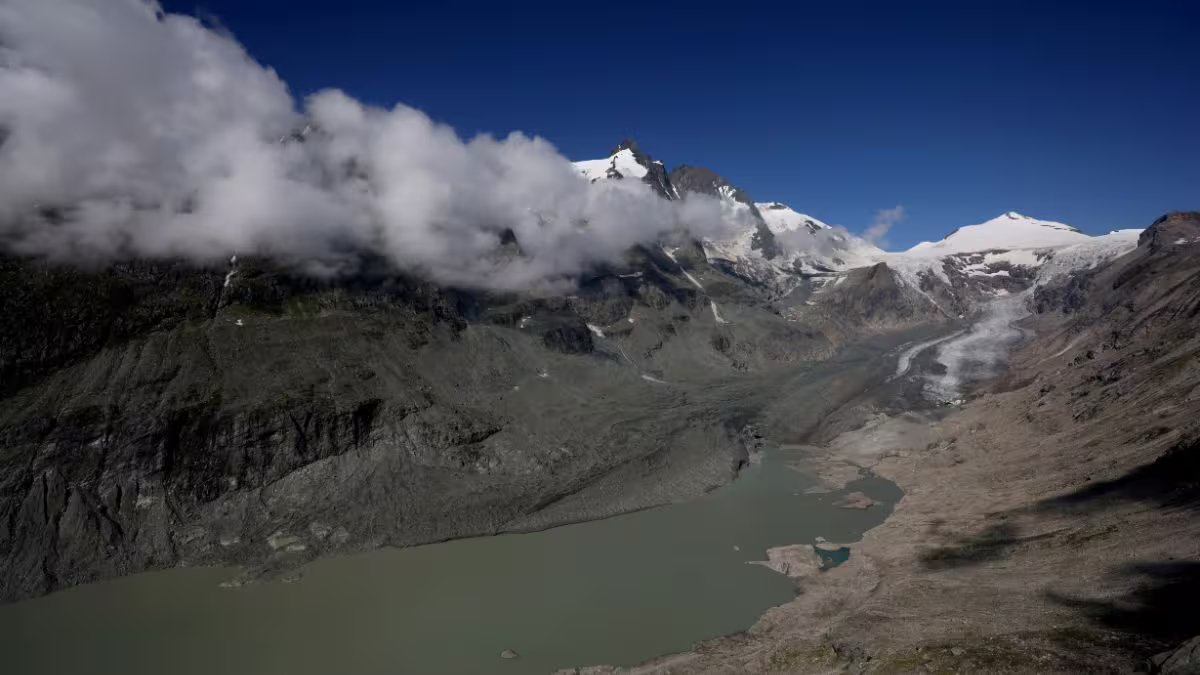
An Austrian court late Thursday convicted an experienced mountaineer of gross negligent manslaughter following the death of his partner during a winter ascent of the country’s highest peak in January 2025.
The case centres on a fatal climb on Grossglockner, the European nation’s highest mountain at 3,798 metres.
The defendant, identified only as Thomas P in accordance with Austrian privacy laws, stood trial at Innsbruck Regional Court, which found him guilty of gross negligent manslaughter in connection with the death of his 33-year-old girlfriend, Kerstin G.
What happened during the climb?
Court records and testimony outlined how Thomas P and Kerstin G set out early on January 18, 2025, attempting a winter ascent of Grossglockner via the Studlgrat route.
This line, described during the proceedings as technically demanding and suitable only for climbers with strong fitness levels and rock-climbing ability, required careful planning in winter conditions.
The route choice became central to the prosecution’s case, which argued that the defendant, as the more seasoned alpinist who organised the tour, bore responsibility for evaluating whether the conditions and his partner’s experience were compatible with a safe attempt.
According to analysis by CNN, the couple began their climb at 6:45 am. By 1:30 pm, they had reached Frühstücksplatzl, commonly referred to as the “breakfast spot”, identified in court as the last realistic turnaround point before the summit ridge.
According to a written statement Thomas P provided to prosecutors, both climbers recognised this location as the “point of no return” and decided to continue despite the knowledge that retreat would become increasingly complex as daylight faded and weather conditions deteriorated.
Prosecutors later argued that the decision to push on from this point represented a critical error, given the winter setting and the physical demands of the remaining sections of the route.
As the afternoon gave way to evening, conditions on the mountain worsened. The prosecution presented evidence that strong winds intensified and temperatures dropped sharply.
Winds were later measured at speeds reaching up to 74 km/h, with ambient temperatures of -8°C translating into a windchill effect of around -20°C.
The defence acknowledged the severity of the weather but maintained that the couple believed themselves to be sufficiently prepared and equipped for a night-time summit push, having planned the outing together.
Stranded
The court heard that by approximately 8:50 pm on January 18, the pair were effectively stuck on the mountain. Prosecutors described this moment as the point at which emergency services should have been alerted without delay.
Evidence presented showed that at around 10:50 pm, a police helicopter passed overhead. Video footage and later courtroom analysis confirmed that no distress signals were sent from the climbers at that time.
Webcam images captured lights from their headlamps as they continued moving along the route, suggesting that both were still attempting to progress despite the increasingly hostile conditions.
Rescue services attempted to reach Thomas P by phone later that night, but several calls went unanswered. The prosecution argued that these missed contacts further reduced the chances of an early intervention that could have altered the outcome.
According to the state’s case, the defendant failed to make use of opportunities to summon assistance during a critical window when aerial support might still have been feasible.
At 12:35 am on January 19, Thomas P spoke with mountain police. The content of this call became a point of dispute in court. Prosecutors said it was unclear whether the conversation amounted to a genuine emergency alert, noting that subsequent attempts by police to reconnect were unsuccessful.
They claimed that the defendant silenced his phone after the call, preventing further contact.
The defence rejected the suggestion that he downplayed the seriousness of the situation, arguing that he did ask for help and that he had not noticed earlier missed calls because his phone’s vibration alert was faint.
Separation & death
As the night progressed, Kerstin G’s physical condition deteriorated. According to the defence, she became severely fatigued close to the summit and could no longer continue.
The defence maintained that she urged Thomas P to go ahead to seek help, believing that this would offer the best chance of rescue.
Prosecutors, however, contended that she was left in an exposed position roughly 50 metres below the summit around 2:00 am, already hypothermic and without adequate protection from the cold and wind.
The prosecution also argued that Thomas P did not take sufficient steps to reduce further heat loss before leaving, such as locating a more sheltered position or setting up emergency protection.
They said he failed to deploy a bivouac or emergency blanket to shield her from the elements.
According to their account, he then continued over the summit and descended the other side, a route choice that increased the time before rescuers could be directed to her precise location.
Webcam images presented in court showed the defendant’s headlamp descending from the summit ridge after the separation. Emergency services were formally notified later in the early hours, with prosecutors stating that a clear emergency call was not made until around 3:30 am.
By the time rescuers reached the area the following morning, Kerstin G had already died from exposure.
Alpine rescue teams located her body at around 10:10 am on January 19. According to testimony referenced during the trial, her body was found suspended upside down from a rock face.
One rescuer told the court:,“We were amazed that she remained in that position,” adding that if wind conditions had been stronger, “she would have fallen over the south face.”
What did the investigation find?
Forensic pathologist Claudia Wöss provided expert evidence regarding the cause of death. She confirmed that Kerstin G died of hypothermia. Her examination also found traces of viral pneumonia and the painkiller ibuprofen in the victim’s body.
Wöss told the court that it was not possible to determine whether illness had significantly reduced Kerstin G’s physical capacity during the climb or whether it contributed to a sudden decline in her condition near the summit.
The forensic testimony added nuance to the reconstruction of events, highlighting uncertainties about how underlying health factors might have interacted with the extreme cold and exertion.
The prosecution did not allege that illness alone caused the fatal outcome. Instead, they argued that the combination of severe weather, prolonged exposure, exhaustion, and delayed rescue measures proved lethal.
The defence, while acknowledging the forensic findings, said they illustrated how multiple factors can converge unpredictably in alpine environments, complicating assessments of individual responsibility after the fact.
What did the prosecution say?
State prosecutors in Innsbruck charged Thomas P with grossly negligent homicide, asserting that his experience in high-altitude alpine tours placed him in the role of the de facto leader of the climb.
They argued that this status carried a duty to prioritise safety decisions, including turning back when conditions and a partner’s physical limits made continuation unsafe.
According to the prosecution, he failed in that duty by pressing on from the “point of no return”, by not calling for rescue services promptly when the pair became stranded, and by neglecting to signal to the helicopter that flew overhead.
They also accused him of inadequate preparation, including not carrying suitable equipment for an unplanned overnight emergency in winter conditions. The prosecution said that as the more skilled climber, he should have recognised earlier that the combination of strong winds, sub-zero temperatures and his girlfriend’s relative inexperience created unacceptable risk.
They told the court that he “should never have allowed himself to get into this situation,” arguing that each missed opportunity for retreat or rescue compounded the danger until escape was no longer possible.
The court also heard from Andrea B, a former partner of Thomas P, who described a prior incident during a 2023 climb on Grossglockner. She told the court that she had been left alone on the mountain when she became dizzy and her headlamp stopped working.
According to her testimony, she was crying and calling out when Thomas P walked ahead and disappeared from view. Prosecutors cited this account as evidence of a pattern of decision-making that prioritised summit ambitions over the immediate safety of companions.
The defence did not dispute that the earlier climb had been difficult but argued that circumstances varied between expeditions and that the previous incident did not prove criminal intent in the 2025 case.
What did the defence say?
The defence presented a markedly different interpretation of events. Thomas P pleaded not guilty and expressed deep remorse, saying he loved his girlfriend and that their plan to climb had been mutual.
His lawyer, Kurt Jelinek, told the court that the couple had prepared together and believed themselves to be adequately equipped.
He described the situation on the mountain as “hopeless” once conditions deteriorated, arguing that decisions were made under immense psychological and physical strain.
Jelinek disputed claims that Kerstin G lacked experience, saying she understood the nature of the climb and had been active in mountaineering for years.
Her parents supported this view in court, describing their daughter as “really active” in the sport since 2020 and rejecting the idea that she would have blindly followed her partner into danger.
Her mother told the court that her daughter often undertook hikes after dark and that the pair had suitable equipment for night climbing.
Regarding the disputed phone calls, the defence said Thomas P did ask for assistance during the 12:35 am conversation with mountain police and that he did not intentionally silence his phone to avoid contact.
According to Jelinek, his client only noticed missed calls when he took out his phone to arrange for a helicopter rescue after his girlfriend’s condition worsened. The defence maintained that when he left her near the summit, he believed that seeking help as quickly as possible offered the best chance of survival.
How did the court reach its verdict?
The court delivered its judgement, finding Thomas P guilty of gross negligent manslaughter. He was sentenced to five months in prison, suspended, and fined €9,600.
In a statement sent to the BBC, the court said it had taken into account mitigating factors, including the defendant’s previously clean record and the personal loss he had suffered through the death of his partner.
The court also noted the impact of intense online scrutiny, stating that the “public discussion on social media, which was incriminating for the defendant,” had been considered in mitigation.
Judge Norbert Hofer, who has professional experience working with mountain and helicopter rescue teams in Tyrol, told the court that Thomas P was an accomplished alpinist, while Kerstin G’s abilities were “light-years behind him” in technical terms.
He said the pair should have turned back earlier because she lacked sufficient winter climbing experience. At the same time, Hofer rejected the notion that the defendant had deliberately abandoned his partner, saying, “I don’t see you as a murderer, I don’t see you as cold-hearted.”
The ruling concluded that while Thomas P had gravely misjudged the situation and failed in his duty of care, his actions did not amount to intentional wrongdoing.
The judgement is subject to appeal.
With inputs from agencies
End of Article