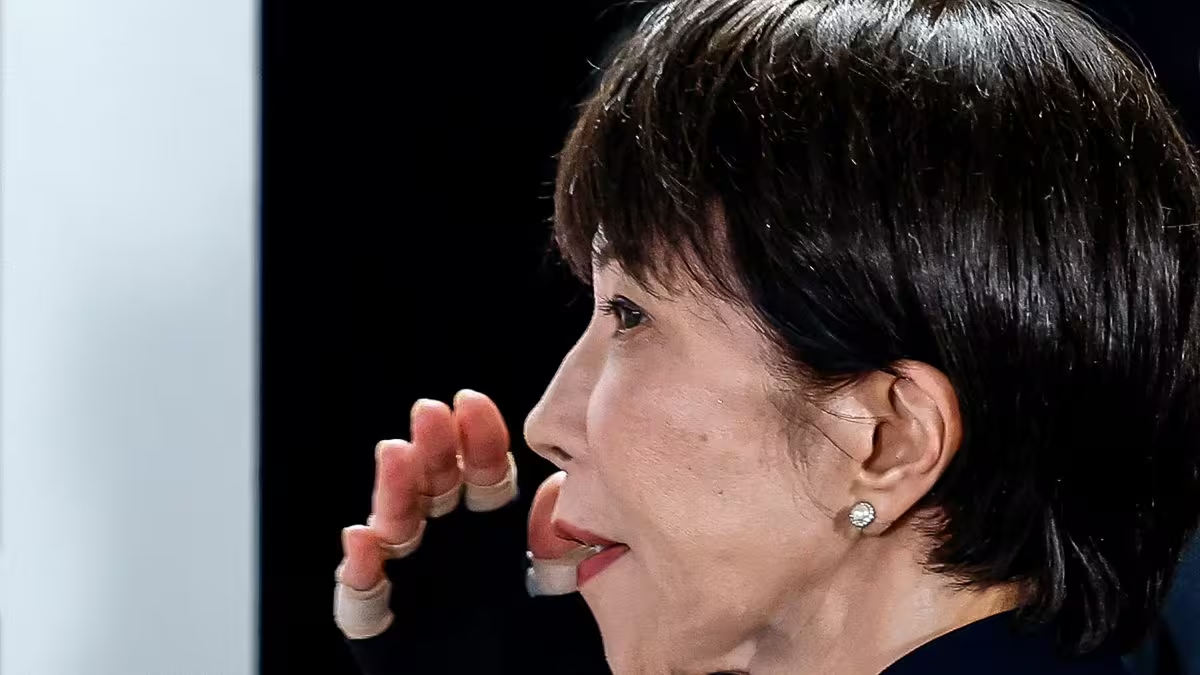
Prime Minister Sanae Takaichi secures a historic two-thirds supermajority, empowering her “Iron Lady” agenda of aggressive tax cuts and military expansion after a high-stakes election gamble pays off
Japanese Prime Minister Sanae Takaichi has officially cemented her status as a political powerhouse, securing a decisive legislative supermajority alongside her ally, the Japan Innovation Party (Ishin), following Sunday’s snap election.
The Liberal Democratic Party (LDP) achieved a postwar record of 316 seats, giving Takaichi the two-thirds “supermajority” she needs to dominate the Diet and potentially bypass the opposition-controlled Upper House.
A mandate for economic and defence overhaul
This win provides the
ultimate political backing for Takaichi’s aggressive fiscal policies, known as “Sanaenomics.” Voters have effectively endorsed her plan to revive growth through expansionary spending, most notably her high-profile pledge to suspend the 8% consumption tax on food for two years.
Plus, the result acts as a public seal of approval for her assertive “Peace Through Strength” stance toward China. With this mandate, Takaichi is now positioned to accelerate military spending and pursue her long-held goal of constitutional reform.
But the snap election wasn’t a walk in the park for Takaichi. The election was a massive gamble when she announced it in January.
Having only taken office in October 2025 to rebuild the LDP’s standing after Shigeru Ishiba’s resignation, she called for the rare winter vote while riding a wave of personal popularity. Critics initially slammed the move, accusing her of political opportunism and straining ties with a Beijing that had already been showing increased aggression in the South China Sea and the North Pacific.
Global alliances and failed isolation
The run-up to the vote unfolded amid a flurry of behind-the-scenes international diplomacy.
In the days leading up to the vote, Donald Trump fully endorsed Takaichi, emphasising a strong US-Japan alliance as a key counterbalance to China’s Taiwan policies. After her win, he congratulated her on social media, wishing her “great success in passing your Conservative, Peace Through Strength Agenda.”
I am sincerely grateful to President Donald J. Trump for his warm words.
I look forward to visiting the White House this spring and to continuing our work together to further strengthen the Japan–U.S. Alliance.
Our Alliance and friendship with the United States of America are… pic.twitter.com/W0pZSvohvx— 高市早苗 (@takaichi_sanae) February 9, 2026
Beijing, meanwhile, had attempted to diplomatically isolate Takaichi following her supportive comments toward Taiwan’s sovereignty. In fact, it held an unusual meeting with Southeast Asian envoys last week, in an attempt to rally regional backing against Japan.
According to multiple sources cited by the South China Morning Post, China invited most Southeast Asian ambassadors or their deputies, presenting the gathering as an opportunity to hear the region’s perspective on Takaichi’s remarks.
During the session—led by a deputy director-general level official—China reportedly pressed individual countries to align with its stance on the Japanese prime minister’s comments. Attendees were told that Southeast Asian nations should side with Beijing, as they were allegedly victims of Japanese aggression during World War II.
However, with the LDP’s landslide win, China’s strategies to corner Japan appear to have backfired.
End of Article