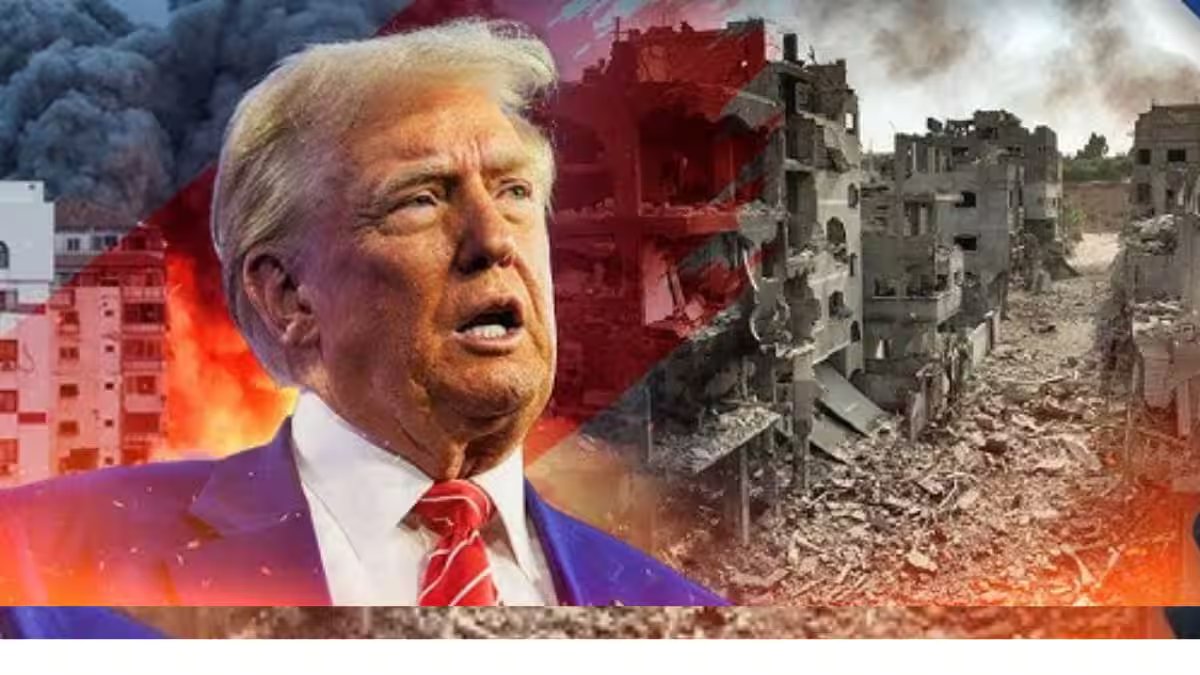
Governments reacted cautiously to Donald Trump’s invitation to join a new ‘Board of Peace’, with diplomats warning it could undermine the United Nations as questions grow over its mandate, funding structure and global ambitions beyond Gaza.
Governments across Europe and beyond are weighing US President Donald Trump’s proposed “Board of Peace” with visible caution as diplomats warn the initiative risks sidelining the United Nations and redefining global conflict management around a personalised US-led structure. While Trump pitches the board as a bold corrective to what he calls ineffective international institutions, critics see a parallel power centre that challenges the UN’s legitimacy, norms and authority.
Cautious responses and quiet alarm among allies
Invitations to join the Board of Peace began landing in European capitals over the weekend, addressed to around 60 countries. The response so far has been telling. Hungary, led by one of Trump’s closest allies in Europe, offered an unequivocal acceptance. Most others have either hedged or stayed silent with officials choosing anonymity to voice concerns about the implications for the UN system.
Italy’s Prime Minister Giorgia Meloni, speaking during a visit to South Korea said Rome was “ready to do our part”, without clarifying whether that support was limited to the Gaza ceasefire framework or extended to Trump’s broader vision. Canadian Prime Minister Mark Carney said he had agreed “in principle” to the Board of Peace’s role in Gaza, stressing that details were still under discussion.
Behind the public caution lies sharper unease. The invitation letter and a draft charter, seen by diplomats, outline a body chaired for life by Trump, initially focused on the Gaza conflict but designed to expand into other global disputes. Member states would serve three-year terms unless they paid $1 billion to secure permanent membership, a provision that has raised eyebrows across Western capitals.
One diplomat summed up the anxiety bluntly, calling it “a Trump United Nations that ignores the fundamentals of the UN Charter”. Several Western diplomats warned that, if implemented, the board could directly undermine the UN by drawing political authority, funding and legitimacy away from multilateral institutions painstakingly built over decades.
A rival architecture to multilateral diplomacy?
Trump has been explicit about his ambitions. In comments and in the charter document, the board is framed as a “more nimble and effective international peace-building body”, implicitly contrasting itself with the UN, which Trump has repeatedly accused of obstructing or failing his peace initiatives. The charter argues that durable peace requires “pragmatic judgment” and the “courage to depart from approaches and institutions that have too often failed”.
Formally, however, the board’s mandate has only been authorised through 2027 by the UN Security Council and is limited to the Gaza conflict. Diplomatic sources and an Israeli official say Trump nonetheless wants the body to evolve into a wider conflict-management mechanism covering disputes he claims to have resolved or could address in future.
That prospect is precisely what troubles many governments. The UN General Assembly president, Annalena Baerbock, avoided directly criticising the plan but warned starkly that the UN remains the only institution with the moral and legal capacity to bring together all nations. Questioning that role, she said, risks plunging the world into “very, very, dark times”.
The structure of the board has added to the controversy. The White House has named figures such as US Secretary of State Marco Rubio, Trump’s special envoy Steve Witkoff, former British prime minister Tony Blair and Trump’s son-in-law Jared Kushner. The list includes no Palestinians, despite Gaza being the board’s starting point. For critics, that reinforces perceptions of a top-down, power-driven model rather than inclusive diplomacy.
Gaza as test case for trump’s global peace ambitions
The immediate focus of the Board of Peace is Gaza, where Israel and Hamas have signed off on Trump’s plan for a transitional technocratic Palestinian administration overseen by an international board. A separate 11-member “Gaza Executive Board” is intended to support day-to-day governance, with figures from Turkey, the UN, the UAE, Qatar and elsewhere.
Even here, tensions are evident. Israeli Prime Minister Benjamin Netanyahu’s office said the composition of the executive board had not been coordinated with Israel and contradicted its policy, particularly objecting to Turkish involvement and expressing discomfort with Qatar’s role.
Beyond geopolitics, rights groups and analysts argue that the model itself is deeply problematic. A foreign-led board supervising the governance of a territory, chaired by a sitting US president, has been likened to a colonial arrangement. Tony Blair’s involvement has also drawn criticism, given his role in the Iraq war and Britain’s imperial history in the West Asia.
Trump, who has openly expressed his desire for a Nobel Peace Prize, insists the board will be “one of a kind”. Yet as governments calculate their responses, the broader question remains unresolved: whether this experiment represents an innovative shortcut to peace, or a unilateral challenge that fractures the already strained architecture of global multilateralism. For now, the uneasy silence from most capitals suggests the latter fear is gaining ground.
End of Article