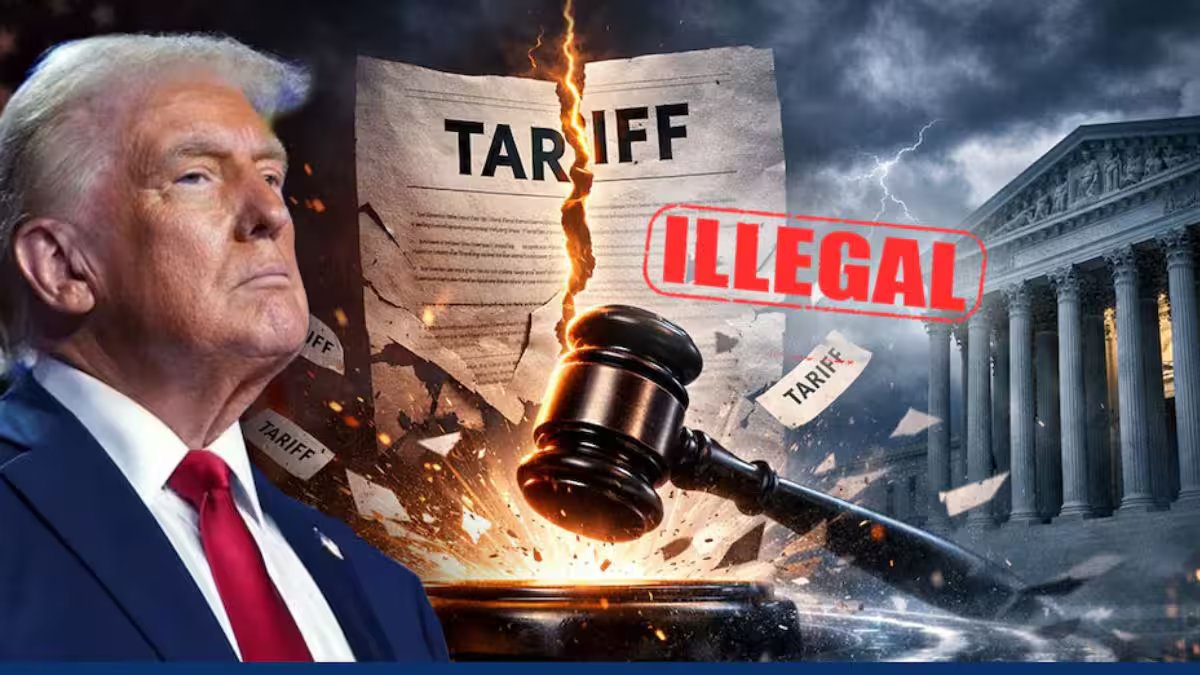
World leaders assess Washington’s next steps after the US Supreme Court struck down Trump’s sweeping tariffs, raising uncertainty over refunds, trade negotiations and the direction of American economic policy.
The global trade order was sent into a tailspin this weekend following a stinging 6-3 US Supreme Court ruling that struck down President Donald Trump’s sweeping “reciprocal” tariffs.
For over a year, Washington had used the International Emergency Economic Powers Act (IEEPA) as a blunt instrument to extract concessions from nearly every major trading partner. However, with the court ruling that the President exceeded his constitutional authority, the leverage that once defined second-term “Trumpism” has effectively evaporated overnight.
World leaders from New Delhi to Brussels are now frantically scoping out the Biden-era laws Trump is dusting off to fill the void. While the ruling offers a momentary reprieve, it has paradoxically triggered a “murky water” period for global businesses. The immediate focus has shifted to the White House’s rapid pivot to Section 122 of the 1974 Trade Act, a move that allows for a temporary 10% global tariff to address balance-of-payment issues, albeit with a 150-day expiration date.
Allies weigh stability versus strategy
In Brussels, London and New Delhi, officials are assessing the implications for trade talks and supply chains already strained by years of tariff disputes. For the European Union and the United Kingdom, the court’s decision offers a potential opportunity for renewed engagement with Washington but without guarantees of stability.
Even with the tariffs struck down, uncertainty lingers. Legal experts note that alternative statutory provisions could allow the US administration to impose narrower duties, sustaining leverage in trade negotiations. That possibility has prompted governments to adopt a wait-and-watch approach rather than celebrate the ruling as a definitive turning point.
India, meanwhile, faces a complex calculus. While the invalidation of broad tariffs may ease pressure on exporters in the short term, policymakers remain alert to the possibility of revised measures that could target specific sectors. Trade diplomacy, therefore, continues under a cloud of unpredictability.
Businesses brace for ‘murky waters’
For multinational firms, the aftermath may prove more complicated than the ruling itself. Companies must now navigate questions surrounding tariff refunds, compliance adjustments and shifting cost structures. Some sectors that reconfigured supply chains in response to earlier duties are unlikely to immediately reverse course, given the risk of new policy shifts.
The mechanics of issuing refunds present another layer of challenge. Determining eligibility, calculating reimbursements and resolving disputes could stretch administrative systems and prolong uncertainty. For businesses that passed tariff costs on to consumers, the question of who ultimately benefits from potential refunds remains politically sensitive.
Market analysts caution that the verdict, while legally significant, does little to restore full clarity to the global economic outlook. Investors remain wary of abrupt policy shifts, particularly if Washington attempts to reassert trade restrictions through alternative mechanisms.
A broader signal for global trade
The ruling also carries symbolic weight. By limiting executive authority over sweeping trade measures, the court has reaffirmed the centrality of legislative oversight in US tariff policy. For trading partners, that institutional check may provide some reassurance though practical effects will depend on how Congress and the administration respond.
Ultimately, global leaders are less concerned with the legal reasoning than with the strategic direction it heralds. Will Washington pursue a more predictable, rules-based trade framework, or will protectionist instincts re-emerge in another form?
As capitals from Europe to Asia reassess their diplomatic and economic strategies, one conclusion is clear: the immediate legal defeat may not mark the end of America’s tariff era, but rather the beginning of a new phase defined by recalibration, negotiation and continued uncertainty.
With inputs from agencies
End of Article