
President Donald Trump promised a bumper year for the US economy in 2026, but six key indicators — including job losses, rising gas prices and stock declines — suggest a more complex reality.
 1 / 7
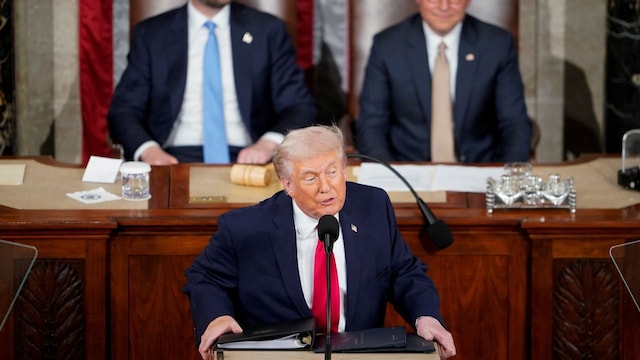
1 / 7President Donald Trump promised that 2026 would bring rapid economic growth in the United States. But recent data on jobs, fuel prices and financial markets paints a more complicated picture, according to an analysis by the Associated Press. Less than two weeks ago, during his State of the Union address, Trump declared that the “roaring economy is roaring like never before.” However, a series of economic indicators released since then highlight areas of concern even as the White House argues that stronger growth is still ahead. Here are six key data points shaping the debate about the US economy in 2026. (Image: Reuters)
 2 / 7
2 / 71. Job Losses Mark a Weak February: The latest employment report showed 92,000 jobs were lost in February, the AP reported, citing revised figures from the Labour Department. Earlier figures were also revised downward. December’s employment data, previously thought to show growth, was adjusted to reflect a loss of 17,000 jobs. Economists note that monthly employment data can fluctuate, but the latest figures suggest the labour market may be softening after a period of stronger hiring. (Image: Canva)
 3 / 7
3 / 72. Rising Unemployment Among US-Born Workers: The unemployment rate among workers born in the United States has edged higher over the past year. According to the latest data, the rate has risen from 4.4% to 4.7%. The increase challenges one of Trump’s long-standing arguments that stricter immigration policies would lead to more jobs for US-born workers. (Image: Canva)
 4 / 7
4 / 73. Gas Prices Surge Amid Iran Conflict: Fuel prices have risen sharply following the military conflict involving the United States and Iran that began on February 28. According to the American Automobile Association, the national average price of gasoline has climbed 19% over the past month to $3.45 per gallon. Analysts warn that prolonged instability in the region could push energy prices even higher. (Image: Canva)
 5 / 7
5 / 74. Stock Market Loses Momentum: The Dow Jones Industrial Average, one of Trump’s preferred measures of economic success, has dropped about 5% over the past month. The decline follows earlier gains that pushed the index to record levels. Market performance remains closely tied to investor expectations around corporate earnings and geopolitical developments. (Image: Canva)
 6 / 7
6 / 75. Productivity Is Rising — But Workers May Not Benefit: There are still bright spots in the economic data. US labour productivity — a measure of how much value workers produce per hour — increased 2.8% in the fourth quarter, according to the United States Department of Labor. Higher productivity can support long-term economic growth, although economists caution that gains do not always translate into higher wages. (Image: Canva)
 7 / 7
7 / 76. Economic Growth Trails the Previous Year: Gross domestic product (GDP) growth in 2025 reached 2.2%, according to government data. That is slightly below the 2.8% growth recorded in 2024 during the final year of the administration of former President Joe Biden. Inflation, measured by the Federal Reserve’s preferred gauge — the personal consumption expenditures index — stood at 2.6% in both 2024 and 2025, suggesting price pressures have remained relatively stable. (Image: Canva)