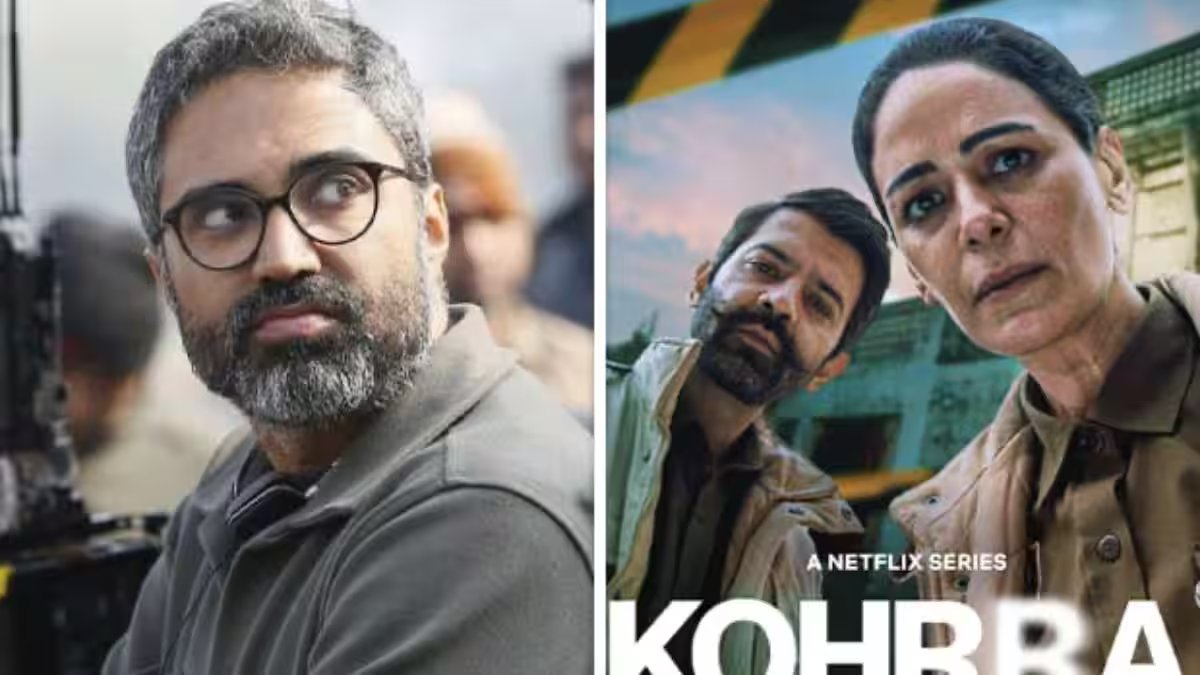
In an EXCLUSIVE interview with Firstpost’s Lachmi Deb Roy, Sudip Sharma and Tanya Bami talk about Netflix’s show Kohrra 2.
The best thing about Netflix’s Korra is that it peels each layer with care and doesn’t come to any rushed conclusion. The show highlights important issues and emphasises on the fact that in some villages, slave trade and bonded laborers still exist. In the entertainment industry, which celebrates noise over nuance, this is one such show that one would like to come back to for its magical silence, which speaks louder than cacophony. In fact, it is fantastic to return to the fog and is truly laudable!
In an exclusive conversation with Firstpost, Sudip Sharma and Tanya Bami talks about the process of making the second season by not resting much on its laurels.
Edited excerpts from the interview:
**Sudip, what was the thought that went behind the making of Kohrra 2 so that the characters evolve? There are a few characters that we miss in this season though.
**
Sudip Sharma: The idea was to start with a fresh slate. We didn’t want to bank on the laurels of the first season in any form. We wanted to tell a new story all over again. And that’s why some of the characters had to go because we ran out of stories for them. Kohrra is an investigative drama, it’s equally about their relationships with each other. So that was the approach with which we started the writing of the second season. The only characters that made it to season two were the ones who we felt had their journey still left.
With Dhanwant’s (Mona Singh) character, there was someone entirely new walking in with her own set of problems, issues and challenges. There was a journey possible with this character as well. The idea was to go on a fresh story and watch it unfold through their eyes.
Kohrra is coming back with another season after more than two years. Did you expect this kind of response when you made it for the first time?
Sudeep: You always hope for that when you put your heart and soul in a new story. Sometimes it comes through and sometimes it doesn’t. It was very rewarding the first time around as well- that sort of appreciation. We also had the support of the platform that there would be another season and we were allowed to go on this journey one more time.
Tanya, what do you have to say about doing a very hyper-local story, completely about the village of Punjab?
Honestly, Netflix comes out with very different content every year.
So, what went behind it? Was it a conscious decision to keep it hyperlocal by going to the villages of Punjab?
Tanya: So, it’s really important for us that the stories resonate locally. That’s really the cornerstone of our strategy in that sense. But I think there are two aspects to this. One is, of course, our creator, Sudeep, he’s very clear about needing this to resonate in an authentic fashion locally, for it to feel like it belongs within the world that he’s creating. I think we have had a lot of discussions about is that limiting or is that additive? And these are meaningful discussions for us to have between, I think, the art and the commerce of it all to really see how we land with his vision, what the clarity that he’s sort of hitting out with.
It’s also a very exciting risk for us to take in that sense. But I think what our aspiration is that every story that we create goes as far and wide as possible.
Tanya, what do you have to say about the way women’s roles have changed, especially post OTT? They are no longer ornamental.
Instead of looking at it as such, in a very exclusive way, I would normalise it, and I think one of the best things that I find at a personal level about Kohrra is that the representation is equal. I don’t think it is about being a female forward story or a story skewed towards male. I feel like across our slate, if we are able to actually balance the narratives, if we are able to really bring forth both ends of the spectrum in the same story or varied, I think it’s really about not making it exclusive because I think with exclusivity, it feels like a demand, but whereas if it is a yin and a yang, then the representation should be just equal and that should be the norm.
End of Article