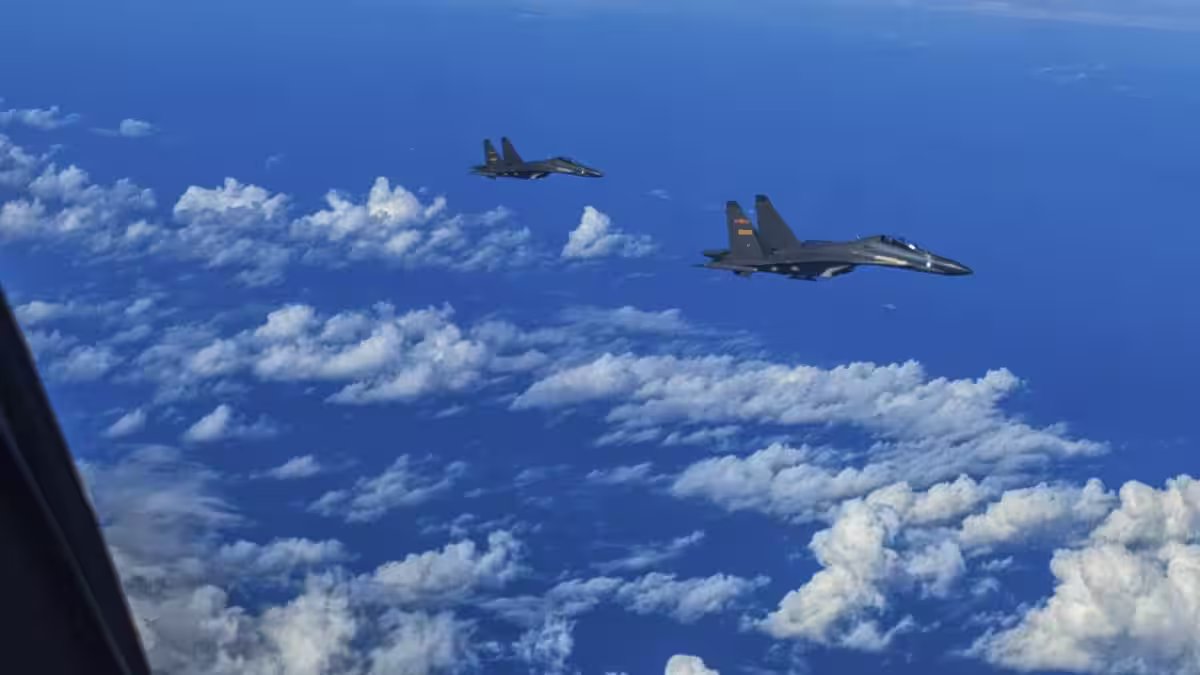
In a sharp break from its monthslong pattern, China has not mounted provocative aerial missions toward Taiwan for nine of the past 10 days, leaving the self‑ruled island puzzled by the sudden drop in aircraft activity.
In a sharp break from its monthslong pattern, China has not mounted provocative aerial missions toward Taiwan for nine of the past 10 days, leaving the self‑ruled island puzzled by the sudden drop in aircraft activity.
China claims of Taiwan as a breakaway province and is committed to annex it — forcefully if required. Under Xi Jinping, China has become much more aggressive toward Taiwan, mounting frequent aerial incursions and conduct regular drills that simulate attacks on the self-ruled island.
For the past several months, China had ramped up provocative aerial incursions and naval manoeuvres around the island.
But, since February 28, China has only moved two aircraft near the island in one instance, according to an AFP tally based on Taiwanese defence ministry’s data.
For comparison, China moved 86 aircraft in the 10-day period last year.
As per the AFP, Chinese military flights around Taiwan fell 42 per cent year-on-year in January and February.
In what has puzzled observers more, the drop has not been witnessed in warships’ movement around Taiwan. The news agency reported that an average of six Chinese warships have been spotted daily around the island in the past 10 days — the same as last year.
Lack of explanation is alarming, say experts
The timing of the drop has added to the intrigue. In addition to the US-Israeli war on Iran, the drop has occurred around the time of China’s annual ’two sessions’ conference and ahead of US President Donald Trump’s visit to China on March 31-April 2.
In an article on Substack, Drew Thompson, a Senior Fellow at Singapore’s S Rajaratnam School of International Studies noted that he did not expect to be worried about the cessation of Chinese operations around Taiwan, but the lack of a rational explanation is disconcerting.
A longtime observer of the Chinese military told AFP that it was “not clear at all how to read it” and the situation was “puzzling”.
Ben Lewis of the analysis website PLATracker told the news agency it was “clearly a significant disruption to routine activity”.
“The longer the activity gap persists, the more concerned I will be about broader implications, but I have not seen any indications that the PRC [People’s Republic of China] is preparing for any major kinetic action,” Lewis further said.
At a time when Taiwanese President Lai Ching-te has proposed hiking defence spending by $40 billion, the drop could be a ploy to weaken the public support for such defence spending, according to Su Tzu-yun, a military expert at Taiwan’s Institute for National Defense and Security Research.
A Taiwanese official supported the argument, saying that China may be trying to “create a false impression that China is easing its threats against Taiwan in order to deceive the US into reducing its support for Taiwan’s security”.
“We must not let our guard down,” the official warned.
But there were also explanations for the development.
Brian Hart, Deputy Director of the China Power Project at the Center for Strategic and International Studies (CSIS) noted on X that Chinese incursions into Taiwan’s air defence identification zone (ADIZ) drop to near zero levels around the time of the annual two sessions conference every year.
“If this pattern persists well beyond the two sessions, then it would be unusual. But I don’t think there’s evidence of anything unusual yet,” Hart said.
End of Article