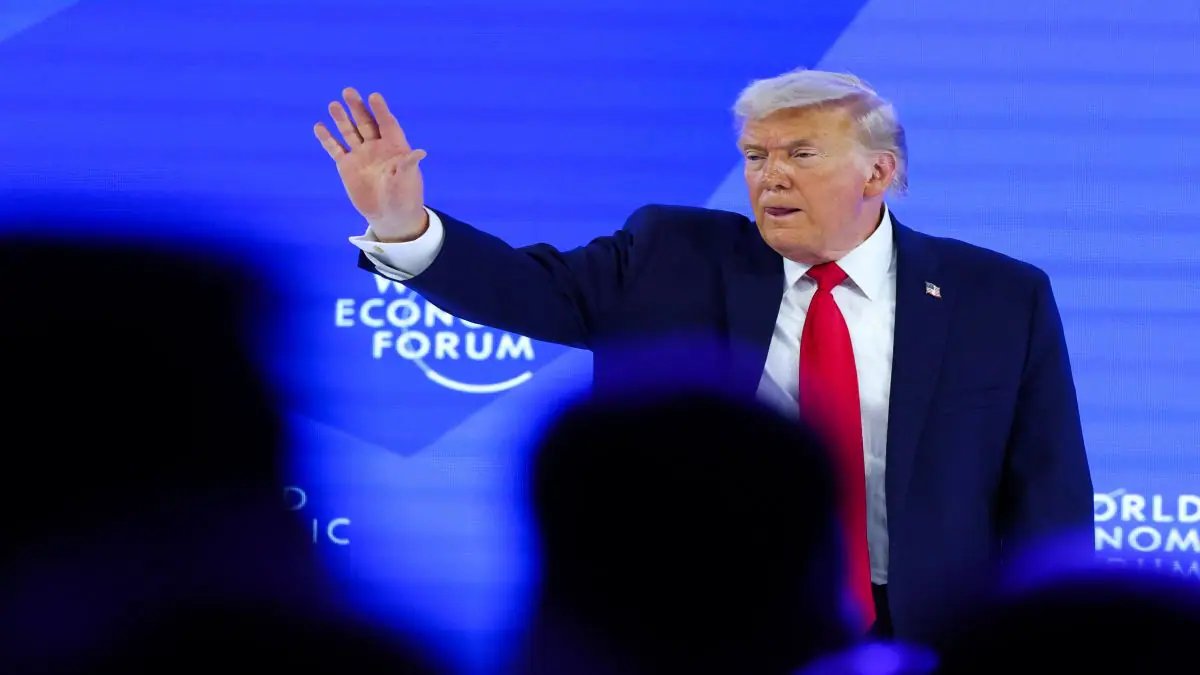
Roughly $9 trillion of US debt is held abroad, raising concerns over exposure as global market nerves grow
The United States’ heavy dependence on foreign financing is facing renewed scrutiny amid rising geopolitical tensions and growing unease among global investors over President Donald Trump’s policy posture, according to reports by Reuters and the South China Morning Post (SCMP).
The US owes around $9 trillion to foreign creditors, a level some analysts have described as an “enormous vulnerability” for Washington, especially as several major economies find themselves at odds with Trump’s increasingly confrontational foreign policy agenda.
Investor nerves have been rattled in recent months by Trump’s remarks on Greenland and renewed tariff threats against allies and rivals alike—moves that critics argue risk destabilising the existing global order. Market participants say these developments are prompting a reassessment of US assets, long regarded as the world’s safest haven.
Signs of caution are already emerging. Denmark’s largest pension fund has sold roughly $100 million worth of US Treasury bonds, a move it said was driven by portfolio considerations rather than politics. At the same time, bond giant PIMCO has begun pivoting away from US assets, citing concerns over valuations and policy uncertainty, according to people familiar with its strategy.
Trump’s repeated public attacks on Federal Reserve chair Jerome Powell have further unsettled investors, raising questions about central bank independence—another cornerstone of confidence in US financial markets.
China and economists raise red flags
Concerns over America’s fiscal trajectory have also been voiced openly in China. Huang Yiping, an adviser to the People’s Bank of China, warned this week that the US debt burden may be on an unsustainable path.
“I’ve heard so many people telling me that [debt] as a share of GDP has been rising and probably will continue to rise. That’s probably not sustainable,” Huang said at an academic forum on the Chinese and American economies organised by the East Asian Institute at the National University of Singapore.
Huang added that the current institutional setting in the US and the style of presidential policymaking made meaningful fiscal discipline unlikely in the near term .
Speaking at the same forum, Harvard economist Jason Furman said the US fiscal outlook was “clearly too large” in deficit terms and that the debt trajectory was increasingly “unsustainable.”
Furman noted that if Washington were to rein in its budget deficit, about half of the adjustment would likely show up in the current account. Otherwise, raising savings or curbing imports would require weaker economic activity, he said.
According to data from the US Congress Joint Economic Committee, total US government debt rose to $38.4 trillion by the end of 2025, up about $2.23 trillion from a year earlier. Despite the scale, Furman noted that neither voters nor policymakers appear particularly alarmed.
China, one of the world’s largest holders of US government debt, has also been trimming exposure. Its holdings fell to $682.6 billion in November, the lowest level since 2008, down from $688.7 billion in October. China slipped to third place among foreign holders in March, behind Japan and the United Kingdom, continuing a gradual decline that began during Trump’s first term.
“The United States is an enormous debtor country,” he said. “China is, at least on a flow basis annually, a growing, enormous creditor country with that growing.”
For global investors, Trump’s policy unpredictability, rising US debt, and mounting geopolitical frictions are strengthening the argument for greater diversification away from US assets. While the dollar and Treasuries remain dominant, recent developments suggest that confidence long assumed to be unconditional is increasingly being tested, analysts told Reuters.
End of Article