The Delhi-Meerut Namo Bharat corridor is set to become fully operational, cutting travel time between Sarai Kale Khan in New Delhi and Modipuram in Meerut to under 50 minutes.
The final leg will be inaugurated by
Prime Minister Narendra Modi on Sunday, February 22. Once opened end to end, the 82 km corridor will be India’s first fully functional Regional Rapid Transit System, designed for high-speed, high-frequency regional travel across NCR.
Firstpost joined a media preview run on the corridor to understand how the system works, what commuters will experience and how it changes the everyday Delhi-Meerut commute.
What sections are now ready?
Two final stretched complete the complete the corridor. The first is the 5 km section between Sarai Kale Khan and New Ashok Nagar in
Delhi. The second is the 21 km stretch from Meerut South at Partapur Tiraha to Modipuram.
With these sections operational, Namo Bharat services will run seamlessly across the entire entitlement for the first time
As per National Capital Region Transport Corporation, the Delhi Metro RRTS, or Namo Bharat trains, will significantly help people by providing high-speed (up to 160 km/h) safe, and comfortable intercity commuting, reducing travel time between Delhi and NCR cities like Meerut to under an hour.
It enhances regional connectivity, improves access to employment and education, and helps reduce road congestion and air pollution.
The journey begins much like a
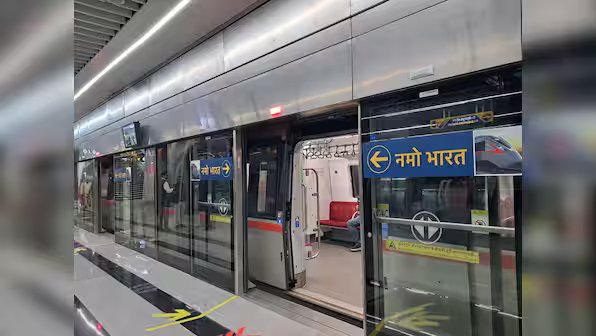
metro ride. Stations are enclosed and secured, with baggage scanners and electronic fare gates that accept QR tickets and NCMC cards.
Platforms are fitted with screen doors that open when the train arrives.
Once onboard, the difference is immediate. The coaches are spacious and well lit, with wide seating, ample legroom and smooth acceleration even at high speeds. The ride feels stable throughout with minimal vibration or noise.
Standard coaches balance seating and standing space, while business class coaches offer a more premium layout.
Vending machines, charging ports and comfortable chairs add to the comfort. This makes the journey suitable for both daily commuters and longer distance travellers.
Namo Bharat is transforming regional travel by making commutes faster, safer, and more comfortable for thousands of passengers every day.
By bringing people & places closer, reducing travel time, and offering a reliable, modern transit experience, Namo Bharat is improving the…— National Capital Region Transport Corporation Ltd. (@officialncrtc) February 17, 2026
What to expect when the services begin?
For regular passengers, predictability is the bigger change. Trains run at high frequency on a dedicated corridor, unaffected by road congestion or weather-related delays.
Digital integration plays a central role. Real-time train information, instant ticketing, and journey planning through the Namo Bharat Connect App reduce uncertainty and waiting time.
In Meerut, metro services will also begin on the same
infrastructure, making this the first system in India where regional rapid transit and metro trains share tracks. This allows smoother transitions between long-distance and intra city travel without changing stations or modes.
Built for comfort and safety and access
The trains feature an aerodynamic stainless steel design inspired by New Delhi’s Lotus Temple, with energy-efficient lighting and temperature control systems. Seating includes transverse layouts with overhead luggage racks and grab rails for standing passengers.
Stations provide drinking water, wheelchair-friendly washrooms and baby diaper changing facilities. Universal access features includes lifts, dedicated wheelchair spaces and clearly marked priority seating. One coach of the rail is reserved for women passengers.
Safety systems include
**CCTV surveillance** across stations and trains, along with platform screen doors at all stations.
Fares and ticketing
Standard class fares on the Delhi-Meerut corridor range from around ₹20 to ₹150, with premium class tickets range from ₹30 to over ₹200. Children under 90 cm travel free.
From real-time train tracking to instant ticketing and journey planning, the Namo Bharat Connect App is your ultimate travel companion.
Download Namo Bharat Connect App Now-
iOS – https://t.co/lB3S7aWZK1
Android – https://t.co/1198HigrVu#NCRTC #NamoBharat… pic.twitter.com/66tZPXGEIS— National Capital Region Transport Corporation Ltd. (@officialncrtc) February 16, 2026
Tickets are available via QR codes, ticket vending machines and NCMC cards, supporting a fully digital and mobile first travel experience.
A glimpse of what lies ahead
The project is implemented by the National Capital Region
Transport Corporation, a joint venture of the Government of India and the states of Delhi, Haryana, Rajasthan, and Uttar Pradesh. The goal is to enable balanced urban growth across NCR through faster and more reliable regional connectivity.
With the Delhi–Meerut line now complete, the RRTS sets a template for future high-speed regional corridors planned across the National Capital Region and beyond.
End of Article