DAG’s art and heritage festival launches its second Mumbai edition exploring its public spaces and communities through the perspective of artists’ collectives and creative collaborations that have come together to claim, contest and reshape the city, tracing the journey of these interventions through walks, talks, screenings, performances workshops and more.
Following the successful inaugural edition in Mumbai in 2025 exploring the world of the artists at and around the iconic Sir J. J. School of Art until the mid-twentieth century period last year, The City as Museum, Mumbai, Edition 2 examines how artistic collectives and community initiatives have navigated, and continue to transform, the city’s social and spatial imaginaries, by revisiting some of the most radical public art projects conducted in India’s maximum city. Kickstarting with Bombay Framed: People, Memory, Metropolis, an exhibition that explores the dynamism of the city through the lens of art, architecture, cinema, communities and urban transformation, the festival foregrounds art as a process of social formation—examining how artistic practices organise communities, articulate dissent, and forge solidarities across caste, class, religion, gender, and geography.
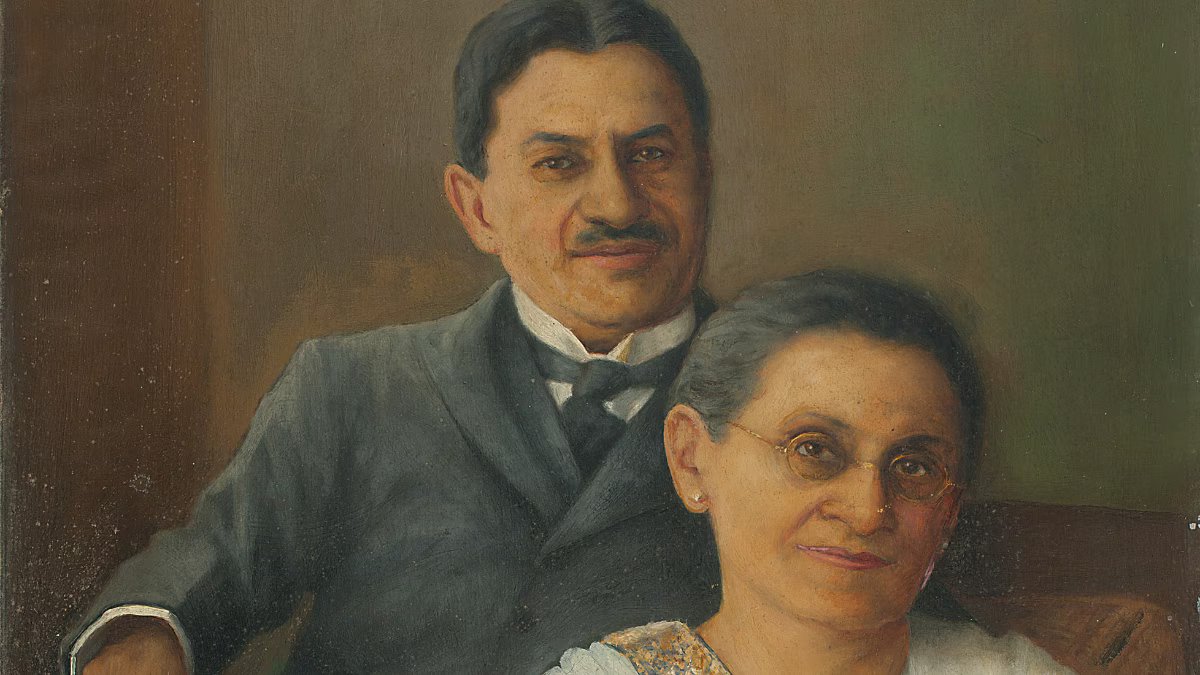
Conceived as a prelude to the second Mumbai edition of the festival, Bombay Framed sets the stage for a larger exploration of the city as a living archive, shaped by memory, movement, and cultural exchange. The exhibition grows out of a series of smaller capsule exhibitions presented by DAG over the years—on Bombay landscapes, portraiture, a recent collaboration with the Sir J. J. School of Art—and attempts to distil the essence of this heady, restless city that never quite sleeps. Across these works and histories, the exhibition traces Bombay’s passage from a colonial port shaped by trade and empire to the complex metropolis it has become through a wide range of material spanning three centuries—paintings, photographs, prints (by Indian and foreign artists), archival material, memorabilia—allowing viewers to encounter the city from multiple points and engage with its layered histories and experiences. It also reflects the city’s contradictions: chaos and calm, hardship and comfort, each contributing to its complexity; and reveals a restless yet resilient metropolis, formed as much by its people and memories as by its sea and skyline.
While rooted in art, the accompanying book moves beyond it to explore the city’s many layers. The introductory essay by historian and volume editor Gyan Prakash positions Bombay as both subject and archive—a city whose meanings are continually written, erased and rewritten. From there, the essays move across the city’s many aspects: Devika Shankar and Preeti Chopra trace its origins and land reclamations; Murali Ranganath examines Parsi philanthropy and civic life; Simin Patel reflects on nineteenth-century hotel culture; Vanessa Caru and Nikhil Rao foreground labour and the working city; Pheroza Godrej writes on art and galleries as platforms for artistic ambition; and Debashree Mukherjee and Rachel Dwyer bring the perspectives of cinema.
Prashant Kidambi considers architecture and monumentality in contrast to everyday street life, while Naresh Fernandes listens to the sounds and rhythms that animate the city. The volume closes with Mustansir Dalvi, who leads the reader on walk through memory and place.
Starting 7 March 2026, The City as a Museum programmes explore Mumbai’s rapidly transforming urban landscape that has long functioned as a site of cultural production, contestation, and collective imagination. From post-independence artists’ and poets’ collectives to community-led urban interventions, the city has nurtured practices that blur the boundaries between art, activism, and everyday life. This lineage extends from the work of Altaf and Navjot in the late 1970s and 1980s to the socially engaged practices of artists such as Tushar Joag, Sharmila Samant, Archana Hande, and Kausik Mukhopadhyay, who were members of the Open Circle Collective and were witness to a rapidly transforming urban landscape since the 1990s.
A close associate of the poets and painters including Arun Kolatkar, Adil Jussawalla and Gieve Patel, writer Jerry Pinto explores the porous relationship between poetry, painting, and urban life in Mumbai at Kala Ghoda’s iconic David Sassoon library, foregrounding the visual and performative practices, literary collectives, such as the Clearing House collective, and their published work of poets and painters. The festival also forefronts performance traditions such as Tamasha and Lavani, that were often conducted in the vibrant, working-class milieus of central Mumbai in the past, and are considered not only in terms of their engagement with marginalised communities but also for their role in articulating and circulating dominant cultural narratives that shaped the modern statehood of Maharashtra.
Similarly, the paintings of Sudhir Patwardhan and the poetry of Narayan Surve serve as important archives of working-class life and its erosion in Mumbai’s mill districts—a history that is explored through a screening of Anjali Monteiro and K.P. Jayasankar’s collaborative film Saacha (Loom); serving as a platform to discuss their DiverCity video archive that is drawn from their long-term practices of working collaboratively across the new media landscapes in Mumbai.
Underlying these explorations is a critical engagement with the evolving idea of the public and the claims of citizenship upon urban space. Working across informal settlements, transit zones, community venues, and heritage sites, the festival and the accompanying exhibition invites audiences to encounter Mumbai as a living museum—one that holds within it the possibility of more porous, equitable, and imaginative urban futures.
Full programme schedule to be announced soon.
About The City as a Museum
The City as a Museum, DAG’s annual art and heritage festival, was conceived as a way to connect artworks and objects in the DAG collection—and those housed in museums, galleries, and archives—to the world outside. By activating historic spaces across cities—from artists’ homes and studios to centres of craft production and sites of arts patronage—the festival animates the larger histories behind the works we see in galleries and exhibitions, making them accessible in new and engaging ways.
Last year, ‘The City as a Museum’ travelled to Mumbai and Delhi for its debut editions, drawing record audiences. In Mumbai, a critically acclaimed exhibition at the Sir J. J. School of Art formed the focal point of a diverse calendar of events that mapped the School’s deep relationship with the city—extending from Elephanta to Mohammed Ali Road to trace how artists have drawn from their experiences of the city. For DAG, artists from Maharashtra hold a place in the collection alongside those from Bengal, and both the Kolkata and Mumbai editions celebrated the tremendous contributions of these regions to the history of modern Indian art.
Through its first edition in Delhi, where DAG’s story began, a vast collection of artworks produced in and about the city offered audiences an unparalleled opportunity to explore the story of Indian modern art at the heart of the capital.
The wide-ranging narratives have been made possible through collaborations with esteemed institutions such as the Indian Museum, the Victoria Memorial, the Rashtrapati Bhavan and the Sir J. J. School of Art, alongside family archives, community initiatives, and the contributions of leading scholars and artists. Over the past five years, the festival has received an overwhelming response from audiences in Kolkata, who travelled across the city to attend programmes, establishing it as a highlight of the city’s cultural calendar.
DAG’s annual festival returns to celebrate Mumbai’s public spaces and communities through the perspective of artists’ collectives and creative collaborations that claim, contest and reshape the city—exploring these stories through performances, workshops, walks, screenings and talks.
A Public in Performance
A performance of Girish Datar’s Sawal Jawab, which takes on the connected histories of Tamasha, Lavani, and Shahiri, followed by a conversation between the director and Tamasha historian and photojournalist, Sandesh Bhandare
M. V. Dhurandhar, Untitled, Watercolour on paper, 4.5 x 4.5 in. Collection: DAG
7 March 2026 Veda Kunba Theatre 4:00 pm – 6:00 pm
The Loom of Time
A screening of Anjali Monteiro and K. P. Jayasankar’s Saacha (The Loom, 2001, 49’), followed by a discussion with the filmmakers, on collaborative media practice in Mumbai after the textile mill workers’ movement in the 1980s, and the creation of the DiverCity web archive
Navjot, Bhiwandi Collage I,1985, Serigraph on paper, 17.0 x 14.0 in. Collection: DAG
8 March 2026 G5A Warehouse 7:00 pm – 9:00 pm
Caste in Caricature
A discussion on caricatural representations of Dr B. R. Ambedkar during the colonial period with author Unnamati Syama Sundar and Professor Vijay Mohite, contextualised by Ambedkar’s collection of books at the Siddhartha College library and closing with a standup performance by Ankur Tangade
Chittaprosad, Untitled, Ink on paper, 7.5 x 11.0 in. Collection: DAG
9 March 2026 Siddhartha College Library 2:30 pm – 4:30 pm
A many-coloured smell
A walking tour of Kala Ghoda’s poetry havens, featuring poets from the Clearing House collective, with Bombay Poetry Crawl
Baburao Sadwelkar, Towards Hornby Road the View from Kala Ghoda, 1951, 11 March 2026 David Sassoon Library 5:30 pm – 7:00 pm
Birds of a Feather
Exploring the community of writers and illustrators for the Bombay Natural History Society Journal, with a talk on artist, illustrator and graduate of Sir J. J. School of Art, Carl D’Silva by journalist and researcher Vrushal Pendharkar
Unidentified Artist (Company School), Purple Sunbird (Cinnyris asiaticus), Watercolour on paper, 1800-04,13.3 x 9.2 in. Collection: DAG
14 March 2026 Bombay Natural History Society 11:00 am – 1:00 pm
Faith in Form
Revisiting Charles Correa’s imagination of a modernist space for faith at Our Lady of Salvation Church, featuring artworks by M. F. Husain and Anjolie Ela Menon, through a conversation between architect Nondita Correa Mehrotra and poet and curator Ranjit Hoskote
M. F. Husain, Christianity, Lithograph and chine collé on paper, 1990, 23.0 x 34.0 in. Collection: DAG 14 March 2026 Our Lady of Salvation Church 3:30 pm – 6:00 pm
Tracing Stone & Shadow
A walk at the Kanheri Caves by archaeologist Suraj A. Pandit, focusing on the social life of the Buddhist community at the caves and their rediscovery through colonial archaeology, followed by a mapping exercise led by students of Sathaye College
N. R. Sardesai, Jogeshwari Caves, Watercolour on paper, 1940, 9.2 x 13.2 in. Collection: DAG 15 March 2026 Sanjay Gandhi National Park 9:30 am – 1:00 pm
End of Article