Bangladesh’s February 12 election and referendum on the July Charter may rewrite the constitution, introducing term limits and bicameralism to prevent future autocracy and ensure a permanent democratic reset under Muhammad Yunus.
Bangladesh is preparing for a watershed moment on February 12, 2026 when voters will cast ballots not only in a national parliamentary election but also in a constitutional referendum on the July National Charter, a first in the country’s history.
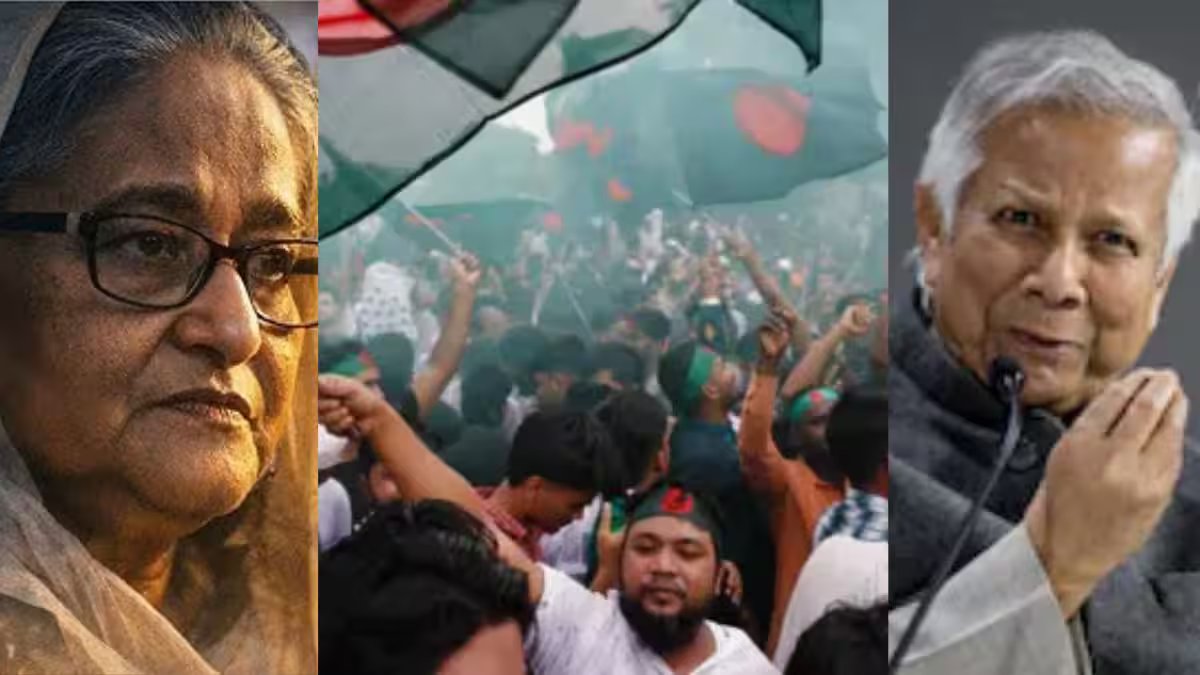
The dual-ballot exercise comes nearly 18 months after a mass student-led uprising ousted long-time leader Sheikh Hasina and it tests whether Bangladesh can move beyond entrenched political rivalries towards institutional reform.
The election to elect members to the 13th Jatiya Sangsad will take place under an interim government led by Nobel laureate Muhammad Yunus in power since August 2024. Alongside it, a constitutional referendum will ask voters whether they endorse the July National Charter’s reform agenda, an ambitious blueprint for restructuring governance.
A dual mandate: Voting for leaders and laws
The February polls are unique because voters will be handed two distinct ballots. One is to elect representatives to the Jatiya Sangsad; the other is a simple ‘Yes/No’ vote on the July National Charter. This Charter is the culmination of the student-led “Monsoon Revolution” that ousted Sheikh Hasina in August 2024.
If the “Yes” vote prevails, the incoming parliament will be legally bound to enact sweeping constitutional amendments within 180 days. According to recent insights from the International Crisis Group, this mechanism ensures that the mandate for reform comes directly from the people, preventing any future majority party from easily backtracking on democratic promises.
The stakes are immense: while the BNP currently holds a narrow lead over Jamaat-e-Islami in pre-election polling, neither party will have the absolute “imperial” authority enjoyed by previous regimes if the Charter is adopted.
Dismantling autocracy: Term limits and bicameralism
At the heart of the proposed constitutional rewrite is a direct strike against the “prime ministerial dictatorship” that critics say defined the Awami League’s 15-year tenure. A headline reform in the July Charter is the imposition of a strict two-term limit (10 years) on the office of the Prime Minister. Considering Sheikh Hasina was in her fourth consecutive term when she was deposed, this move is designed to ensure a regular rotation of leadership and prevent the consolidation of absolute power.
Furthermore, the Charter proposes a radical shift from a unicameral to a bicameral legislature. Bangladesh has traditionally operated with a single chamber, the Jatiya Sangsad. The new model envisions a 100-member “Upper House” formed through proportional representation based on the percentage of votes parties receive in the lower house elections. This structural change aims to provide a check on the lower house, ensuring that smaller parties and diverse professional voices have a seat at the table, thereby tempering the “majoritarian tyranny” that has often led to street violence and political instability.
Institutionalising neutrality: The return of the caretaker
Perhaps the most critical structural change involves the institutionalisation of the caretaker government mechanism. The July Charter seeks to outline a permanent, non-partisan framework for future transitions of power. By embedding this into the constitution, the Yunus administration aims to solve the “trust deficit” that has plagued Bangladeshi elections for decades.
However, the path forward remains fraught with geopolitical and internal risks. As Al Jazeera notes, regional powers like India, China, and Pakistan are watching closely, as a shift in Bangladesh’s constitutional model could alter the balance of power in South Asia.
Domestically, with the Awami League currently sidelined, the challenge remains whether a new government will genuinely embrace these checks and balances or seek to dilute them once in power. If successful, February 12 will not just be an election day; it will be the birth of a “Second Republic” for Bangladesh.
End of Article