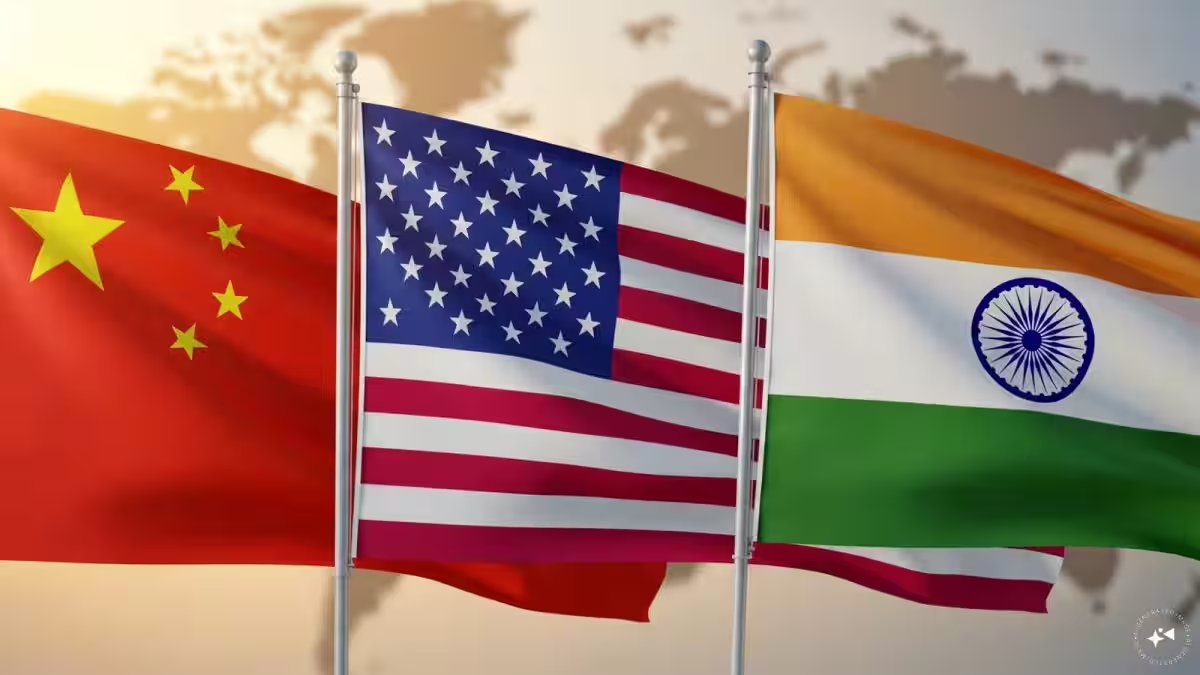
China has claimed it helped mediate the May standoff between India and Pakistan, a claim New Delhi has firmly rejected, insisting the crisis was resolved through direct bilateral channels.
After the
United States, China has now asserted that it played a mediating role in easing tensions between
India and Pakistan during the May confrontation, even as New Delhi has repeatedly dismissed any third-party involvement and maintained that the situation was resolved through direct engagement between the two sides.
In his latest remarks earlier this week, US President
Donald Trump once again claimed he had helped resolve the India–Pakistan conflict during his bilateral meeting with visiting Benjamin Netanyahu.
Speaking at the Symposium on the International Situation and China’s Foreign Relations in Beijing on Tuesday, Chinese Foreign Minister Wang Yi said the world was witnessing a surge in conflict and instability. “This year, local wars and cross-border conflicts flared up more often than at any time since the end of WWII. Geopolitical turbulence continued to spread,” he said.
Wang added that China had adopted an “objective and just stance” in addressing global disputes. “To build peace that lasts, we have taken an objective and just stance, and focused on addressing both symptoms and root causes,” he said, as quoted by PTI.
China’s mediation claims and wider conflicts
Outlining Beijing’s approach, Wang said, “Following this Chinese approach to settling hotspot issues, we mediated in northern Myanmar, the Iranian nuclear issue, the tensions between Pakistan and India, the issues between Palestine and Israel, and the recent conflict between Cambodia and Thailand.”
His remarks come months after the military confrontation between India and Pakistan in May, which followed a terror attack in Pahalgam on April 22. India launched Operation Sindoor, striking terror infrastructure in Pakistan and Pakistan-occupied Kashmir, before expanding operations to include military installations.
India’s response and background to the standoff
India has consistently said the four-day confrontation ended through direct military-to-military communication, without any external mediation. At a press briefing on May 13, the Ministry of External Affairs rejected claims of outside involvement. “Regarding the ceasefire and what sort of role other countries played, etc. See, the specific date, time and wording of the understanding was worked out between the DGMOs of the two countries at their phone call on 10th May 2025, commencing at 15:35 hours,” the ministry said.
New Delhi has long maintained that there is no scope for third-party intervention in matters between India and Pakistan.
Questions have also been raised about China’s role during the conflict, particularly in relation to its military ties with Pakistan. China is Pakistan’s largest arms supplier, accounting for over 81 per cent of its military equipment. Diplomatically, Beijing called for restraint on the first day of Operation Sindoor while expressing regret over India’s airstrikes. “China finds India’s military operation early this morning regrettable,” a Chinese Foreign Ministry statement said on May 7.
Indian military officials later accused China of using the confrontation to advance its strategic interests. Deputy Chief of Army Staff Lt General Rahul R Singh said Beijing had treated the standoff as a “live lab” and alleged that China provided extensive support to Pakistan during the operation. China did not directly respond to the remarks.
Despite the tensions, Wang spoke of improving ties with New Delhi, saying China had invited Prime Minister Narendra Modi to attend the Shanghai Cooperation Organisation summit held in Tianjin in August this year. “Also, this year, we invited the leaders of India and the DPRK to China. China-India relations showed a good momentum, and the traditional friendship with the DPRK was cemented and further promoted,” he said, adding that the SCO summit was a success.
What happened in Pahalgam
The chain of events was triggered when gunmen killed at least 26 people in April at the tourist resort of Pahalgam in what was the deadliest such attack in Kashmir in a quarter-century, leading to a series of retaliatory steps by India and Pakistan. Operation Sindoor was India’s swift military response in May 2025, aimed at terrorist infrastructure in Pakistan-occupied Kashmir and Pakistan following the April 22 attack. The operation involved precision strikes using indigenous technology, including BrahMos missiles, and sought to dismantle terror bases, signal India’s resolve, increase the cost of terrorism for Pakistan and establish a doctrine of decisive retaliation without crossing the Line of Control.
End of Article