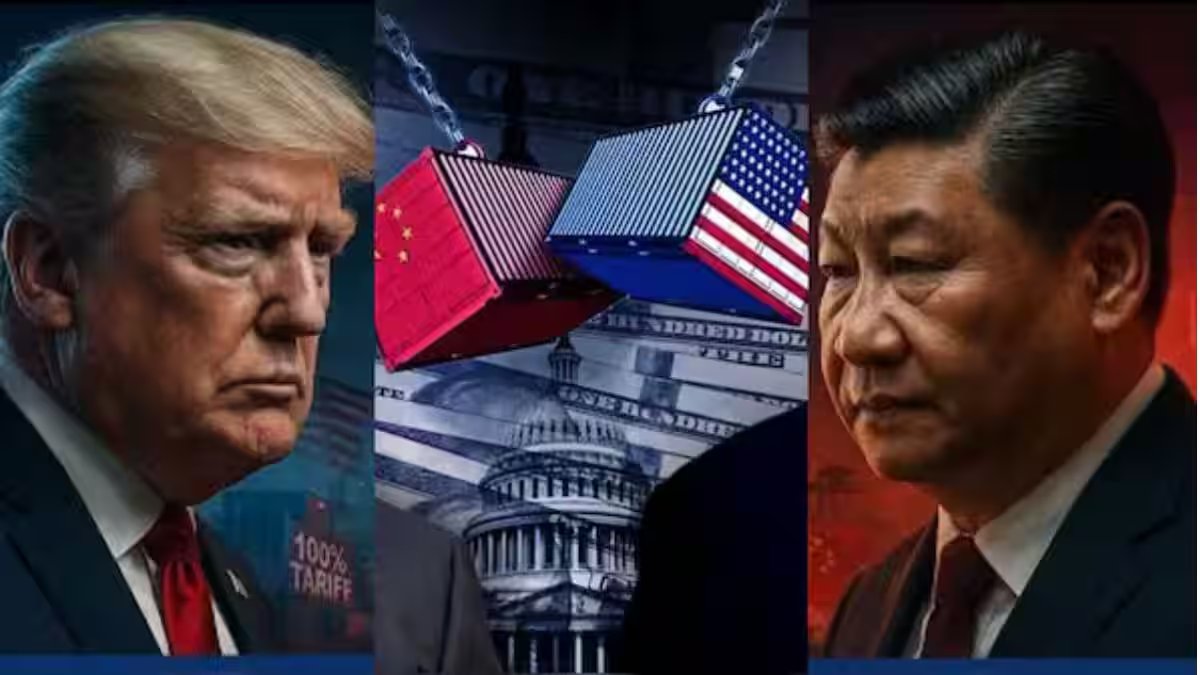
As Donald Trump revives aggressive tariff policies, US trade partners are hedging against uncertainty by diversifying away from Washington, allowing China to expand its economic influence and gain ground in global trade realignments.
As President Donald Trump doubles down on a protectionist “America First” agenda, the global trade order is undergoing a seismic realignment. Historically close US allies, rattled by unpredictable and aggressive tariff threats are no longer waiting for a seat at the Washington table. Instead, they are aggressively diversifying their economic portfolios with Beijing emerging as the primary beneficiary of this strategic retreat from American market dependency.
Countries increasingly weary of unpredictable tariff spikes are diversifying their trade relations with China emerging as a key beneficiary of this realignment. Traditional US allies, disillusioned by the uncertainty and economic strain caused by Washington’s tariff policies are edging closer to Beijing for more stable and mutually beneficial trade partnerships.
China’s “pressure valve”: A record $1.2 trillion surplus
Despite the high-walled tariff barriers erected by the Trump administration, the Chinese export machine has proven remarkably resilient. By the end of 2025, China reported a record-shattering trade surplus of nearly $1.2 trillion. While bilateral trade with the US slumped—with exports to America falling by 20%—Chinese manufacturers successfully rerouted their shipments to the Global South and Europe.
Beijing has utilised these third-party markets as a “pressure valve” to sustain its manufacturing sector. Exports to Africa jumped by over 25%, while shipments to Southeast Asia and the European Union saw double-digit growth. This diversification has not only cushioned the Chinese economy against US sanctions but has also deepened Beijing’s influence in emerging economies that are increasingly wary of American economic coercion.
China capitalises on global trade dynamics
Beijing’s willingness to engage with countries seeking reliable trade alternatives has enabled it to strengthen diplomatic and economic influence. Moves by major economies such as Canada to negotiate comprehensive trade deals with China — including lowered tariffs on electric vehicles and agricultural products signal a broader readiness among US partners to hedge against the risks posed by Washington’s protectionist approach.
Europe and other trading blocs are similarly recalibrating their economic diplomacy, sometimes pursuing separate accords with China or exploring trade routes beyond traditional US-centered frameworks. This shift reflects broader concerns over the viability and long-term payoff of aligning exclusively with an unpredictable US trade policy.
Long-term implications for global economic power balance
Trump’s tariff-centric policy, intended to protect American industries and reduce trade deficits, has inadvertently accelerated a restructuring of global trade networks. Many countries now prioritize consistent market access and predictable conditions, even if that means deepening engagement with China.
Analysts say this trend could have lasting consequences for US influence in global economic governance, as nations hedge against disruptions and seek diversified partnerships to safeguard growth. China’s ability to capitalise on these shifts underscores how disruptive tariff politics can alter established trade hierarchies, potentially reshaping global economic power balances in the years ahead.
End of Article