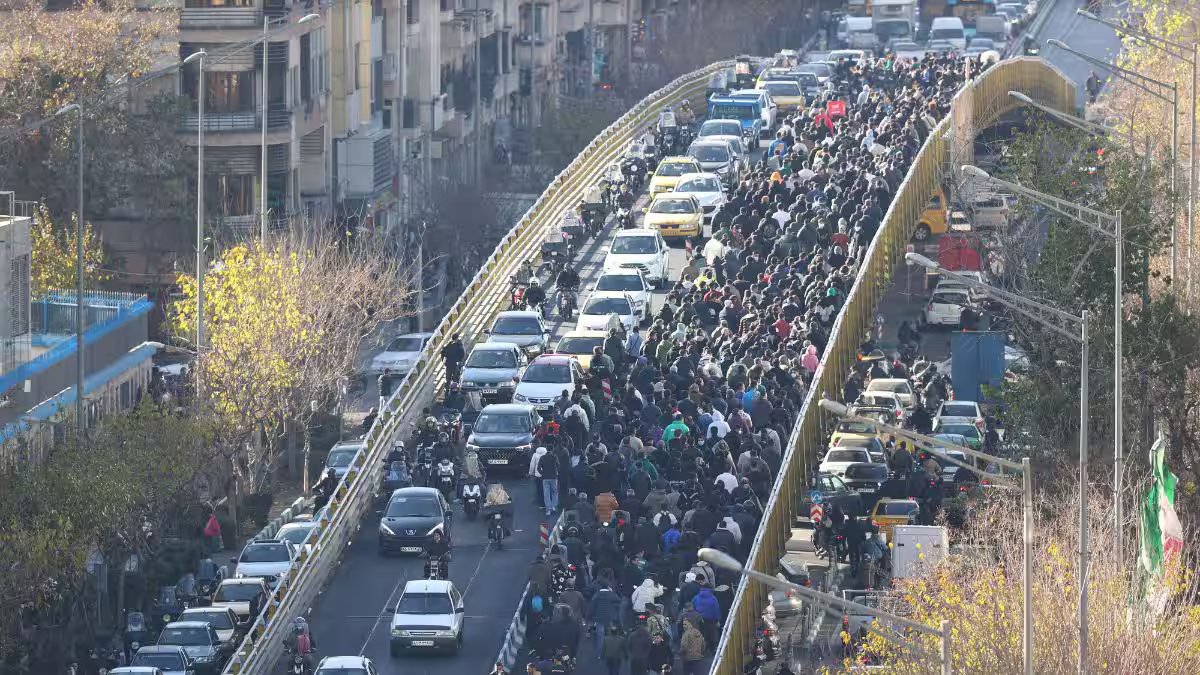
Iran has fired the CEO of Irancell, its second-largest telecom operator, accusing the company of failing to fully enforce internet shutdown orders during unrest. Many viewed the blackout as a way to control news during growing protests over economic difficulties
In an unusual move amid one of the most severe communication clampdowns in years, Iran’s government has fired the chief executive of Irancell, the country’s second-largest mobile network operator, for not fully complying with orders to block
internet access during widespread unrest.
The decision, reported by state-linked Fars news agency on Sunday, comes as Iranians grapple with a near-total communication blackout that began without warning on January 8, when authorities cut off nearly all mobile and internet services.
The blackout was widely seen as a bid to stem the flow of information during intensifying calls for
anti-government protests sparked by economic hardship.
Fars reported that “Alireza Rafiei was removed from the position of CEO of the company after about a year of activity.”
The agency quoted officials saying “Irancell disobeyed the orders of the decision-making institutions in implementing the announced policies regarding the restriction of internet access in crisis situations.”
“The relevant institutions decided to dismiss the CEO of Irancell, citing ‘failure to comply with the announced rules in crisis situations.’” it added.
Irancell, founded in 2005 and with around 70 million subscribers, is a central player in Iran’s digital infrastructure, making its compliance crucial to Tehran’s crackdown strategy.
Also read |
Why US intervention in Iran would be a mistake
Internet access begins limited return
After more than a week of near-total isolation from the global web, Iranian authorities signalled a modest loosening of restrictions on Sunday. In Tehran, journalists from Agence France-Presse (AFP) reported they were able to reach the global internet, although most domestic connections remained blocked.
State television also reported that access to Google services had been restored “via all mobile phone lines and internet service providers.”
Officials said they plan to restore internet access “gradually”, though the extent and pace of the reopening remain unclear.
The blackout has been one of the most comprehensive in Iran’s modern history, coinciding with nationwide protests over economic conditions and growing frustration with the regime. Analysts have described such shutdowns as tools to suppress dissent, cutting off communication and coordination among demonstrators.
While some connectivity returned briefly, most Iranians remain largely disconnected from the broader internet.
End of Article



tp777 https://www.betp777.org