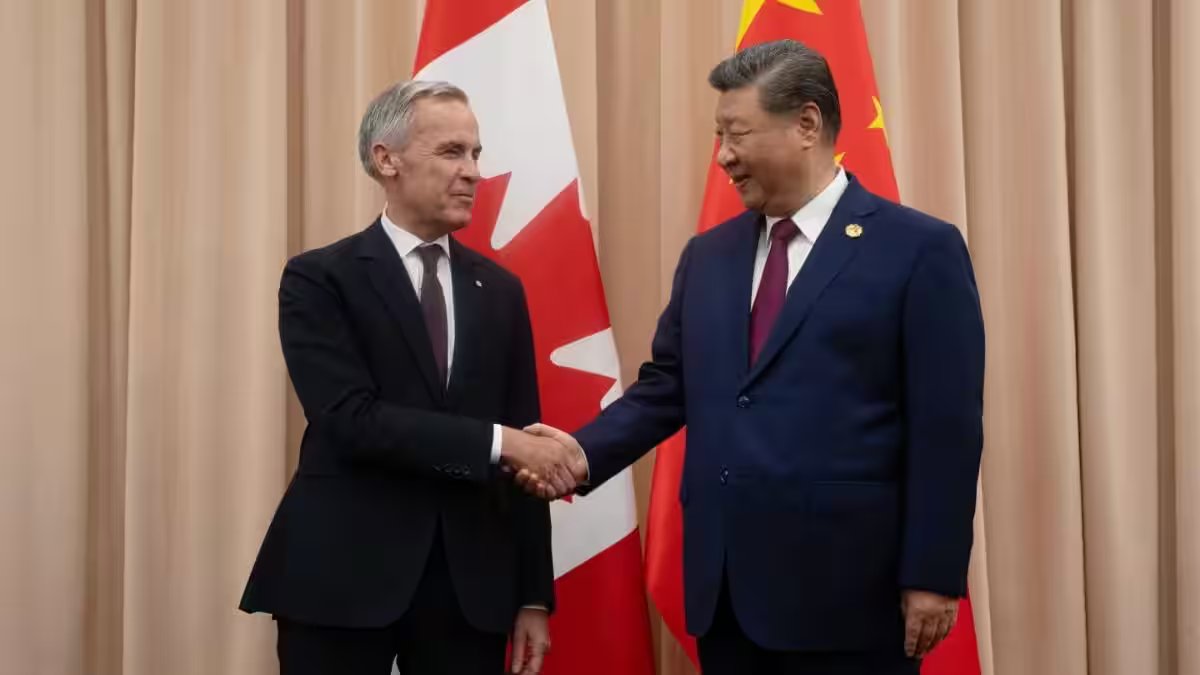
The statement came from Canada’s Taiwanese Envoy Harry Ho-jen Tseng following a meeting between Prime Minister Mark Carney and Chinese President Xi Jinping last week. Under the agreement, both countries have agreed to lower trade barriers and rebuild ties
Taiwan has expressed some reservations about the Canada-China trade deal, saying that while Ottawa is reeling with economic issues due to the US, Beijing is not a trustworthy partner.
The statement came from Canada’s Taiwanese Envoy Harry Ho-jen Tseng following a meeting between Prime Minister Mark Carney and Chinese President Xi Jinping last week. Under the agreement, both countries have agreed to lower trade barriers and rebuild ties.
“If this trip to China is genuinely looking for an economic remedy for Canada, I don’t think you can find an answer in China. If this trip to China is trying to create political leverage of some sort, domestically or internationally, I don’t know – it’s another matter,” Tseng said.
Tseng, who was the deputy foreign minister for Taiwan, added that a free trade deal is “unachievable between Canada and China, simply because China is not a market economy.”
‘Landmark deal’
The Canadian leader hailed a “landmark deal” under a “new strategic partnership” with China, marking a turning point in years of diplomatic spats, tit-for-tat arrests, and tariff disputes.
Carney has sought to reduce his country’s reliance on the United States, its key economic partner and traditional ally, as President Donald Trump has aggressively raised tariffs on Canadian products.
“Canada and China have reached a preliminary but landmark trade agreement to remove trade barriers and reduce tariffs,” Carney told a news conference after meeting with Xi.
Under the deal, China, which was previously Canada’s largest market for canola seed, is expected to reduce tariffs on canola products to around 15 per cent by March 1, down from the current 84 per cent.
China will also allow Canadian visitors to enter the country visa‑free.
In turn, Canada will import 49,000 Chinese electric vehicles (EVs) under new, preferential tariffs of 6.1 per cent.
“This is a return to the levels that existed prior to recent trade frictions,” Carney said of the EV deal.
With inputs from agencies
End of Article