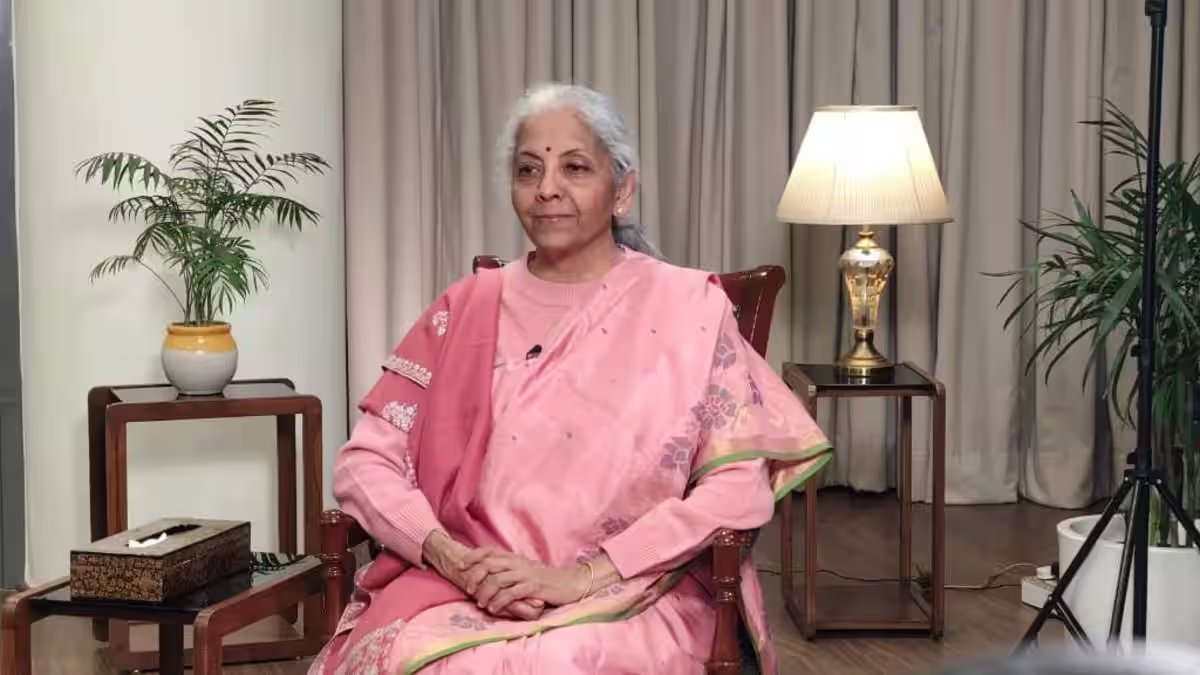
In an exclusive interview with Network18 on Monday, Sitharaman said Budget 2026 was “slightly different” from previous Budgets, but emphasised that its primary focus was stability amid unprecedented global uncertainty.
Finance Minister Nirmala Sitharaman on Monday said Budget 2026 was “slightly different” from previous Budgets, but stressed that its central theme was stability in the face of unprecedented global uncertainty. In an exclusive interview with Network18 Group Editor-in-Chief Rahul Joshi, she responded to criticism that the Budget was cautious or status quoist, describing the approach as deliberate.
“The Indian economy’s fundamentals are absolutely strong. It is the global uncertainties… of an order that we have never seen before,” Sitharaman said. She added that the government had to consider not just the current year but also the next Finance Commission cycle and the long-term path to Viksit Bharat 2047. Stability, she emphasised, was a conscious signal to businesses and investors navigating tariff wars, conflicts, and volatile global markets.
A broader vision beyond taxes
Sitharaman said the Budget should be viewed in a broader time frame, noting that it is the first of what Prime Minister Narendra Modi has described as the “second quarter of the 21st century.” She explained why Part B of the Budget speech carried unusual weight, highlighting that it went beyond tax proposals to outline how administration and fiscal policy would evolve.
“It is not just the tax proposals taking us towards 2047,” she said, adding that the Budget also reflects how governance, tax administration, and policy responses will align with long-term national goals. She rejected claims that the Budget lacked vision, saying such criticism overlooked the perspective from which it was crafted.
Tax certainty and continuous reforms
Highlighting India’s consistent high growth, Sitharaman said the country has been the fastest-growing major economy for four consecutive years, rooted in political and policy stability.
“Tax certainty brings stability for businesses,” she said, pointing to ease of doing business, responsiveness to industry, and efforts to “extend a red carpet while removing red tape simultaneously.”
She also stressed that reforms are not confined to budget announcements.
“Reforms continue,” she said, invoking the concept of a continuing ‘Reform Express’ throughout the year. “So it’s not just the Budget; please also look at the performance.”
Three core ‘kartavyas’ of Budget 2026
In her ninth consecutive Budget, Sitharaman focused on three central duties or kartavyas:
-
Accelerating and sustaining economic growth – enhancing productivity, competitiveness, and resilience through interventions in manufacturing, infrastructure, and strategic sectors.
-
Fulfilling people’s aspirations – building citizen capacity via skill development, employment generation, and broader opportunities.
-
Inclusive development – aligned with Sabka Saath, Sabka Vikas, ensuring access to resources, amenities, and opportunities for all families, communities, regions, and sectors.
End of Article