
According to G Mahalingam, former Executive Director at the RBI and former Whole-Time Member of SEBI, the current tax framework strongly favours equities over fixed-income instruments.
Mahalingam said, said the government uses tax incentives to encourage people to move their savings into financial markets, which is why lower tax on equity investments appears justified.
However, he pointed out that equity is a much riskier asset compared to bank deposits and bonds. While equities have delivered around 12% returns over the long term, bonds and bank deposits have yielded only about 6–6.5%.
He cautioned that the large gap in taxation—where long-term capital gains on equity are taxed at 12.5%, while interest income from deposits and bonds is taxed at regular income tax slab rates—could push savers towards equities purely for higher post-tax returns, without adequately considering the risks involved.
According to him, this tax difference is too wide and needs to be tweaked to avoid encouraging excessive risk-taking.
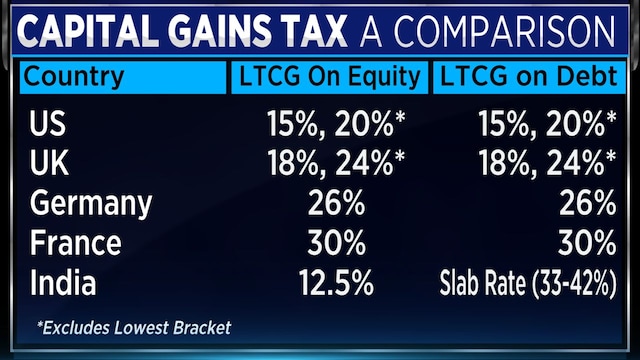
Ananth Narayan, former Whole-Time Member of SEBI, pointed out that the large difference in taxation across asset classes has made tax a key driver of asset allocation in India. As a result, even pensioners and retirees are being pushed to take higher equity risk just to protect their savings from inflation.
Narayan said that in fixed income, investors earning around 6% returns at a time when inflation is close to 5% are effectively being taxed on their capital rather than real income. He added that fixed-income investments also carry interest rate risk and credit risk, making it unfair to tax the entire interest income at marginal slab rates.
According to him, this tax structure gives the wrong incentives by encouraging investors to take more equity risk than they are comfortable with. He argued that long-term capital gains tax should be uniform and low across asset classes, allowing investors to allocate their savings based on risk appetite rather than tax considerations.
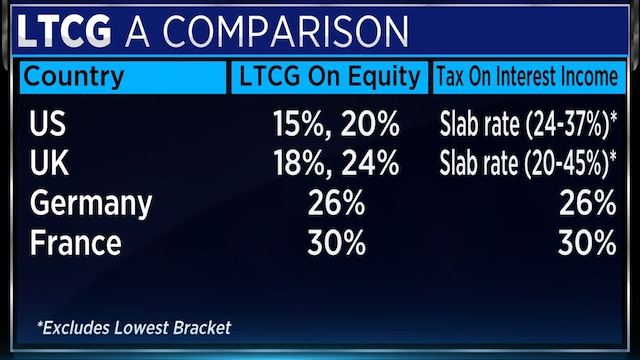
Srinivasan Varadarajan, Banking Veteran & Market Expert said policymakers historically used tax incentives to attract equity capital because India was capital-starved. However, the situation has changed significantly over the past decade. Equity participation has surged, with investor numbers rising sharply and equity mutual fund assets overtaking debt funds.
G Mahalingam warned that the current imbalance in taxation could create a macroeconomic problem. He said investors are increasingly shifting money into equities, leading to weak growth in bank deposits. As a result, banks are struggling to raise deposits even as they remain the main source of funding for lower-rated borrowers.
He pointed out that while large, highly rated companies can raise money from bond and equity markets, MSMEs depend heavily on bank loans. If banks face a shortage of deposits, credit to MSMEs could suffer, hurting production and economic growth.
For the entire discussion, watch the accompanying video
Catch all the latest updates from the stock market here
Also, catch the latest Budget 2026 expectations updates here
Catch all the latest updates from the Q3 earnings here