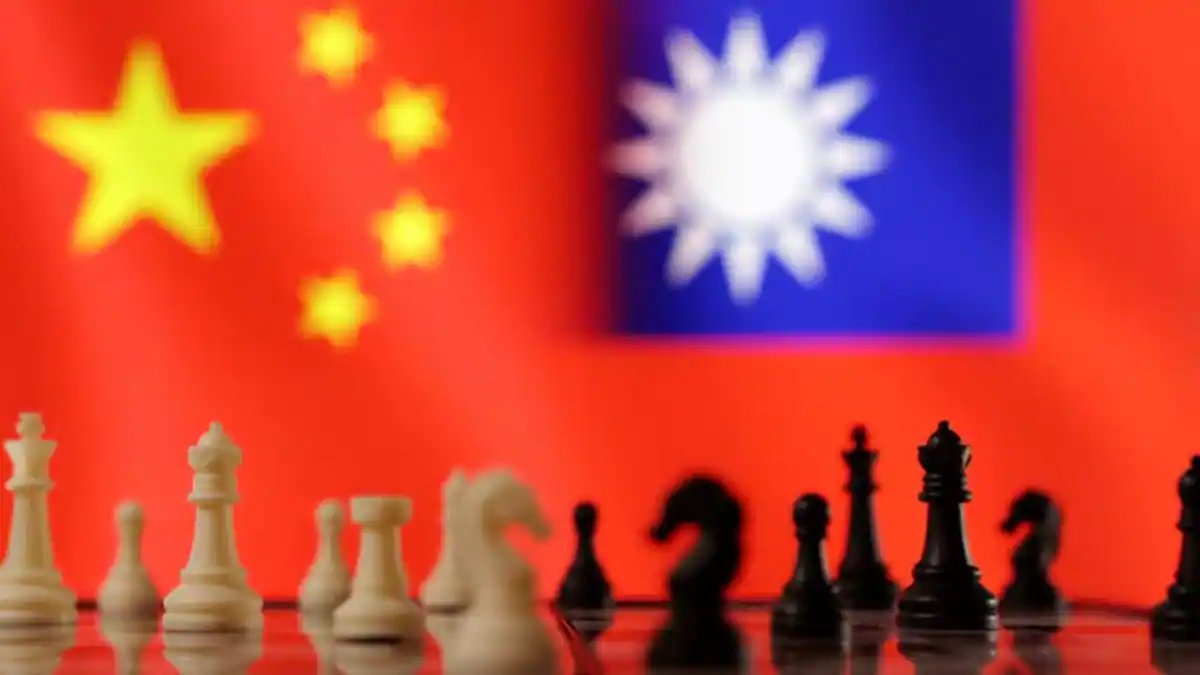
Beijing has warned that a proposal by Taiwanese lawmakers to amend legislation governing cross-strait relations amounts to a push for “de jure independence” and increases the risk of war
Beijing has warned that a proposal by Taiwanese lawmakers to amend legislation governing cross-strait relations amounts to a push for “de jure independence” and increases the risk of war.
“This proposal disregards the mainstream public opinion in Taiwan … publicly challenges the historical and legal fact that Taiwan is part of China, and blatantly promotes ‘de jure Taiwan independence’,” South China Morning Post quoted Taiwan Affairs Office spokesman Chen Binhua as saying on Sunday.
“Taiwan independence means war. We have full confidence and sufficient capability to crush any form of ‘de jure Taiwan independence’ plot,” Binhua added.
Chen was referring to a proposal by lawmakers from Taiwan’s ruling, independence-leaning Democratic Progressive Party (DPP) to amend the law regulating relations between people on both sides of the Taiwan Strait.
In a social media post on Saturday, DPP legislator Lin I-chin said the Act Governing Relations Between the People of the Taiwan Area and the Mainland Area should be renamed the “Taiwan and the People’s Republic of China (PRC) Relations Act”.
Lin also called for the removal of references to “before national reunification” and the use of the term “region” to describe territories on both sides of the strait, saying the changes would better reflect “basic facts”.
Lin said the proposal, which seeks to amend a law enacted in the early 1990s to regulate exchanges between Taiwan and mainland China, completed its legislative petition on Friday after securing the signatures of more than 20 DPP lawmakers.
However, analysts have questioned whether the DPP has enough seats in Taiwan’s Legislative Yuan to pass the amendment, as opposition parties currently hold a slim majority, reported SCMP.
Several lawmakers from the main opposition Kuomintang (KMT), which is seen as more friendly towards Beijing, have criticised the proposal, including party chairwoman Cheng Li-wun.
Taiwan’s government has responded cautiously.
The Mainland Affairs Council said on Saturday that the cross-strait relations law was politically sensitive and that any amendments would require broad societal consensus.
Despite this, the proposal has drawn a strong reaction from Beijing. Chen said the move showed that the administration of President William Lai Ching-te and the DPP were “peace destroyers, crisis creators and war instigators”.
The proposal has nonetheless sparked strong concern in Beijing.
Speaking on Sunday, Chen said the legislative move “fully demonstrates that the (William) Lai Ching-te administration and the DPP are complete peace destroyers, crisis creators and war instigators”.
He warned that if “independence separatist forces” crossed what Beijing considers a red line, it would take “decisive measures” in accordance with the Anti-Secession Law.
DPP’s past attempts
This is not the first time the DPP has sought to revise the name and wording of the legislation. In 2020, when the party held a majority in the legislature, it advanced a similar proposal that was later withdrawn.
The law was last substantially amended in 2019, when lawmakers introduced a requirement for a referendum in Taiwan before any cross-strait political agreement could be signed.
Beijing considers Taiwan part of China and insists it will seek reunification by force if necessary.
In recent years, it has intensified military and political pressure on the island, viewing Lai and his predecessor Tsai Ing-wen — also from the DPP and in office from 2016 to 2024 — as pro-independence figures.
Yu Xintian, a researcher at the Institute of Taiwan, Hong Kong and Macau Studies at the Shanghai Institute for International Studies, told SCMP that the proposal represented “a clear move towards the ‘one China, one Taiwan’ framework”.
However, Yu said there was still ambiguity over what constituted “de jure Taiwan independence”, adding that the practical impact of the proposed amendment “remains to be seen”, as it did not yet meet Beijing’s threshold for the use of force.
He noted that Beijing retained a wide range of options in its cross-strait “toolbox”, from diplomatic and rhetorical pressure to military measures, citing recent People’s Liberation Army drills encircling Taiwan.
With inputs from agencies
End of Article