For most countries, power is measured in tanks, aircraft and economic weight. Iran possesses fewer of these than many of its adversaries.
Yet since the late Cold War era, Iran has steadily expanded its influence across West Asia — affecting conflicts in Lebanon, Syria, Iraq, Gaza and Yemen often without deploying its conventional army beyond its borders.
At the centre of that transformation stood
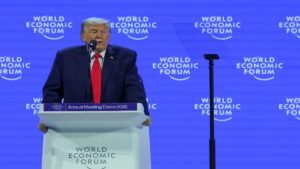
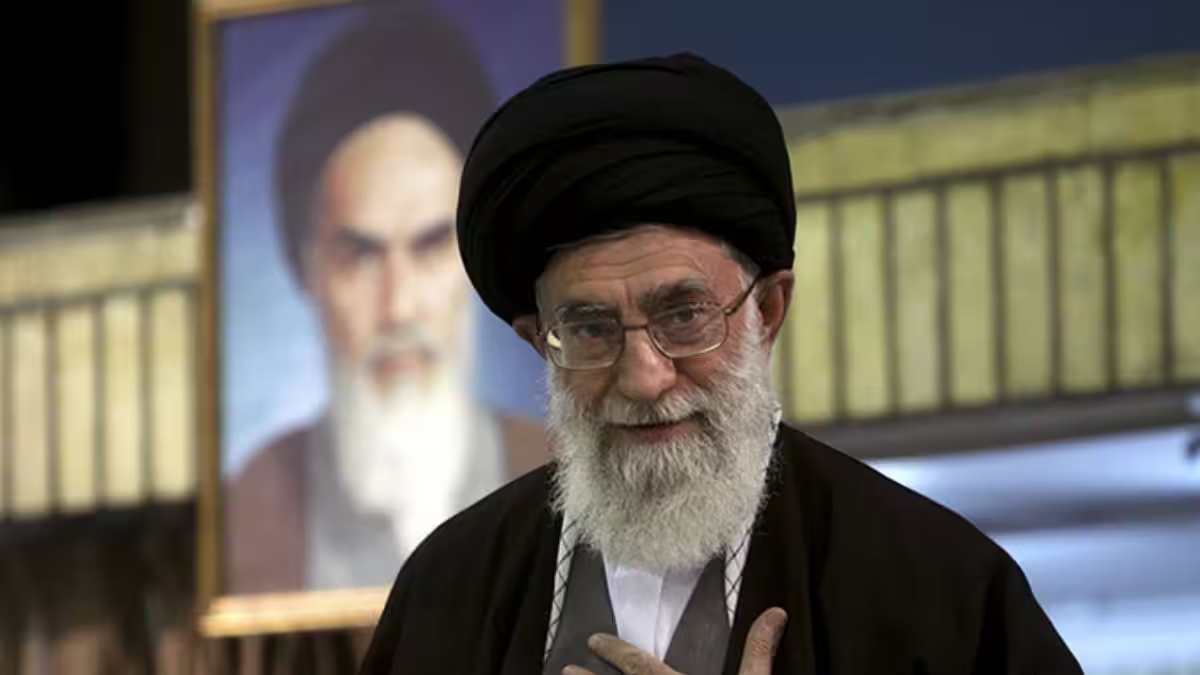
Ali Khamenei, whose refusal, as US President Donald Trump says, to agree to stop the nuclear weapons programme has led to another regional war in West Asia. After three rounds of peace talks between the US and Iran, Israel on Saturday launched preemptive strikes in Tehran. The US forces joined the war in coordination. Iran has retaliated with multiple strikes on American military bases across West Asia.
Follow Iran war live updates here
During the intervening night of February 28 and March 1, Israeli forces claimed that Tehran strikes led to the assassination of Khamenei. In the early hours of Sunday, Trump claimed Khamenei was dead.
Reza Pahlavi, the son of Iran’s last Shah, too backed the claims that Khamenei was dead. He also warned Iran’s clergy elite against choosing a successor of Khamenei.
Iran’s defence ministry, in its first response, denied claims and reports of Khamenei’s death, calling it an American plot to assassinate the Supreme Leader of the country. The Iranian media too refuted such reports saying Khamenei was in good health.
Later, Iran confirmed Khamenei’s assassination in Israeli-US strikes. Reports also said that he died in an Israeli strike that targeted the building where Khamenei was holding a meeting with his inner circle. Reuters, meanwhile, reported that the air strikes also killed Khamenei’s daughter and his grandchildren.
The Israel-US strikes began on Iran when the country was already witnessing public protests against the Khamenei regime. Protesters were chanting “Death to Khamenei”. Speculation of Khamenei’s death continues to flood social media, making him the central figure of the ongoing conflict — domestic or foreign — in Iran and West Asia.
How Khamenei got Iran
Khamenei became Iran’s Supreme Leader in 1989 following the death of
Ayatollah Ruhollah Khomeini. Back then, many observers saw him as an unlikely successor. He lacked Khomeini’s revolutionary charisma and senior clerical standing. Several analysts at the time expected Iran’s political system to fragment or moderate.
At the time of Khomeini’s death, Iran’s constitution required the Supreme Leader to be a senior religious authority. Khamenei did not meet that threshold. The political leadership amended the requirement and elevated him to the position, a decision that prioritised political reliability over clerical hierarchy.
The episode shaped his leadership style: legitimacy would come not from religious rank alone, but from preserving the state the revolution had created.
Instead, the opposite occurred.
Khomeini created the Islamic Republic. Khamenei stabilised and weaponised it.
Rather than rebuilding Iran into a traditional military power, he pursued a different objective: ensuring the state could never again be invaded, overthrown, or strategically isolated. Over time, that defensive aim evolved into a broader project — projecting influence across
West Asia without direct occupation.
The system he oversaw relied not on battlefield victories but on persistence, deterrence and indirect pressure. Gradually, it reshaped how conflict itself operates across the region.
The war that defined his strategy
The worldview Khamenei applied after 1989 was formed a decade earlier during the Iran-Iraq war.
For eight years Iran faced a militarily stronger opponent backed by regional and international powers. Iraqi forces used chemical weapons. Iranian cities were bombarded. The country’s economy struggled under isolation and sanctions.
Despite mobilising large numbers of volunteers, Iran lacked advanced aircraft, precision weapons and modern command systems. The conflict ended without decisive victory, but inside Tehran the lesson was clear: Iran could not rely on conventional warfare for survival.
Future security required asymmetry.
Rather than matching adversaries weapon for weapon, Iran would increase the cost of confronting it. The objective would not be to defeat stronger enemies outright but to make victory over Iran prohibitively difficult. When
Khamenei assumed leadership in 1989, that lesson became doctrine.
How Khamenei constructed a parallel state in Iran
To implement this doctrine, Khamenei strengthened an institution that gradually became central to the republic’s power structure: the Islamic Revolutionary Guard Corps (IRGC).
Originally created to defend the revolution, the organisation expanded into intelligence operations, missile development, cyber capabilities and foreign missions. It also built economic influence, operating in construction, telecommunications and energy sectors. Over time, it functioned alongside — and sometimes above — civilian ministries.
Internally, auxiliary forces such as the Basij militia helped manage dissent. Periodic protests did not weaken the system; they reinforced its guiding assumption that political instability could invite foreign intervention.
The emerging doctrine was simple: Iran would avoid decisive wars but would make confrontation unavoidable. Instead of winning battles, it would manage escalation. Security would come from entangling adversaries in multiple theatres simultaneously.
The result was a state designed to endure sanctions, unrest and external pressure simultaneously. Political legitimacy became less important than regime durability. Khamenei’s approach prioritised survival over popularity.
The network beyond Iran’s borders
His most consequential innovation, however, occurred outside Iran. Instead of deploying large expeditionary forces abroad, Tehran cultivated partnerships with armed movements across West Asia — from the
Hezbollah in Lebanon and
Hamas in Palestine’s Gaza to the
Houthis in Yemen. These groups operated within their own national contexts but aligned strategically with Iran.
The benefits were immediate. Iran gained regional reach without direct occupation, while adversaries faced pressure across multiple theatres simultaneously.
A confrontation with Tehran could produce tension near Israel’s northern border, around US military facilities in Iraq, or along international shipping routes.
This created strategic depth. Iran no longer needed to fight wars on its own soil; conflicts could unfold far from its territory. Gradually, warfare in the region shifted from state-to-state battles toward interconnected fronts.
Khamenei’s challenge: Managing confrontation with stronger powers
Iran’s leadership understood it could not defeat the United States or Israel in open war. Instead, Khamenei’s doctrine focused on shaping the
risks of escalation.
The method was calibrated confrontation. Actions were typically limited — missile launches, drone strikes, maritime seizures and cyber operations — but sustained over time. Each individual incident fell below the threshold that would automatically trigger major war, yet collectively they imposed continuous strategic pressure.
This produced a form of deterrence based on uncertainty. Retaliating heavily risked widening the conflict across several fronts. Responding lightly risked encouraging further attacks.
West Asia entered a new strategic pattern: persistent confrontation without decisive war.
Khamenei’s nuclear programme: A leverage tool
Iran’s nuclear programme became the diplomatic extension of this strategy.
Advances in uranium enrichment increased international pressure but also created bargaining power. Limiting those activities reduced tensions and opened negotiations. The programme therefore functioned as political leverage as much as technological development.
Rather than openly pursuing a nuclear weapon, Iran maintained a position close to the threshold of capability. This ambiguity complicated military planning by its adversaries. Any preventive strike carried the risk of regional escalation.
The programme functioned less as a battlefield weapon and more as a deterrent shield.
Khamenei’s grand scheme: Reorganising regional conflict
Over time, these policies changed the character of conflict across West Asia.
Earlier decades had seen conventional wars: armies crossing borders and ceasefires ending fighting. The newer model involved overlapping confrontations — militias, drones, missile exchanges and maritime incidents — occurring continuously but rarely culminating in formal war.
Regional states adapted. Israel expanded missile interception systems. Gulf monarchies invested in both defence technology and diplomacy. Western powers shifted from large military occupations to containment strategies.
All were responding to the same reality: Iran’s network-based deterrence architecture.
Will Khamenei’s system endure?
Khamenei’s influence extends beyond his personal authority because he embedded policy into institutions. Security bodies, economic foundations and intelligence structures operate in overlapping layers designed to function even during leadership transition.
This explains why sanctions, cyberattacks, assassinations and domestic unrest have not fundamentally altered Iran’s regional posture. The strategy is no longer an individual’s approach; it is a state doctrine.
He built continuity rather than personal rule.
This may have lasting consequences, but Iran will likely look for a new balance in the post-Khamenie future.
West Asia today exists in a state neither of peace nor full war. Large-scale conflict remains possible but dangerous for all sides, while smaller confrontations occur regularly.
That environment, incidentally, reflects deliberate design.
Khamenei’s strategy did not aim for decisive victories. It sought permanent strategic relevance — ensuring Iran could not be marginalised, invaded or ignored. His legacy therefore is not territorial expansion. It is a security structure in which confrontation persists but escalation is contained.
In reshaping how power is exercised by a weaker state against stronger adversaries, he altered the region’s political physics. Wars no longer begin cleanly or end clearly. They simmer, shift locations and overlap. The result is a West Asia defined less by peace agreements than by managed instability — a condition in which peace is fragile but large-scale war is prohibitively dangerous.
End of Article