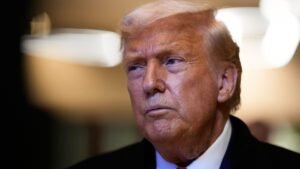
President Donald Trump has intensified threats of military action against Iran, heightening fears of a wider regional conflict and prompting capitals across the world — including New Delhi — to assess the strategic and economic consequences.
In a series of statements, Trump urged Tehran to return swiftly to nuclear negotiations, warning that “time is running out” and that any future US military action could be “far worse”. A formidable US naval armada is reportedly heading towards the region as a show of force.
Iran’s leadership has dismissed the rhetoric as “reckless and inflammatory”, rejecting talks conducted under the threat of force and vowing to defend its sovereignty. At the heart of the standoff lie concerns over Iran’s nuclear programme and the regime’s crackdown on anti-government protests.
What’s at stake for India
For India, a potential escalation carries both economic and strategic risks.
In January 2026, the Trump administration announced a 25% tariff on goods from countries engaged in trade with Iran. While India’s overall trade exposure to Iran is now limited, such measures could heighten competitive pressures on select exports, including rice, tea and other agricultural products.
Strategic interests could also come under strain, particularly India’s involvement in Iran’s Chabahar port. Earlier this month, the Ministry of External Affairs said India remains in touch with the US to operationalise a short-term sanctions waiver that allows continued work at the strategically important port, amid reports suggesting Washington could tighten pressure on partners engaging with Tehran.
The trade angle
India’s direct trade linkages with Iran remain marginal, accounting for around 0.3% of total exports and less than 0.1% of imports in the last fiscal. Exports are dominated by basmati rice, which makes up over 60% of shipments, while imports largely consist of fruits and nuts, along with limited crude-linked products.
| India’s trade exposure to Iran | |||
| Category | FY25 | FY26 Apr-Nov | Share of total trade |
| Exports to Iran | ₹10,497 cr | ₹6,629 cr | 0.3% |
| Imports from Iran | ₹3,748 cr | ₹1,952 cr | 0.1% |
| Source: Ministry of Commerce and Industry | |||
For basmati exporters, Iran continues to be the third-largest destination, accounting for about 13% of exports in FY25. While demand is likely to remain resilient as basmati is a staple food, prolonged unrest could disrupt logistics and delay payments, tightening working capital cycles.
On the import side, fruits and nuts — over 60% of India’s imports from Iran — are considered non-essential and demand could shift quickly if supplies are disrupted.
In a note dated January 28, Crisil Ratings said the unrest has not yet had a material impact on India Inc’s trade flows or corporate credit profiles, but warned that sharper escalation could trigger spillover effects, particularly through higher crude prices.
The energy risk
Iran accounts for roughly 4-5% of global crude oil supply. While it is no longer a key supplier to India, any disruption to critical routes such as the Strait of Hormuz could spark a sharp rise in global oil prices, complicating India’s import-dependent energy outlook.
Crisil flagged that sustained crude price inflation would have cascading effects across sectors including oil refining, aviation, specialty chemicals, paints, petrochemicals, flexible packaging and synthetic textiles, depending on the ability to pass on higher costs.
Brent crude briefly spiked above $65 a barrel following the initial unrest before stabilising, underscoring how quickly geopolitical shocks can ripple through commodity markets.
Diplomatic tightrope
A broader flare-up would also raise concerns over regional stability and the safety of Indian expatriates in the Gulf, further testing New Delhi’s delicate diplomatic balancing act between Washington and Tehran.
India has so far adopted a stance of cautious engagement, seeking to protect its strategic interests while avoiding overt alignment. Officials are closely studying the potential impact of renewed US sanctions on connectivity projects and have underlined the importance of diplomatic channels to prevent a wider regional escalation.