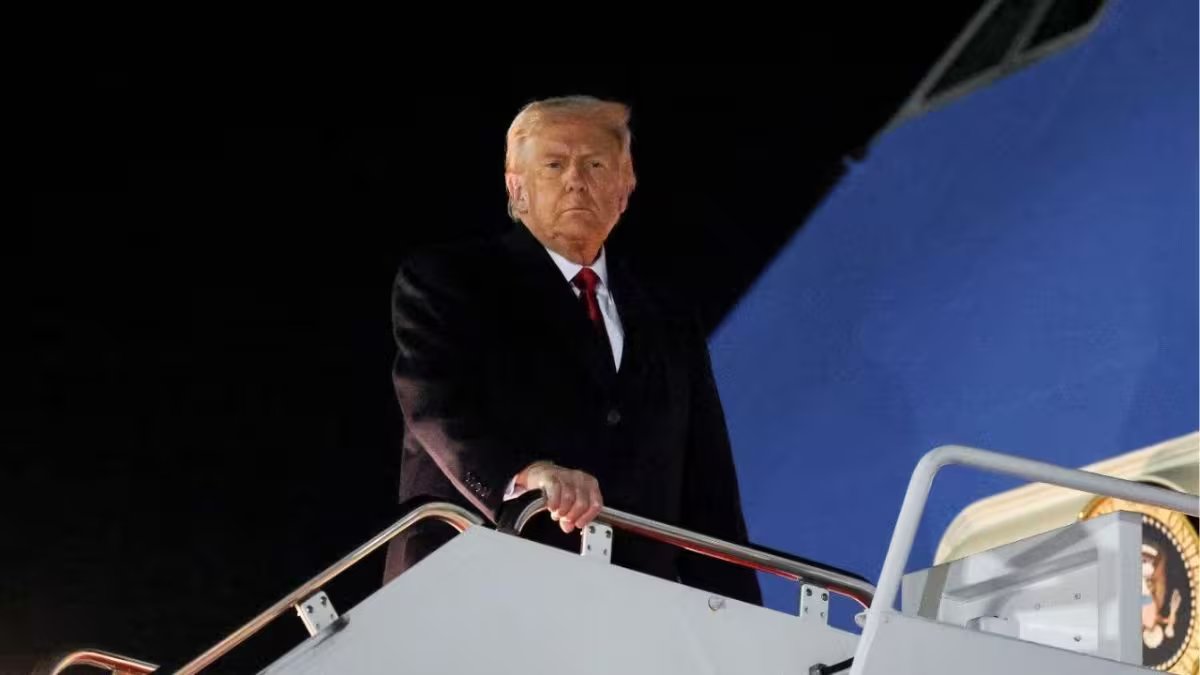
As his approval ratings hit an all-time low, US President Donald Trump is likely to roll back metal tariffs ahead of the mid-term elections. The duties have pushed households into an affordability crisis and hit the manufacturing sector that depends on imported raw and intermediate materials to make finished goods.
As his approval ratings have fallen to an all-time low, US President Donald Trump is likely to roll back tariffs on metals ahead of the mid-term elections.
Trump’s tariffs have raised everyday household expenses by up to $200 and hit the manufacturing sector so hard that it has
lost around 72,000 jobs since April.
As a result, Trump’s approval has dropped to an all-time low of 36 per cent, according to the AP-NORC survey conducted this month.
While the economy is bound to be at the top of voters’ minds, they have also rejected Trump’s crackdown on immigrants. A majority of Americans —at 62 per cent— believe Trump has gone overboard in deploying federal agents to cities and 54 per cent say he has gone too far on immigration in general.
Such poor ratings have coincided with
warnings from allies that Trump’s policies will lead to the Republicans’ defeat in the 2026 mid-term elections.
These warnings and the declining approval numbers have pushed Trump toward a course correction: he has already withdrawn the National Guard from several Democrat-run cities and announced an end to the immigration crackdown in Minnesota. A downward revision of tariffs appears to be the next corrective step.
ALSO READ —
Mid-term pressure: Trump scales back immigration crackdown as political backlash grows
The Financial Times has reported that Trump is planning to reduce tariffs on steel and aluminium to address the affordability crisis and his poor ratings.
Trump has imposed a 50 percent tariff on steel, copper, and aluminium imports. He has also placed 50 percent tariffs on 407 “derivatives” of steel and aluminium — intermediate products made from these metals, ranging from automobile parts and machinery to specialty chemicals and pumps.
The FT has reported that Trump is considering narrowing the list of these derivatives. Essentially, such a reduction would cut input costs for manufacturers.
For weeks, surveys have shown that Republicans are set to lose the mid-terms:
| Pollster | Dates | Sponsor | Margin | Democrat | Republican |
|---|---|---|---|---|---|
| YouGov | Jan. 30 – Feb. 2 | Economist | Democrat +4 | 44% | 40% |
| Morning Consult | Jan. 30 – Feb. 1 | — | Democrat +5 | 47% | 42% |
| Public Policy Polling | Jan. 29–30 | — | Democrat +7 | 48% | 41% |
| HarrisX/Harris Poll | Jan. 28–29 | Harvard CAPS | Democrat +3 | 47% | 44% |
| HarrisX/Harris Poll | Jan. 28–29 | Harvard CAPS | Democrat +4 | 52% | 48% |
| Marquette University Law School | Jan. 21–28 | — | Democrat +7 | 52% | 45% |
| Cygnal Political | Jan. 27–28 | — | Democrat +4 | 48% | 44% |
| McLaughlin & Associates | Jan. 21–27 | — | Democrat +2 | 46% | 44% |
| The Argument/Verasight | Jan. 26–27 | — | Democrat +4 | 52% | 48% |
| Echelon Insights | Jan. 22–26 | — | Democrat +5 | 49% | 44% |
| Beacon Research/Shaw & Company Res. | Jan. 23–26 | Fox News | Democrat +6 | 52% | 46% |
| YouGov | Jan. 23–26 | Economist | Democrat +5 | 43% | 38% |
| Morning Consult | Jan. 20–25 | — | Democrat +1 | 44% | 43% |
| Morning Consult | Jan. 23–25 | — | Democrat +2 | 45% | 43% |
| Ipsos | Jan. 23–25 | Reuters | Democrat +4 | 41% | 37% |
How tariffs rattled households and industries
Contrary to what Trump and his supporters maintain, foreign companies or countries do not pay tariffs, as tariffs are import taxes paid by importers.
Nearly half of all American imports now subjected to tariffs are intermediate goods that US factories use to produce finished products, such as metals to make food and beverage cans, and circuit boards used in various electronics. Trump’s tariffs on metals and hundreds of derivative goods have raised costs for small- and medium-sized manufacturers. The consequences include reduced profit margins, rising consumer prices, and, most notably, job losses.
Consider these facts: American factories now employ 72,000 fewer people than they did in April when Trump announced his tariffs, and they currently employ fewer workers than during Trump’s first term, according to Washington Post and Reuters respectively.
Among manufacturers, automakers have shed around 20,000 jobs since April and semiconductor companies have laid off around 13,000 workers, as per The Post.
As for households, Navy Federal Credit Union Chief Economist Heather Long told PBS that tariffs mean $100 to $200 more in costs per household. He said the country is stuck in a “jobless boom”.
“The other thing that’s been really hard for a lot of people on Main Street to reconcile is they see these really strong GDP growth numbers. They see the stock market at a record high, but they don’t really feel it because I have been calling this a jobless boom. There’s a boom, but we have had virtually no job creation outside of health care since April. And that’s really weighing on a lot of everyday middle-class Americans,” said Long.
What Trump plans to do about tariffs
To mitigate these issues, the Trump administration is reviewing the expansive list of goods covered by tariffs to exempt some items and halt further expansion of the list, according to the FT.
The newspaper quoted three sources saying the administration intends to replace the expansive list with targeted tariffs on national security grounds.
Sources say the Trump administration has concluded that tariffs are hurting consumers by making everyday items—such as pie tins, and food and drink cans—more expensive.
Indeed, 52 per cent of Americans believe Trump’s economic policies have made their lives worse, according to a survey by the Pew Research Center.
End of Article