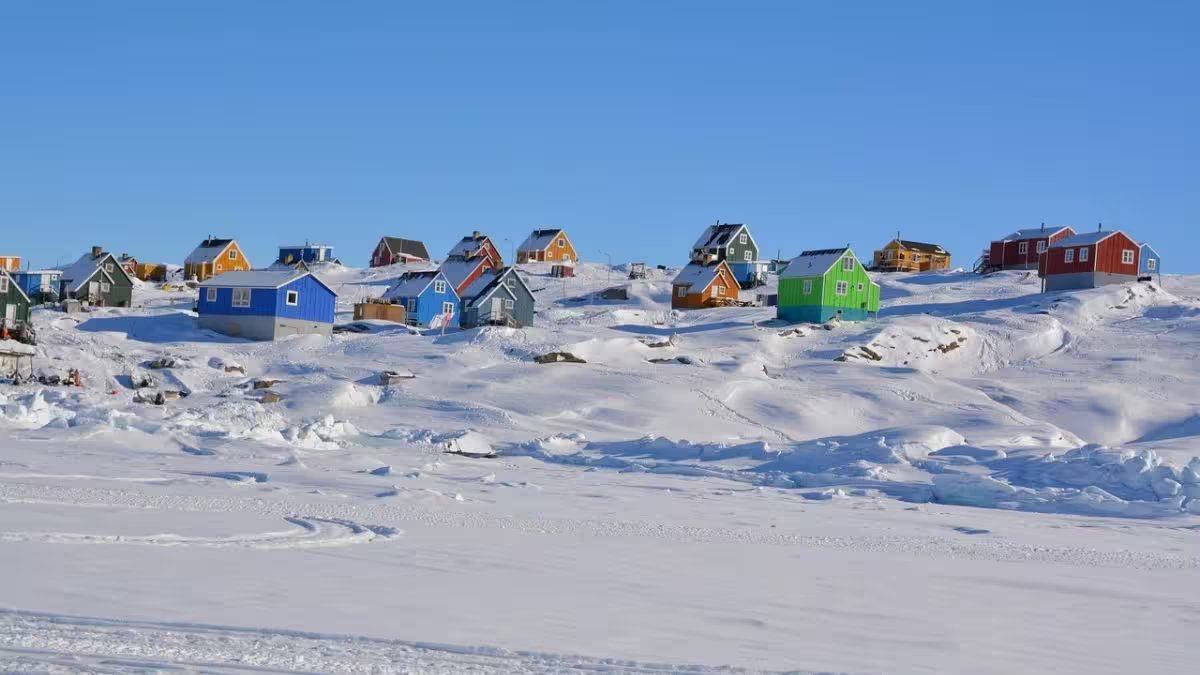
Greenland is the world’s largest island. It lies in the North Atlantic Ocean and most of it is inside the Arctic Circle. A massive ice sheet covers nearly 80 percent of the land.
Even though Greenland is closer to North America, it is part of the Kingdom of Denmark. Greenland governs most of its internal matters, while Denmark handles defence and foreign policy.
Why Greenland is in the news?
Greenland is getting global attention for two main reasons. The first is the growing interest of the United States. The US has had a military presence in Greenland since World War II.
Trump has reportedly asked special forces to prepare contingency plans for a possible invasion of Greenland, a move that has faced resistance from senior US military officials over legal and political concerns.
The second concern is climate change. Greenland’s ice sheet is melting faster than scientists expected.
This melt adds to rising sea levels across the world. Researchers from many countries study Greenland to understand how warming affects polar regions.
Greenland has deposits of rare earth minerals that are needed for electronics and clean energy technology. There has also been interest in oil and gas, though the Greenland government has restricted fossil fuel exploration.
These issues have sparked debate inside Greenland about development, environment, and independence.
Features and Terrain
The capital city is Nuuk. It sits on the southwest coast and is home to about a third of the island’s population. Houses painted in red, blue, and yellow line the rocky coast.
Greenland’s Inuit people call the island Kalaallit Nunaat, which means Land of the Greenlanders. Most people speak Greenlandic. Danish and English are also widely spoken.
Greenland has a population of around 56,000. There are no roads linking towns. Life is shaped by weather, ice, and the sea. Fishing and hunting remain central to the economy and culture.
Getting to Greenland
For decades, reaching Greenland required patience. Most travellers flew through Copenhagen or Reykjavik before continuing to Greenland on smaller planes. This is starting to change.
New airports and direct flights are reshaping travel to the island. Seasonal direct flights now connect Nuuk with cities in the United States and Europe.
Getting to Greenland is one of the most expensive parts of the trip as the only way to get there without going on a cruise is to fly.
Air Greenland is the national airline, offering both international flights to and from Greenland, and domestic flights and helicopters within Greenland. It operates regular flights from Copenhagen (year-round), Billund (seasonal) and Aalborg (seasonal) in Denmark to Nuuk (year-round), Kangerlussuaq (seasonal), Ilulissat (seasonal) and Narsarsuaq (seasonal), as well as flights between Nuuk and Iqaluit in Canada (seasonal).
Icelandair operates flights from Keflavík International Airport in Reykjavík to Nuuk (year-round), Kulusuk (March to September), Ilulissat (seasonal) and Narsarsuaq (June to September).
These routes are making Greenland more accessible to international visitors, especially from North America.
Once inside Greenland, travel is unlike anywhere else. There are no highways between towns. People rely on small aircraft, helicopters, boats, and ferries.
In winter, snowmobiles and dog sleds are still used in some areas. Planning transport is a key part of any Greenland trip.
When to visit
Greenland has two main travel seasons. Summer lasts from June to August. Temperatures remain cool, but conditions are easier for travel. In summer, the sun stays in the sky for most of the day. In the north, the sun does not set at all for weeks. This is known as the midnight sun.
Winter is long, cold, and dark. Temperatures can drop far below freezing. But winter is also when visitors can see the Northern Lights. From September to April, the night sky often glows with green and purple lights, especially away from towns.
Each season offers different experiences. Summer is better for hiking and boat travel. Winter is best for snow activities and aurora viewing.
What to see and do
Greenland is famous for its ice. One of the most popular destinations is Ilulissat, a town north of the Arctic Circle. Nearby, a fast-moving glacier releases huge icebergs into the sea.
These icebergs drift slowly through Disko Bay and can be seen from land or boat.
The Ilulissat Icefjord is a protected site and a major draw for travelers. Boat tours allow visitors to move between towering walls of ice while guides explain how glaciers work and why they matter to the global climate.
Hiking and Nature
Greenland’s landscapes are vast and quiet. There are mountains, rocky coastlines, tundra, and lakes formed by melting ice.
The Arctic Circle Trail is one of the best-known hiking routes. It stretches across remote land with no roads or villages in between.
Wildlife is another highlight. Musk oxen roam inland areas. Arctic foxes, seals, and whales can be spotted in different regions.
Polar bears live mostly in the far north and east, and sightings are rare but possible.
Culture and Museums
Nuuk offers insight into Greenland’s past and present. The National Museum displays ancient tools, clothing, and stories of Inuit life.
Visitors can learn how people adapted to harsh conditions over thousands of years.
Smaller towns have local museums and cultural centres. Art, music, and storytelling remain important parts of daily life.
Traditional kayaking and drum dancing are still practiced, alongside modern forms of expression.
Food is another way to experience culture. Greenlandic dishes often include fish, seal, reindeer, and musk ox. Many restaurants now combine traditional ingredients with modern cooking styles.
Adventure Activities
Adventure tourism is growing fast. Visitors can hike on glaciers, climb ice walls, or kayak among icebergs. Guided tours focus on safety and environmental care.
In winter, dog sledding remains a powerful symbol of Arctic life. Travelers ride behind teams of dogs across frozen land, guided by local drivers. Ice fishing and snowshoeing are also popular.
These activities attract travelers looking for nature, quiet, and challenge rather than luxury.
Travel Trends
Tourism in Greenland is increasing as flights become easier and global interest grows. New airports are opening or expanding in Nuuk and other towns. This is expected to bring more visitors in the coming years.
The Greenland government is trying to avoid mass tourism. New rules support local ownership of tour companies. Officials want tourism to benefit residents and protect fragile ecosystems.
There are concerns in some towns about cruise ships and overcrowding during peak months. Local leaders are working to balance economic opportunity with quality of life.
Costs and reality for travellers
Greenland is not a cheap destination. Food, hotels, and tours cost more because supplies must be imported. Flights within Greenland are also expensive.
Visitors should plan carefully and book early. Weather delays are common, so flexible schedules help. Despite the cost, many travellers feel the experience is worth it because Greenland offers something few places can.
Greenland is not exactly a place for budget travelling. Staying in budget hostels and eating at local stores are hacks to swear by.
Average daily budget for a single traveller excluding flight prices can range from from $100 to $200. While a mid-Range could be between $200 to $400.
Greenland visa rules depend on your nationality, but generally, EU/Schengen citizens and some other countries can enter visa-free for upto 90 days.
Most non-EU/EEA citizens need a specific Greenland visa issued via a Danish mission, as standard Schengen visas aren’t valid unless explicitly marked for Greenland.
Visa application fee can range between $120-$130 depending your nationality and other immigration rules.
You need a passport valid beyond your stay, and for work or long stays, permits are required through Danish immigration (SIRI) or local municipalities.
Choose destinations based on interests. Nuuk is best for culture and city life. Ilulissat is ideal for ice and scenery. Remote areas suit experienced travelers seeking adventure.
Pack properly. Weather changes quickly. Warm, waterproof clothing is essential even in summer.
Respect local customs and nature. Greenlanders value their land and traditions. Responsible travel matters here more than anywhere else.
End of Article