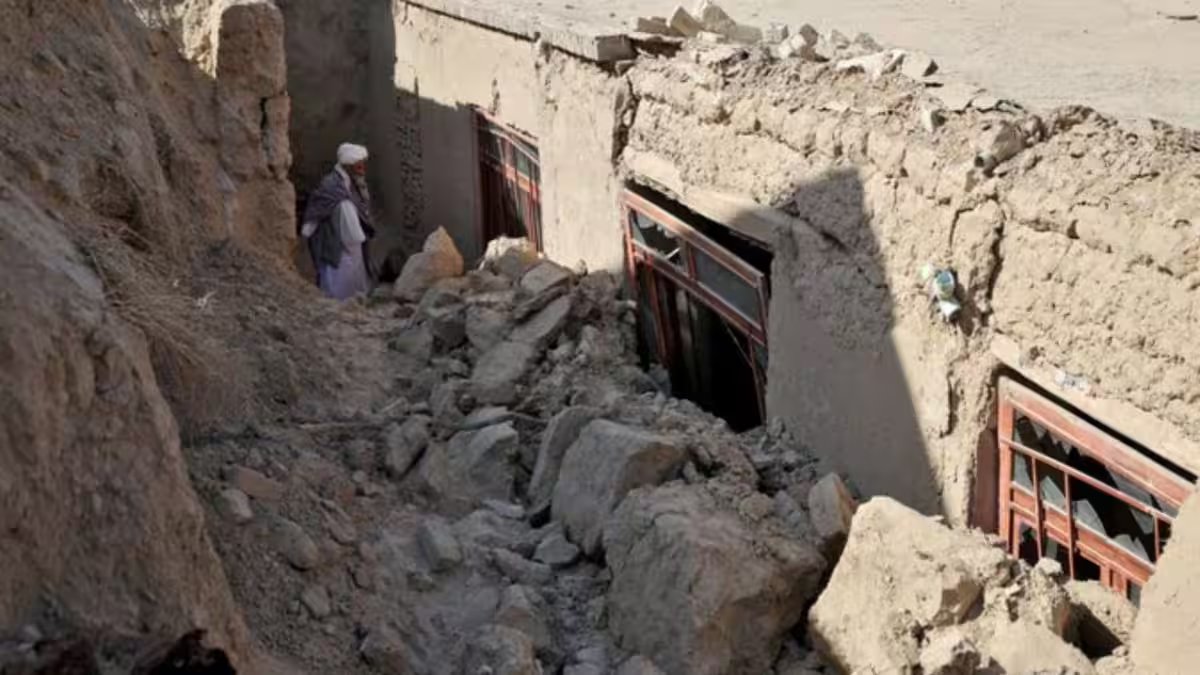
Pakistan launched intelligence-based airstrikes on militant camps inside Afghanistan, citing conclusive evidence linking TTP fighters to recent suicide attacks and warning it will act to protect national security
Afghanistan on Sunday strongly condemned Pakistan’s airstrikes targeting Tehreek-e-Taliban Pakistan (TTP) fighters along the border, describing them as a “clear violation” of its sovereignty and international law.
In a post on X, Afghan government spokesperson Zabihullah Mujahid said the strikes hit a religious seminary and several residential buildings in border areas, resulting in dozens of civilian casualties, including women and children who were killed or injured.
“Last night, they bombed our civilian compatriots in Nangarhar and Paktika provinces, martyring and wounding dozens of people, including women and children,” he said in a post on X.
د پاکستاني پوځي رژيم له خوا د افغانستان د حريم د نقض په تړاو د ا.ا.ا. د ملي دفاع وزارت اعلامیه
د تیرو تجاوزونو په دوام یو ځل بیا پاکستاني پوځي رژیم د افغانستان ننگرهار او پکتیکا ولایتونو په څو ملکي سیمو، (یوې دیني مدرسې او ګڼو ملکي کورونو) هوايي بریدونه ترسره کړل… pic.twitter.com/3JIUFX5Nkb— د ملي دفاع وزارت – وزارت دفاع ملی (@MoDAfghanistan2) February 22, 2026
Afghanistan’s Ministry of National Defence said protecting the nation’s sovereignty and ensuring the safety of its citizens was both a religious and national duty, warning that a measured and appropriate response would be delivered at the right time.
In a post on X, the ministry said, “Attacks on civilian targets and religious centres are clear evidence of the Pakistani army’s intelligence and security failures, and such repeated aggressions will never conceal their internal shortcomings.”
Pakistan carried out airstrikes along its border with Afghanistan early Sunday, targeting Tehreek-e-Taliban Pakistan (TTP) fighters accused of carrying out recent deadly attacks inside the country.
Pakistan’s Information Minister Attaullah Tarar said the military conducted what he called “intelligence-based, selective operations” against seven camps linked to the TTP and its affiliates. He added that a regional affiliate of the Islamic State group was also targeted during the strikes, according to the Associated Press.
“Pakistan has always strived to maintain peace and stability in the region,” Tarar said in a post on X, but stressed that the safety and security of Pakistani citizens remained a top priority.
Islamabad did not disclose the precise locations of the strikes. However, senior sources told CNN-News18 that Pakistani forces targeted areas in the Bermal and Argun districts of Paktika province, as well as the Khogyani, Bahsod, and Ghani Khel districts of Nangarhar province.
Coordinated strikes and rising regional tensions
Multiple explosions were heard in rapid succession in the Margha area, pointing to a carefully coordinated military operation. Reports also said missiles launched from an unidentified aircraft struck the Banusi Madrasa in Bermal.
خسارات بهجا مانده از حمله شب گذشته ملیشههای پاکستان بر یک مدرسه در ولسوالی برمل ولایت پکتیکا! pic.twitter.com/UWUxS4Wyz1
— نجمان الافغاني تخاری (@Sufyan1800) February 22, 2026
Note: Firstpost could not independently verify the authenticity of the video.
At least 28 Tehreek-e-Taliban Pakistan (TTP) fighters were killed in the strikes, which targeted locations across eastern and southeastern Afghanistan. Pakistani broadcaster Geo News, citing the information ministry, said the operation focused on camps linked to Fitna al Khwarij (FAK), its affiliates, and Daesh Khorasan Province (DKP). The ministry said the strikes were carried out “with precision and accuracy” in retaliation for recent suicide attacks in Islamabad, Bajaur, and Bannu during Ramzan.
The escalation follows a string of deadly attacks in northwestern Pakistan. In Bajaur district, a suicide bomber drove an explosives-laden vehicle into a security checkpoint, killing 11 soldiers and a child. Hours later, another suicide attack in Bannu killed two soldiers, including a lieutenant colonel. Officials said the Bajaur attacker was an Afghan national.
Pakistan’s Information Minister Attaullah Tarar said authorities had “conclusive evidence” linking recent attacks—including a suicide bombing at a Shiite mosque in Islamabad that killed 31 worshippers—to militants acting on the “behest of their Afghanistan-based leadership and handlers.”
He added that Pakistan had repeatedly urged Afghanistan’s Taliban authorities to prevent militant groups from using Afghan territory to stage attacks inside Pakistan and called on the international community to pressure Kabul to uphold its commitments under the Doha Agreement.
Earlier this week, Pakistan’s Foreign Office spokesperson Tahir Andrabi said Islamabad “very legitimately demands that Afghan territory should not be used for terrorism inside Pakistan,” adding that while Pakistan had shown restraint, “all options would obviously remain on the table.”
Relations between Pakistan and Afghanistan have remained strained over the past year due to increasing cross-border violence, despite a Qatar-brokered ceasefire that has largely held in recent months.
End of Article