Bangladesh is just days away from one of the most consequential elections since its independence, as the country prepares for a nationwide vote to select its next prime minister and government.
The vote will take place against the backdrop of the August 2024 mass uprising — led primarily by students — that resulted in the dramatic collapse of Sheikh Hasina’s government after nearly a decade and a half in power, and ushered in an interim administration.
Often described domestically as the country’s “Second Independence,” the movement has fundamentally reshaped Bangladesh with serious questions being raised about governance, accountability, and democratic legitimacy.
This election guide by Firstpost offers a comprehensive overview of the 2026 general election in Bangladesh.
When and how will voting take place?
The Election Commission of Bangladesh has confirmed February 12, 2026 (Thursday), as polling day, with voters heading to the booths after a tightly regulated campaign period.
The nomination process formally closed on December 29, 2025, followed by
the official launch of campaigning on January 22, 2026.
In accordance with electoral law, all political campaigning must cease by 4:30 pm on February 10, creating a 48-hour cooling-off period ahead of voting.
Polling hours on election day will run from 7:30 am to 4:30 pm, an extension of one hour compared to previous elections.
The extended schedule has been introduced to manage what the Election Commission describes as an unusually complex voting process, with voters required to cast ballots for both parliamentary representation and a constitutional referendum on the same day.
Candidates are elected through a First-Past-The-Post system, where the contender with the highest votes in the constituency will be declared the winner.
Why is the Bangladesh election the biggest in 2026?
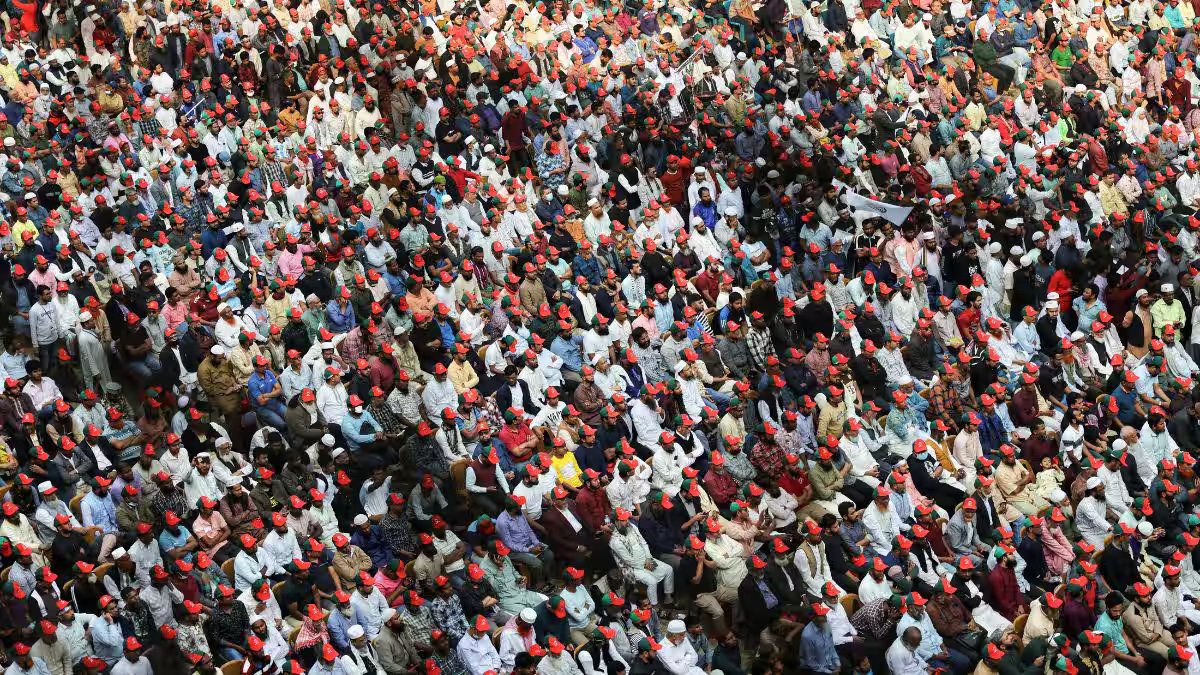
From a numerical standpoint, the election is one of the largest democratic exercises ever conducted in South Asia. The final electoral roll lists 127,695,183 registered voters, placing Bangladesh at the top of global voter participation counts for 2026.
Voters will elect representatives to 300 general seats in the Jatiya Sangsad, while 50 additional seats reserved for women will be filled later through proportional allocation based on party performance.
A total of 1,981 candidates are contesting the election.
Voting will be conducted across 42,761 polling centres, housing approximately 244,739 polling booths nationwide.
The logistical demands of administering such a vast operation have placed unprecedented pressure on election officials, particularly in light of the volatile political environment following the 2024 upheaval.
Overseeing the electoral process is Chief Election Commissioner Dr AMM Nasir Uddin, whose role is widely regarded
as one of the most challenging in Bangladesh’s history.
Muhammad Yunus, serving as chief adviser of the interim administration, occupies a unique position. Although he is not contesting the election, the success or failure of the transition process is closely linked to his stewardship.
To ensure order during the election period, Dhaka has authorised the deployment of 92,500 military personnel, the largest such deployment since 1971.
These forces will operate alongside police and the Rapid Action Battalion, with the army granted magisterial powers
to address immediate threats of violence.
Why is the Bangladesh election this time unique?
A defining feature of the 2026 election is the introduction of a dual-ballot system. For the first time, Bangladeshi voters will simultaneously decide the composition of parliament and the future of key constitutional reforms through a national referendum.
The second ballot relates to the July Charter, a reform framework introduced by the interim government under Yunus.
The charter proposes structural changes intended to reduce executive dominance, strengthen institutional independence, and address long-standing criticisms of politicisation across state bodies.
The referendum seeks public approval for several constitutional amendments, a few of which are:
-
Among them is a proposal to restrict any individual from serving more than two terms as prime minister, a move widely seen as a response to the concentration of power witnessed in previous administrations.
-
Another proposal calls for the creation of a permanent judicial appointments commission, removing the prime minister’s direct influence over judicial selection.
-
The July Charter also envisions the establishment of an upper house of parliament, designed to provide proportional representation to experts, minorities, and members of civil society.
-
In addition, it seeks to reinstate the constitutional office of the Ombudsman, an institution originally intended to oversee transparency and accountability within government but long dormant in practice.
Election officials have acknowledged that managing a referendum alongside parliamentary voting presents operational challenges, but argue that the reforms under consideration are central to the democratic transition triggered by the events of 2024.
Which parties are in the fray?
The political environment ahead of the 2026 election is markedly different from previous cycles. The Awami League, which dominated Bangladeshi politics for more than a decade, remains suspended from the electoral process.
Its absence has fundamentally altered the competitive structure of the contest, giving rise to a largely bipolar race between established opposition forces and newer political movements that emerged from the protest period.
Bangladesh Nationalist Party (BNP)
The Bangladesh Nationalist Party (BNP) enters the election as the most established contender and is widely viewed as the leading party in opinion surveys.
The party is
headed by acting chairman Tarique Rahman, who returned to Bangladesh on December 25, 2025, after spending 18 years in self-imposed exile in London. His return triggered large public gatherings and revitalised the party’s grassroots machinery.
While he is widely seen as the likely prime ministerial candidate should the BNP secure a majority, unresolved legal questions related to past convictions remain unaddressed.
The BNP’s campaign centres on a platform branded “Bangladesh First,” which emphasises economic recovery, social protection, and political stability. Among its key pledges is a “Family Card” programme aimed at providing monthly financial assistance to economically vulnerable households to help cover essential food expenses.
The party has also committed to retaining the First-Past-The-Post electoral system.
11-party alliance led by NCP & Jamaat-e-Islami
Challenging the BNP is an 11-party alliance often described as representing a “new guard” in Bangladeshi politics.
The coalition includes the National Citizen Party (NCP), which grew out of the 2024 student movement, and Bangladesh Jamaat-e-Islami, which has re-established itself as a significant political force after years of marginalisation.
The NCP is led by former student leaders 27-year-old Nahid Islam, Sarjis Alam, and Hasnat Abdullah. Its campaign focuses on dismantling entrenched political practices, promoting proportional representation, and preventing a return to what it describes as cyclical power-sharing between the BNP and Awami League.
Jamaat-e-Islami, under the leadership of Shafiqur Rahman,
has emerged as the organisational backbone of the alliance, drawing on strong networks developed during recent student union elections.
Apart from the NCP and Jamaat-e-Islami, other parties in the alliance comprise Bangladesh Khelafat Majlis, Khelafat Majlis, Bangladesh Khilafat Andolan, the Nizam-e-Islam Party, the Liberal Democratic Party (LDP), Amar Bangladesh Party (AB Party), the Jatiya Ganotantrik Party (JAGPA), the Bangladesh Development Party (BDP), and the Bangladesh Labour Party.
Other contenders
Other political actors include the Jatiya Party (Ershad)-led National Democratic Front (NDF), led by GM Quader, which is attempting to position itself as a centrist alternative despite internal divisions.
Several leftist alliances, including the Communist Party of Bangladesh leading the Democratic United Front (DUF), are also contesting seats, campaigning on labour rights, economic redistribution, and social justice.
A few other parties like the Islami Andolan Bangladesh (IAB), the Gono Odhikar Parishad, and the Amjonotar Dal are also in the fray.
What are some firsts in this Bangladesh election?
One of the most notable reforms for the general election is the introduction of expatriate postal voting. For the first time, Bangladesh’s diaspora — estimated at around 15 million people — has been given the opportunity to vote from abroad.
Through an online registration system, approximately 300,000 expatriates have successfully enrolled to cast postal ballots. These ballots display party symbols rather than individual candidate names, a design choice intended to simplify the process for overseas voters.
Another significant change is the reintroduction of the “No Vote” option.
In constituencies where only a single candidate is contesting, voters can select this option to reject the uncontested candidacy. If “No Vote” secures a majority, the Election Commission is required to hold a fresh election in that constituency.
Environmental considerations have also influenced election rules. The use of laminated plastic posters — long a feature of Bangladeshi election campaigns — has been prohibited.
Candidates are instead required to rely on digital displays or biodegradable materials, aligning the election with the interim government’s broader environmental agenda.
Meanwhile, as the election is under the spotlight globally, the European Union has deployed a 150-member observation mission, while the US-based NGO Carter Center is providing technical assistance related to ballot integrity.
Although the United Nations will not deploy observers without a formal mandate, its Dhaka office may offer technical support if approved separately.
330 International Observers Confirmed for Upcoming Elections
Dhaka, January 31, 2026: Six international organisations, including the Organisation of Islamic Cooperation (OIC), have agreed to deploy at least 63 observers for Bangladesh’s 13th general election and the referendum…
— Chief Adviser of the Government of Bangladesh (@ChiefAdviserGoB) February 1, 2026
India, as well, has been invited to observe the polling.
Where does women’s participation stand in the Bangladesh election?
Despite an increase in female candidacy, women remain significantly underrepresented in the 2026 election.
A total of 78 women are contesting parliamentary seats, the highest number in a competitive election in Bangladesh. However, they account for less than four per cent of all candidates and are contesting in only 67 constituencies.
Of these candidates, 61 have been nominated by political parties, while 17 are running as independents.
Election Commission records indicate that women with family or marital connections to influential political figures tend to perform better electorally than those without such ties. Nearly one-third of the women candidates fall into this category.
At least
30 political parties have fielded only male candidates. The BNP has nominated 10 women, all of whom have direct family connections to senior party leaders.
This pattern reflects a broader historical trend in which women’s political participation has often been mediated through dynastic networks rather than independent political careers.
Historical data shows the uneven trajectory of women’s representation in parliament. No women were elected in the 1973 or 1979 elections.
Modest gains followed in subsequent decades, with fluctuating success rates often shaped by the credibility of the electoral process. The 2014 and 2024 elections, both widely criticised for being one-sided, saw relatively higher numbers of women elected, while contested elections produced more variable outcomes.
Although the Representation of the People Order mandates that parties reserve 33 per cent of committee positions for women, compliance has been limited. In 2021, the Election Commission extended the deadline for implementation to 2030.
Which issues will dominate voters’ minds?
Economic pressures are a dominant concern for voters. Inflation has remained elevated throughout 2025, particularly for essential commodities, while unemployment — especially among educated youth — continues to rise.
Corruption also remains another central issue. Bangladesh’s ranking of 151st on the Corruption Perception Index in 2024 has reinforced public scepticism about governance.
Relations
with India have also featured prominently in campaign discourse. Public resentment persists over India’s perceived support for the previous government and has resulted in political parties adopting differing approaches.
The 11-party alliance is campaigning on an explicitly anti-hegemonic platforms, while BNP — despite a pragmatic diplomatic thaw earlier this year — continues to prioritise a “Bangladesh First” agenda that demands an end to border killings and a fair resolution to
the Teesta water-sharing dispute.
This tension was recently navigated during a high-profile, four-hour visit to Dhaka on December 31, by Indian External Affairs Minister Dr S Jaishankar, who attended the funeral of former Bangladeshi Prime Minister Begum Khaleda Zia to offer a symbolic “goodwill gesture” and deliver a personal condolence letter from Prime Minister Narendra Modi to her heir, Tarique Rahman.
On arrival in Dhaka, met with Mr Tarique Rahman @trahmanbnp, Acting Chairman of BNP and son of former PM of Bangladesh Begum Khaleda Zia.
Handed over to him a personal letter from Prime Minister @narendramodi.
Conveyed deepest condolences on behalf of the Government and… pic.twitter.com/xXNwJsRTmZ
— Dr. S. Jaishankar (@DrSJaishankar) December 31, 2025
Who can win the 2026 Bangladesh general election?
Political analysts have outlined three primary outcomes following the vote. One scenario involves the BNP securing an outright majority, allowing it to govern independently.
Another envisions a hung parliament requiring coalition negotiations, potentially elevating the influence of smaller parties or the 11-party alliance.
A third scenario involves a stronger-than-expected performance by the NCP-Jamaat bloc, driven by youth mobilisation.
Beyond seat counts, the credibility of the process itself remains the central issue. A widely accepted result could stabilise Bangladesh’s democratic institutions, strengthen investor confidence, and support the country’s graduation from Least Developed Country status.
Conversely, allegations of manipulation or violence could undermine the legitimacy of the transition initiated in 2024.
In an email to the Associated Press last week, Hasina
who is in self-exile in New Delhi, denounced the election, writing, “A government born of exclusion cannot unite a divided nation.”
Although the election itself is being conducted under the First-Past-The-Post system, the debate over proportional representation has also become a central campaign theme.
The NCP and Jamaat-e-Islami have argued that the existing system produces disproportionate outcomes, while the BNP has defended it as essential for political stability.
The date for counting of votes has been set for the same day on February 12 and date for the poll of reserved seats has been set for the next day.
Also Watch:
With inputs from agencies
End of Article