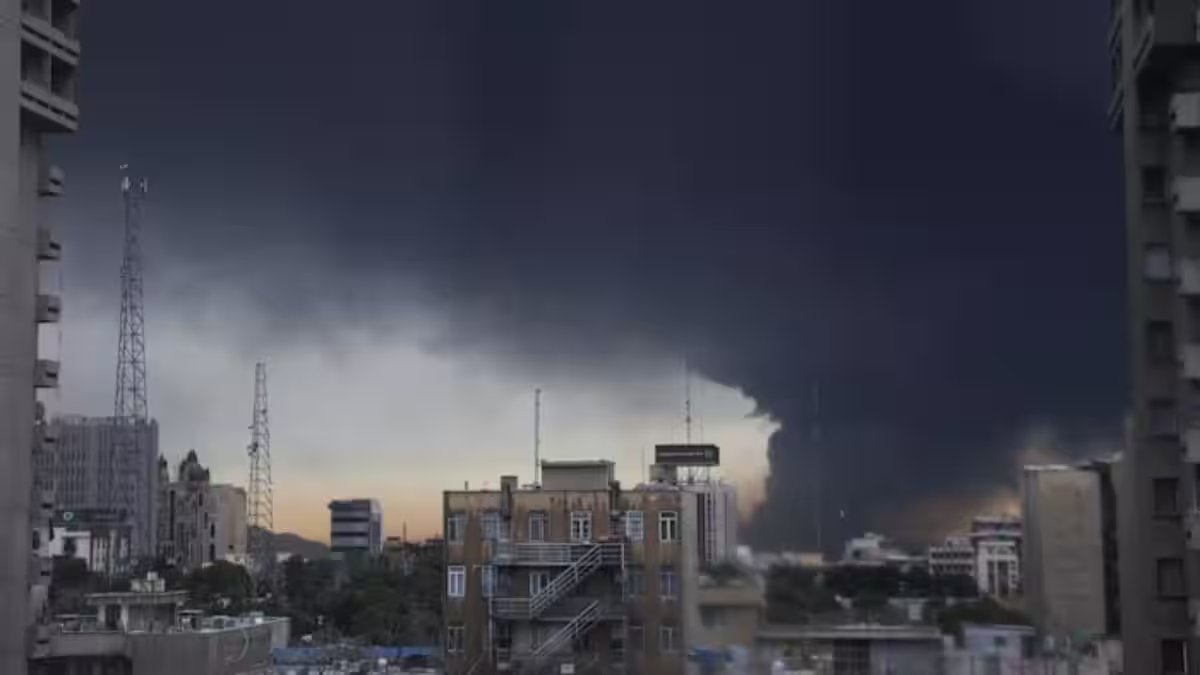
From oil refineries in Saudi Arabia and the UAE to a gas production facility in Qatar and oil depots in Tehran, the region’s energy infrastructure —the economic lifeline of the West Asia— has come under attack amid the US-Israeli war on Iran. Here are the energy facilities hit so far in the conflict.
From oil refineries in Saudi Arabia and the UAE to a gas production facility in Qatar and oil depots in Tehran, the energy infrastructure —West Asia’s economic lifeline— has come under attack amid the US-Israeli war on Iran, pushing oil prices to their highest levels in four years and raising fears of global energy insecurity.
Oil and gas facilities have also been struck in Bahrain, Iraq, and Israel as both sides have attacked the energy infrastructure.
From the pre-war level of $72.48 a barrel,
Brent crude oil futures surged to a high of $119.50 on Monday before settling at $98.96 — the first time oil surged past the $100-mark since 2022 when Russia launched the full-scale invasion of Ukraine.
But it’s not just strikes on oil and gas facilities across the region that have rattled the sector. The tanker traffic has come to a halt in the Strait of Hormuz, which is used for around 20-25 per cent of the world’s seaborne oil and gas trade. Analysts have
warned that the price surge could be far from over.
In a client note cited by Yahoo Finance, Macquarie strategist Vikas Dwivedi wrote that a few weeks of closure of the Strait of Hormuz will create a domino effect of events that could push crude to $150 or higher — more than the $149 during the 2008 financial crisis.
Here are all the oil and gas facilities have been attacked in the ongoing US-Israel war on Iran.
Iranian attacks on Gulf countries
Saudi Arabia
The Saudi authorities reported attempted strikes on the Aramco-owned Ras Tanura oil refinery on March 2 and March 4.
Operations were suspended at the facility, which is central to the kingdom’s oil trade, after those attacks.
Previously, Aramco’s Abqaiq and Khurais plants in Saudi Arabia were attacked in 2019. Iran-backed Yemen-based Houthis had taken responsibility for the attacks.
Qatar
Iran attacked an energy facility in the Ras Laffan Industrial City, which is a major hub for liquefied natural gas (LNG).
Qatar is the world’s top supplier of LNG with a share of around 20 per cent.
UAE
An Iranian drone caused a massive fire at the Fujairah Oil Terminal in Fujairah on March 3.
The facility is the world’s third-largest oil storage facility and serves as a critical hub for global oil supplies.
Bahrain
Iran struck the Bahrain Petroleum Company’s (Bapco) refinery near Ma’ameer, Bahrain, on March 5. The attack caused a fire at the facility.
Later, on March 9, an Iranian drone struck the Sitra island and caused a fire at the country’s only oil refinery.
Iraq
A drone attributed to Iran or Iran-backed militias in the region struck a US-operated oilfield in Duhok province, Iraq, on March 5.
Similar rocket and drone strikes targeted an oil field in Basra province and the headquarters of a US oil company in the province on March 5 and 6.
Israel
The Islamic Revolutionary Guards Corps (IRGC) of Iran claimed striking the oil refinery in Israel’s Haifa, which is the largest in the country.
“IRGC hits Haifa refinery in response to Israeli regime’s attack on Tehran refinery,” Iran’s Mehr news agency reported the IRGC as saying.
The US-Israeli strikes on Iran
Israel attacked oil refineries and oil storage facilities on March 7.
These facilities were the Tondgouyan refinery in Shahr Rey, Tehran Province; Shahran refinery in Tehran City; oil storage facilities in Karaj, Alborz province; separate facility in Tehran City; and an oil depot in Tehran’s Kuhak neighbourhood.
These were the first strikes by Israel on Iran’s oil infrastructure in the ongoing war.
In the ‘12-Day War’ last year, Isreal had struck the Tondgouyan and Shahran refineries.
End of Article