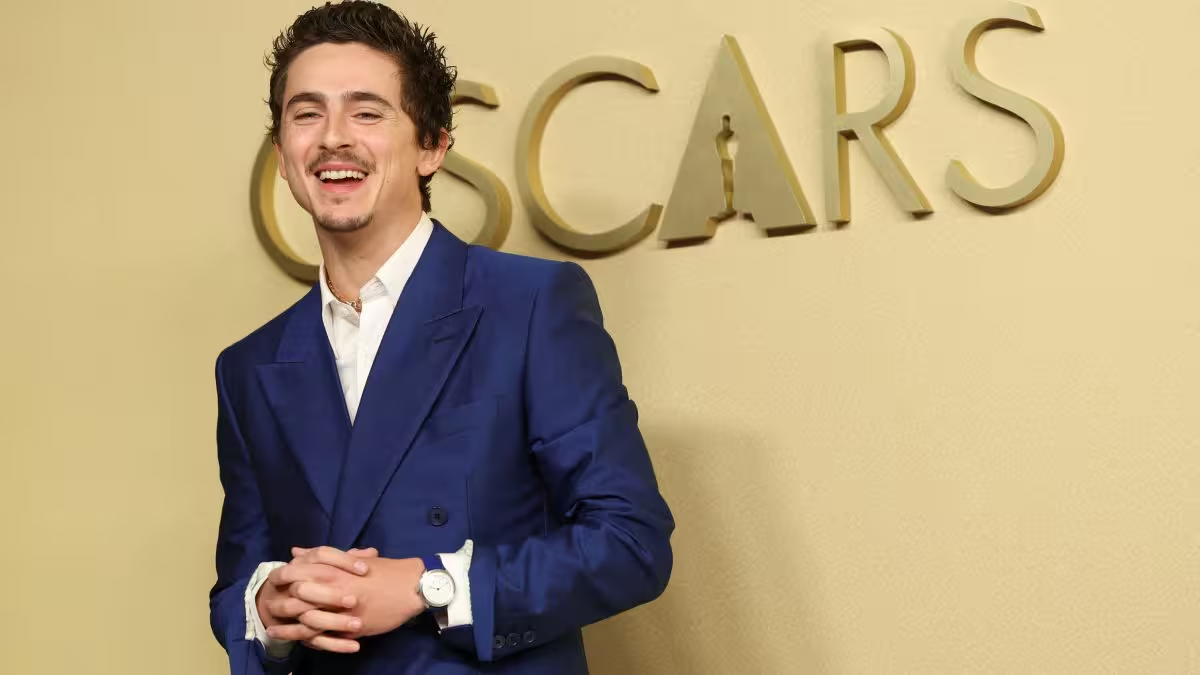
After an offhand remark about ballet and opera, Timothée Chalamet has sparked an unexpectedly big debate about elitism, the cultural relevance of art forms, and whether artists should criticise other art forms.
At a recent CNN and Variety town hall about the future of cinema, Chalamet made a comment that quickly rippled far beyond the film industry. While discussing the kinds of projects he wants to pursue, the actor said he didn’t see himself working in ballet or opera: art forms he framed as things people are trying to “keep alive.”
Within hours, the remark had travelled across film Twitter, arts circles and awards-season media, sparking a surprisingly passionate debate: was Chalamet dismissing classical arts, pointing out an uncomfortable cultural reality, or just being a little too offhand about it?
The argument that Chalamet might actually have a point
One of the more sympathetic takes came from a New York Times critic, who argued that Chalamet’s comment, while clumsy, reflects a reality many artists working in classical disciplines quietly acknowledge. The critic notes that Chalamet himself grew up around dance. His mother and sister trained at the School of American Ballet, and he spent his childhood in Manhattan Plaza, a famous New York building home to performers across theatre, opera and dance.
From that perspective, the actor wasn’t dismissing ballet outright. Instead, he was pointing to something more structural: that ballet and opera largely exist outside mainstream cultural life. The piece frames his comment less as a jab and more as a blunt observation about cultural visibility: the difference between art forms that dominate popular attention and those that survive within more specialised audiences.
The backlash: artists shouldn’t be dismissing other artists
But the backlash was immediate.
Major institutions, including the Metropolitan Opera and London’s Royal Ballet and Opera, responded with videos and statements highlighting packed audiences, backstage artistry and the enduring appeal of live performance.
Many critics and performers argued that one artist publicly belittling another art form, especially one as historically important as ballet, felt unnecessary. Actors and industry figures weighed in across social media and interviews, with several stressing that the arts ecosystem relies on mutual respect between disciplines, not hierarchy.
Jamie Lee Curtis was among those who publicly commented on the debate, echoing a sentiment shared by many performers: that artists should be careful not to casually devalue other forms of artistic labour. The broader frustration wasn’t just about ballet itself. It was about the optics of a Hollywood star appearing to dismiss a centuries-old discipline.
Awards season has turned the debate louder
The timing of the comment hasn’t helped.
Chalamet’s remarks resurfaced just as the awards-season conversation was reaching its peak, with the actor widely seen as a serious Best Actor contender for Marty Supreme. In an industry where momentum and public perception shape awards campaigns, even a throwaway comment can take on outsized importance.
The controversy has complicated what was otherwise a strong run for the actor. Analysts have noted that while Oscar ballots had already closed, meaning the backlash is unlikely to influence the final vote, the timing still shifts the broader awards-season narrative surrounding Chalamet.
Meanwhile, the race itself has grown more unpredictable. Michael B. Jordan’s surprise SAG win has injected new momentum into the Best Actor conversation, giving pundits fresh material to debate just as the controversy around Chalamet began circulating online. In awards season, perception often matters as much as performance. And a viral clip arriving days before the Oscars inevitably becomes part of the story.
The internet is mourning “old Timmy”
At the same time, the controversy has collided with another online narrative: a growing nostalgia for what fans call the “old Timmy.”
Since the satirical Marty Supreme press run began circulating online, and especially after the ballet comment, social media has been flooded with posts mourning the actor’s earlier persona. Clips of Chalamet from the Call Me By Your Name era have surged across TikTok and X: the floppy Prince Charming hair, the soft-spoken interviews, the indie-film wunderkind energy that first made him a Gen-Z heartthrob.
Fans have been unusually dramatic about the shift. Some joke that “an angel has lost its wings,” while others say the actor has gone “from Timothée to Timothy.” For many, revisiting interviews and red-carpet moments from before 2023 now feels, as one viral comment put it, “like seeing an ex.”
The nostalgia reflects a broader discomfort with how Chalamet’s image has evolved in recent years from sensitive arthouse star to a more self-aware, sometimes ironic Hollywood figure.
The bigger cultural question behind the controversy
What makes the debate interesting isn’t really Chalamet himself.
Doja Cat defends the arts of ballet & opera following Timothée Chalamet’s recent comments. pic.twitter.com/texwfiqVMM
— Pop Base (@PopBase) March 9, 2026
It’s the deeper question the moment exposes: where do classical art forms sit in contemporary culture? Ballet and opera have long been symbols of cultural prestige, but they’ve also struggled with accessibility, funding, and public engagement. Many companies now actively experiment with new collaborations and digital performances to broaden audiences.
In that context, Chalamet’s comment, however awkward, tapped into an ongoing conversation about which art forms feel central to cultural life today and which survive on institutional support.
Whether Chalamet intended it or not, the ballet remark has become a cultural Rorschach test. For some, it raised questions about how classical arts fit into contemporary culture. For others, it simply confirmed that one of Hollywood’s most beloved young actors is entering a new, and perhaps less innocent, phase of his public persona.
Either way, a throwaway comment about ballet has done what few awards-season soundbites manage: spark a debate that stretches from opera houses to TikTok.
End of Article


This was beautiful Admin. Thank you for your reflections.