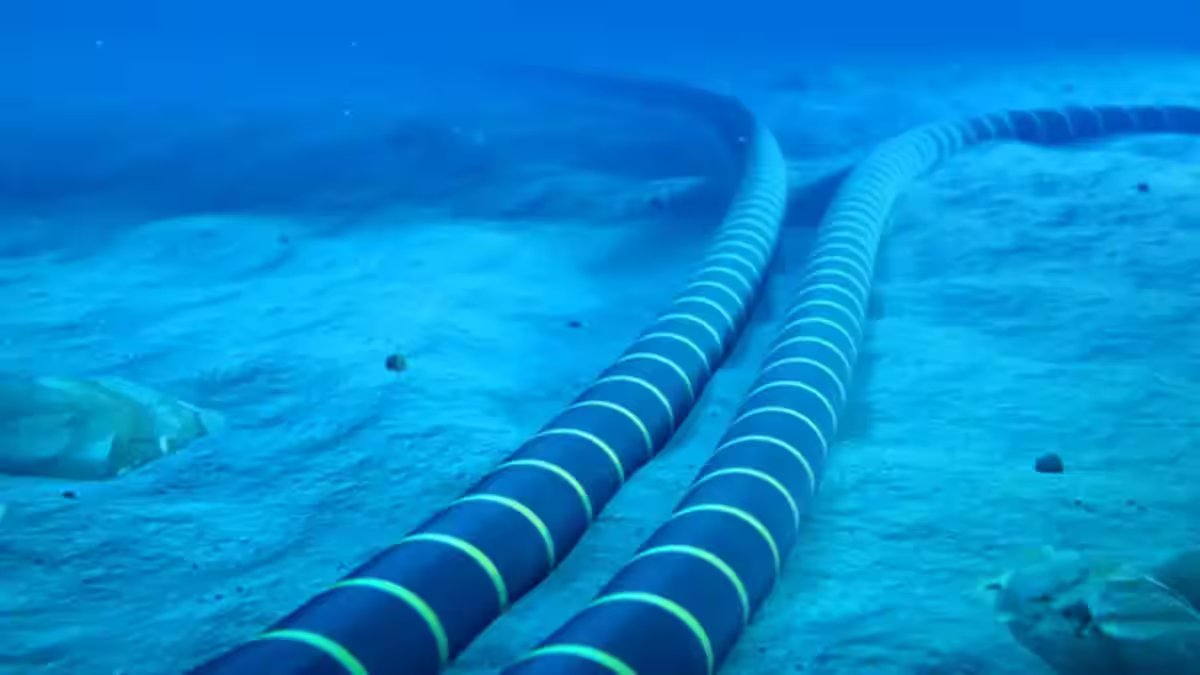
The Strait of Hormuz is not only vital for global oil shipments but also a major route for submarine internet cables linking Asia and Europe. With nearly one-third of India’s westward data traffic passing through the corridor, any disruption could affect international connectivity, cloud services and digital infrastructure
A significant portion of the world’s oil and liquefied natural gas shipments pass through the narrow Strait of Hormuz that connects the Persian Gulf with the Gulf of Oman and the wider Indian Ocean.
And beneath the same waters that carry oil tankers lies a dense network of submarine fibre-optic cables that form the backbone of global internet connectivity.
These cables transmit the vast majority of the world’s digital communications, including financial transactions, cloud computing traffic, video conferencing, social media data and international enterprise operations.
For India, many of the networks linking the country to Europe, West Asia and other global digital hubs pass through or near this corridor.
As
hostilities in West Asia escalate, experts warn that instability in this region could also threaten digital infrastructure.
What is the internet corridor beneath Strait of Hormuz?
-
A large portion of international internet traffic moves through fibre-optic cables placed on the ocean floor rather than through satellites.
-
Submarine fibre-optic cables carry the overwhelming majority of global internet traffic.
-
These cables transmit emails, online banking data, corporate communications, cloud services, streaming content and cross-border digital transactions.
-
The Gulf waters surrounding the Strait of Hormuz serve as a major transit corridor for subsea cables connecting South Asia, West Asia and Europe.
-
Because of the geography of the region, several cable systems converge within a relatively narrow maritime area, creating a concentration of global data routes.
-
These routes are among the shortest and fastest digital pathways linking Asian data centres with European and West Asian networks.
How is India tied to these subsea routes?
-
A large share of India’s international internet traffic moves westward through cable systems in the Arabian Sea and Gulf region before reaching Europe.
-
Experts estimate that roughly one-third of India’s westward data traffic travels through networks passing through or close to the Strait of Hormuz.
-
Systems such as SEA-ME-WE 4 (SMW4), I-ME-WE (IMEWE) and Flag Telecom’s FALCON connect India with global networks through this region.
-
The same infrastructure also provides critical connectivity for Gulf countries including Kuwait, Qatar, Bahrain, Iraq and the United Arab Emirates.
-
If a significant escalation or closure affects the Strait of Hormuz, the digital links that connect these regions to global networks could face serious disruption.
-
The region is witnessing major investments in new fibre-optic cable systems to meet growing demand for data transmission.
-
Large technology companies and telecom operators are increasingly involved in building next-generation subsea cable systems.
-
For example Google CEO Sundar Pichai
recently announced a new connectivity initiative while visiting New Delhi. The India-America Connect initiative aims to establish additional subsea cable routes linking India with international digital networks.
How are undersea cables vulnerable during conflict?
Submarine cables are highly resilient but they remain exposed to several physical risks because they lie along the seabed.
Key vulnerabilities include:
-
Anchors from large vessels dragging across the seabed can damage cables.
-
Maritime accidents or fishing equipment can sever fibre-optic lines.
-
Underwater explosions or naval activity in conflict zones can disrupt cable routes.
-
Tectonic shifts or seabed movements can also affect cable infrastructure.
-
When cables are damaged, specialised repair ships are normally deployed to locate and fix the affected section.
However, conflict conditions make such operations extremely difficult. Repair work on numerous cables has been suspended because vessels cannot safely operate in the area.
What happens if undersea cables are disrupted?
-
If cables cannot be repaired quickly, network capacity gradually declines.
-
As multiple cables experience routine wear or accidental damage, the remaining operational cables become overloaded.
-
This can lead to increased network latency, congestion or even complete service disruptions.
-
Rerouting data over longer distances increases latency and slows internet speeds.
-
Terrestrial networks generally have much lower bandwidth capacity compared to undersea fibre systems.
With inputs from agencies
End of Article