Lebanon has become part of a rapidly widening conflict in West Asia that began with a joint United States-Israeli military campaign against Iran and has now drawn Hezbollah directly into open hostilities with Israel.
The chain of events over the past few days has reopened the northern front between Israel and Lebanon largely for the first time since the fragile ceasefire of 2024.
The immediate trigger was the killing of Iran’s Supreme Leader Ali Khamenei during coordinated US and Israeli strikes on Iranian military and intelligence infrastructure on February 28.
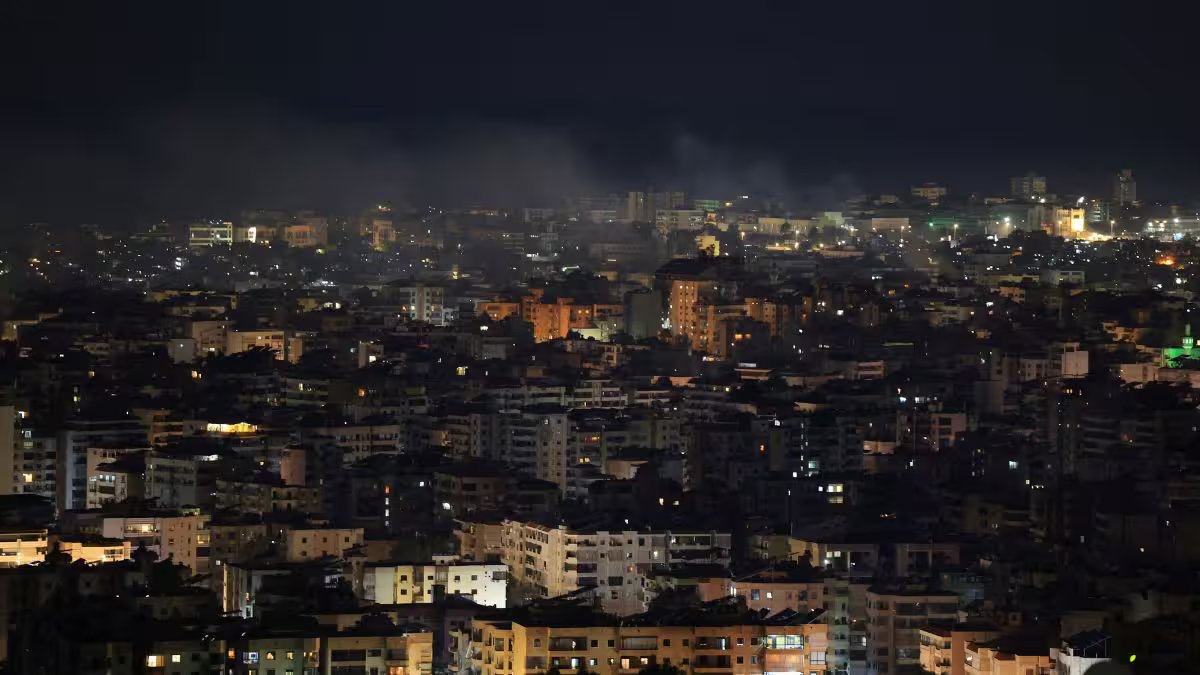
Hezbollah in Lebanon responded by launching missiles and drones at Israel in what it described as retaliation for Khamenei’s death, prompting Israel to unleash large-scale air strikes across Lebanon, including on the southern suburbs of Beirut, villages in the south and locations in the Bekaa Valley.
Lebanese authorities reported heavy civilian casualties, while Israel said it had targeted Hezbollah command centres, launch sites and senior militants.
How did a war with Iran expand into Lebanon?
The current crisis began with a sweeping assault by US and Israeli forces on Iranian targets on February 28. The operations, which hit military installations, intelligence headquarters and senior leadership figures inside Iran, marked a dramatic escalation after negotiations with Tehran were suspended.
The killing of Khamenei, who had led Iran for nearly four decades, sent shockwaves through the region and international markets and immediately raised fears that Iran’s regional allies would respond.
Those fears materialised within days.
On March 1, Hezbollah announced it had fired rockets at northern Israel, the first time in more than a year that the group publicly claimed an attack across the border.
The group framed the action as retaliation for the killing of Iran’s Supreme Leader and for what it described as repeated Israeli strikes.
By the early hours of March 2, Hezbollah had fired six projectiles toward northern Israel and also launched drones, including toward a military missile defence facility south of Haifa.
The Israeli military said several of the incoming projectiles landed in open areas and one was intercepted by the air force, adding that there were no reported injuries or damage on the Israeli side.
Israel said Hezbollah’s decision to enter the confrontation with Iran amounted to opening a new front. Israeli officials stated that the group had “joined the campaign” alongside Tehran.
The response was swift and far more extensive than the tit-for-tat exchanges that had characterised the post-2024 period. Israel carried out air strikes across Lebanon,
with a particular focus on Hezbollah-controlled areas in Beirut’s southern suburbs, as well as targets in southern Lebanon and the Bekaa Valley.
Lebanese state media reported that the first wave of strikes killed at least 31 people and injured 149.
The bombardment prompted panic and displacement in the capital. Residents fled the southern suburbs on foot and by car as multiple explosions rocked Beirut from around 2:40 am, clogging major roads.
Israeli forces later issued evacuation warnings to residents of dozens of villages in southern and eastern Lebanon, signalling that the campaign would not be limited to a single night of strikes.
What is the scale of Israel’s response against Hezbollah?
Israeli officials framed the campaign as an offensive designed to prevent Hezbollah from exploiting the war with Iran to threaten Israel’s northern border.
The Israel Defense Forces said they had hit dozens of Hezbollah command centres and launch sites across Lebanon, in addition to targeting senior commanders.
Israeli military leaders stressed that the current operation went well beyond the regular strikes Israel has conducted since 2024 against what it identifies as Hezbollah efforts to rebuild and rearm.
Chief of the General Staff Eyal Zamir said, “Hezbollah opened a campaign against Israel overnight, and is fully responsible for any escalation.”
In a later statement, he warned, “We must prepare for many prolonged days of combat ahead,” describing the strikes as the opening phase of an offensive against Hezbollah.
The scope of Israel’s preparations was highlighted in comments from Brig. Gen. Effie Defrin during a press briefing.
“We have mobilised close to 100,000 reservists – dozens of battalions, brigades, and divisions – deployed in defense of the northern border and prepared for all possibilities, both defensive and offensive. All options are on the table. We are conducting ongoing situation assessments. All options remain on the table,” he said.
Defrin also signalled that Israel was prepared for further escalation on the Lebanese front, including the possibility of ground operations, adding, “Hezbollah opened fire last night. We warned it. It will pay a heavy price. We are well prepared.”
What is Hezbollah’s role as Iran’s regional proxy?
Hezbollah’s involvement in the current escalation is rooted in its long-standing relationship with Tehran.
Founded in 1982 with backing from Iran’s Islamic Revolutionary Guard Corps, Hezbollah, a Shi’ite Muslim group, has functioned for decades as Iran’s most powerful ally in the Levant and a central pillar of the so-called “Axis of Resistance” against Israel.
Iran has provided the group with extensive funding, weapons, training and political support, allowing Hezbollah to build a large and sophisticated military apparatus.
For Israel, Hezbollah represents a persistent strategic threat because of its stockpile of rockets and precision-guided missiles capable of reaching targets across Israeli territory.
Israeli officials have long argued that neutralising Hezbollah is not only about confronting a Lebanese militia but also about weakening Iran’s ability to project power on Israel’s northern border.
What does this mean for the 2024 ceasefire?
The renewed fighting has effectively ended the fragile ceasefire that Israel and Hezbollah agreed to in November 2024 after more than a year of cross-border hostilities.
Under the terms of that truce, both sides were supposed to halt attacks, with Lebanon responsible for preventing armed groups from launching operations against Israel and Israel committing to end offensive actions.
In practice, the ceasefire had been tenuous from the outset.
Israel has continued to carry out regular strikes on what it describes as Hezbollah targets in Lebanon, accusing the group of exploiting the lull in fighting to rebuild its forces and rearm.
Hezbollah, for its part, has accused Israel of violating Lebanese sovereignty through frequent drone overflights and air strikes. The group’s elite Radwan forces were also accused of failing to fully withdraw north of the Litani River, as required under international arrangements.
Israeli strikes on Beirut’s southern suburbs were the first in that area since November, when Israel killed a senior Hezbollah military official, Ali Tabtabai.
Lebanese authorities had been told by the US ambassador shortly before the Iran strikes that Israel would not escalate against Lebanon as long as there were no hostile acts from the Lebanese side.
Hezbollah’s missile launches ended that understanding and triggered the most intense Israeli bombardment of Lebanese territory since the 2024 war.
How has Lebanese leadership reacted?
The recent violence has placed Lebanon’s political leadership in a difficult position.
President Joseph Aoun condemned the Israeli strikes on Lebanese territory but also warned against Lebanon being used as a platform for conflicts “we have nothing to do with,” saying such actions would “expose our nation once more to dangers.”
“This is something the state will not allow to be repeated and will not accept,” he said, reflecting a policy line adopted by his administration, which has sought to curb Hezbollah’s independent military role since taking office with US backing a year ago.
Prime Minister Nawaf Salam
described the firing of rockets from Lebanese territory as reckless and harmful to national security.
Lebanese state media reported that, following a call from Justice Minister Adel Nassar, the public prosecutor ordered security forces to immediately arrest those responsible for launching the rockets toward Israel.
These statements highlight the deep internal divisions within Lebanon over Hezbollah’s armed status. Hezbollah’s weapons have long been a point of contention in a country still scarred by the 1975-1990 civil war.
Calls for the group to disarm have increased since the 2024 conflict, in which Hezbollah suffered heavy losses and its long-time leader
Hassan Nasrallah was killed along with hundreds of fighters.
Despite those setbacks, Hezbollah remains a powerful actor with its own military and social structures, able to take decisions that the Lebanese state cannot fully control.
Also Watch:
With inputs from agencies