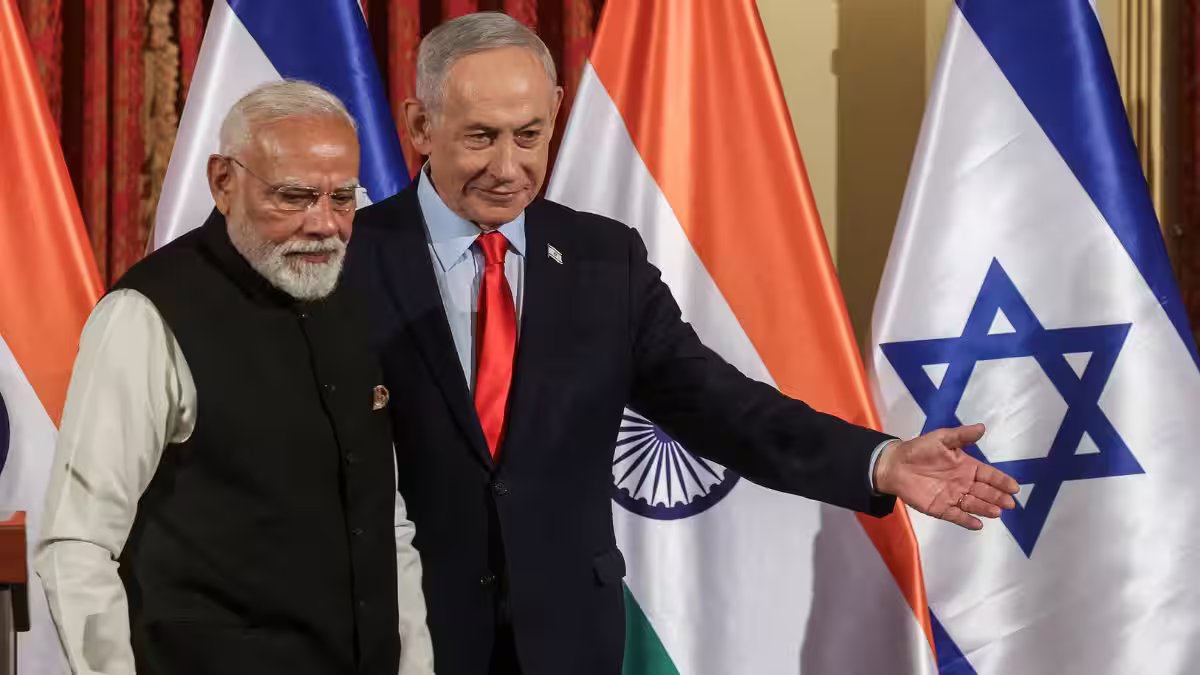
Amid the growing tensions in West Asia, Prime Minister Narendra Modi said on Sunday that he spoke with his Israeli counterpart Benjamin Netanyahu, urging for an ’early end’ of hostilities.
Amid the growing tensions in West Asia, Prime Minister
Narendra Modi said on Sunday that he spoke with his Israeli counterpart,
Benjamin Netanyahu, urging an ’early end’ to hostilities. The phone call was conducted a day after
Israel and the United States launched lethal strikes against Iran, triggering a wider West Asian crisis.
In his post on X, formerly known as Twitter, PM Modi said that he conveyed to Netanyahu India’s concerns over the latest developments and highlighted the importance of protecting civilians amid the raging conflict.
“Had a telephone call with PM Benjamin Netanyahu to discuss the current regional situation. Conveyed India’s concerns over recent developments and emphasised the safety of civilians as a priority. India reiterates the need for an early cessation of hostilities,” the Prime Minister wrote in a post on late Saturday.
Had a telephone call with PM Benjamin Netanyahu to discuss the current regional situation. Conveyed India’s concerns over recent developments and emphasised the safety of civilians as a priority. India reiterates the need for an early cessation of hostilities.@netanyahu
— Narendra Modi (@narendramodi) March 1, 2026
India walks the tightrope
Soon after the news of the conflict spread like wildfire, India urged both parties to “
exercise restraint” in its first reaction to the fast-degenerating situation in West Asia on Saturday evening. “We urge all sides to exercise restraint, avoid escalation, and prioritise the safety of civilians. Dialogue and diplomacy should be pursued to de-escalate tensions and address underlying issues. Sovereignty and territorial integrity of all states must be respected,” the MEA said in its statement.
“Our Missions in the region are in touch with Indian nationals and have issued appropriate advisories asking them to remain vigilant, stay in contact with the Missions, and follow local security guidance,” the ministry added. Safety of the civilians in West Asia has been a concern for India since the region houses a
10-million-strong Indian diaspora.
Amid the chaos, External Affairs Minister
Dr S. Jaishankar spoke to his Iranian and Israeli counterparts, Seyed Abbas Araghchi and Gideon Sa’ar, respectively, to express his deep concerns. During the talks, Jaishankar reitered India’s call for dialogue and diplomacy to de-escalate tensions.
Later in the evening, Jaishankar also spoke to his counterparts from the UAE, Qatar, Kuwait and Bahrain and sought their cooperation in ensuring the well-being of the Indian community. Overall, India is concentrating on walking the diplomatic tightrope since it has cordial ties with both Iran and Israel.
End of Article