The Israel-US conflict against Iran continues unabated. After the announcement of the death of Ayatollah Ali Khamenei on Sunday (March 1), Tehran has vowed to avenge the Supreme Leader’s death.
As the fighting enters day 3 on Monday, US President Donald Trump said the US strikes would continue at “full force” until its objectives were achieved, but that there would “likely be more” service deaths. He further suggested the strikes could last for four weeks.
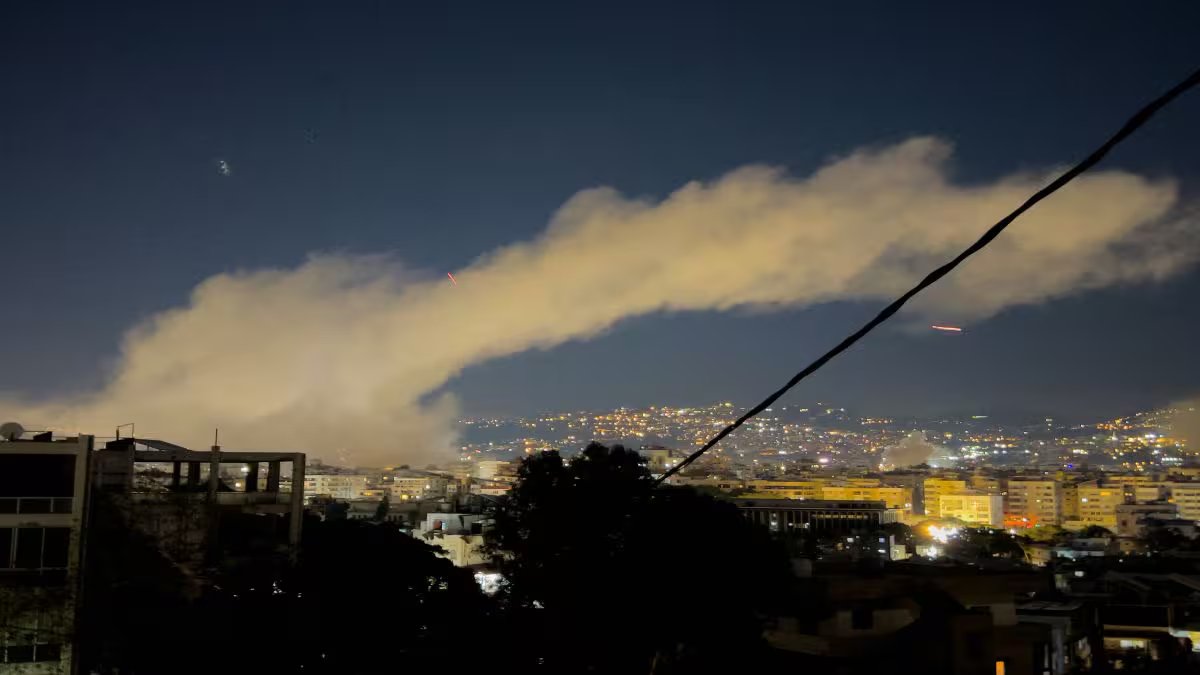
Meanwhile, the Israeli military has confirmed that it struck “senior Hezbollah terrorists in the Beirut area”. This comes after Hezbollah launched missiles and drones from Lebanon towards Israel. The group said that the strikes were in retaliation for the killing of Iran’s Supreme Leader, Ali Khamenei.
As the conflict escalates at breakneck speeds, it is hard to keep track of everything. If you feel lost about the latest developments, here’s what you need to know.
1) Hezbollah has waded into the war, launching missiles towards Israel in retaliation for the killing of Iranian supreme leader Ayatollah Ali Khamenei. According to Israeli media, the projectiles fell in open areas in Israeli territory.
This, in turn, has resulted with the IDF launching counter-attacks at Hezbollah targets in Lebanon. The IDF IDF said it “will not allow the organisation to pose a threat to the State of Israel and harm the residents of the north.” “The terrorist organisation Hezbollah is destroying the state of Lebanon, responsibility for the escalation lies with it,” the military said, vowing to “respond forcefully” to the attack.
2) Meanwhile, US President Donald Trump, who has returned to Washington, DC from Florida, said he would
“be talking” with Iran’s leaders at their request, even as he continued to call on “Iranian patriots” to seize the moment created by the killing of Supreme Leader Ali Khamenei the previous day and topple the regime.
“They want to talk, and I have agreed to talk, so I will be talking to them. They should have done it sooner,” said Trump. “They should have given what was very practical and easy to do sooner. They waited too long.”
Asked when talks might take place, Trump said, “I can’t tell you.”
Trump also told the Daily Mail that the campaign in Iran could last up to four weeks. “It’s always been a four-week process… It’s a big country,” he said. “It’ll take four weeks — or less.”
3) Three US service members have been killed in action as part of US military operations against Iran, the US Central Command said in a statement on Sunday. These are the first confirmed deaths since the US began launching strikes against Iran on Saturday. Trump warned in his Truth Social video that there would likely be more casualties.
4) UK PM Keir Starmer has also agreed to the US’ request to use its military bases for operations against Iranian missile sites.
In a statement on social media, Starmer said he has authorised the move “to prevent Iran firing missiles across the region, killing innocent civilians, putting British lives at risk, and hitting countries that have not been involved.”
He described the decision as being for a “specific and limited defensive purpose” focused on Iran’s missile launch sites and storage facilities.
5) The UK’s defence ministry has confirmed that one of its
military bases in Cyprus was hit by a suspected drone. No casualties were reported from the incident.
A Ministry of Defence spokesperson said: “Our Armed Forces are responding to a suspected drone strike at RAF Akrotiri in Cyprus at midnight local time. Our force protection in the region is at the highest level and the base has responded to defend our people. This is a live situation and further information will be provided in due course.”
6) Iranian officials have reported at least 153 people were killed after a strike on a girls’ school, with Iran’s President Masoud Pezeshkian calling the incident a “barbaric act”. Earlier, Iranian authorities said the country’s enemies conducted strikes on the school in the southern town of Minab on Saturday. Israel said it was not aware of any US or Israeli strike on a school in Iran, and Washington said it was looking into the reports.
7) On Sunday, Bahrain’s military said it intercepted 61 Iranian missiles and 34 drones since Iran started attacking the country following US-Israeli strikes on Tehran over the weekend. Bahrain is among the Arab Gulf countries that Iran has hit. The Bahraini military said the Iranian missile and drone targeted civilian facilities and private properties in attacks constituting a “flagrant violation of the principles of international and humanitarian law.”
8) On Sunday, the foreign ministers of Qatar, Saudi Arabia, the United Arab Emirates, Kuwait, Oman, Bahrain also had a virtual emergency meeting in which they condemned Iran for the attacks on US bases and other civilian infrastructure, including airports, hotels and in some cases, residential areas.
They called on Iran to immediately halt its attacks on their territories, which they said violated their sovereignty and threatened to undermine regional security and stability.
The further added that their countries retain “their legal right to respond and the right to self-defence,” according to international laws.
9) Amid the attacks, the
prices of oil have seen a jolt. When markets began trading late Sunday, oil prices rose sharply. A barrel of Brent crude oil, the international standard, was trading at around $79 per barrel on Sunday night, according to FactSet, up about eight per cent from Friday.
10) Meanwhile,
Prime Minister Narendra Modi spoke to his Israeli counterpart Benjamin Netanyahu over a phone call and discussed the regional situation. In a post on X, PM Modi said that he conveyed India’s concerns over recent developments and emphasised the safety of civilians as a priority. India reiterates the need for an early cessation of hostilities. PM Modi also spoke with UAE President Sheikh Mohamed bin Zayed Al Nahyan, condemning the attacks and condoling the loss of lives. The Indian leader also expressed his thanks for taking care of the Indian community living in the UAE.
11) US Secretary of State Marco Rubio, Defence Secretary Pete Hegseth, CIA director John Ratcliffe and Joint Chiefs of Staff Chairman Dan Caine will brief Congress on the US military operation against Iran, the White House said Sunday.
Spokesman Dylan Johnson said the four would speak to “the full membership of both chambers of Congress on Tuesday, March 3.” He added that Pentagon officials had briefed congressional staffers on the conflict for more than 90 minutes on Sunday.
12) As the attacks continue,
European leaders have urged Iran to seek a “negotiated solution”. In a rare joint statement, the leaders of France, Germany and the UK called on the Iranian state to allow its people to determine their own future and condemned Tehran’s retaliatory attacks on US army bases in the region.
The statement was signed by the French President Emmanuel Macron, German Chancellor Friedrich Merz, and British prime minister Keir Starmer. It said: “We condemn Iranian attacks on countries in the region in the strongest terms. Iran must refrain from indiscriminate military strikes. We urge the Iranian leadership to seek a negotiated solution. Ultimately, the Iranian people must be allowed to determine their future.”
With inputs from agencies
End of Article