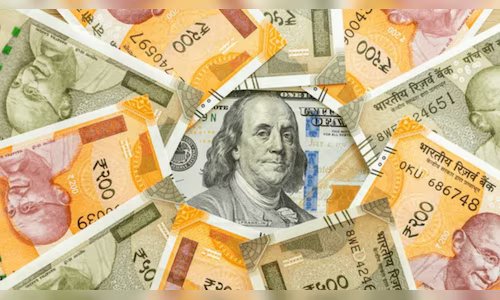
“The Indian rupee is, broadly speaking, in a good place,” he said, adding that the currency has stabilised after earlier headwinds eased.
He explained that the rupee is now modestly undervalued on a trade-weighted basis after starting last year from relatively stronger levels. While appreciation may be limited, depreciation is expected to be gradual rather than sharp.
“I don’t think the rupee is going anywhere fast,” he said.
Addressing concerns that AI could weaken India’s software exports, Trivedi said earnings and inflows may remain resilient even if hiring slows.
Also Read | India must not emulate China’s model, says Piyush Goyal; calls AI a Y2K-like revolution
He noted that productivity gains from AI adoption could support revenues despite labour market adjustments, reducing risks to external balances.
Trivedi said emerging market (EM) economies, including India, are now better positioned to handle global volatility compared with past cycles such as the taper tantrum period.
Improved monetary policy frameworks and fiscal discipline have strengthened credibility in bond and currency markets, allowing central banks to avoid aggressive rate hikes during external shocks.
India’s fiscal consolidation path and inflation-targeting framework have contributed to this resilience, he added.
Goldman Sachs expects India’s 10-year government bond yield to move toward a medium-term fair value of around 6.5%.
Trivedi said yields are currently near the upper end of their trading range and could decline gradually as inflation moderates and deposit repricing supports financial conditions.
He added that global yield curves remain steep, and India is moving broadly in line with global trends.
Also Read | Smartphone now India’s top export category with total overseas shipment worth $30 bn: Vaishnaw
Trivedi described the current global environment as supportive for growth and disinflation but warned that financial markets could experience higher volatility.
“We think growth is going to be good. We think inflation will decline,” he said, while noting that asset valuations are elevated and may lead to market churn despite stable macro conditions.
Goldman Sachs expects further depreciation in the US dollar, which Trivedi said remains overvalued by historical measures.
A more balanced global growth cycle and potential US Federal Reserve rate cuts could push the dollar lower over time, supporting emerging markets and capital flows into bonds.
Trivedi also expects a gradual appreciation in the Chinese renminbi, supported by China’s external surplus and currency valuation dynamics. He said this trend reduces pressure on the rupee from a competitiveness standpoint.
For the full interview, watch the accompanying video
Catch all the latest updates from the stock market here