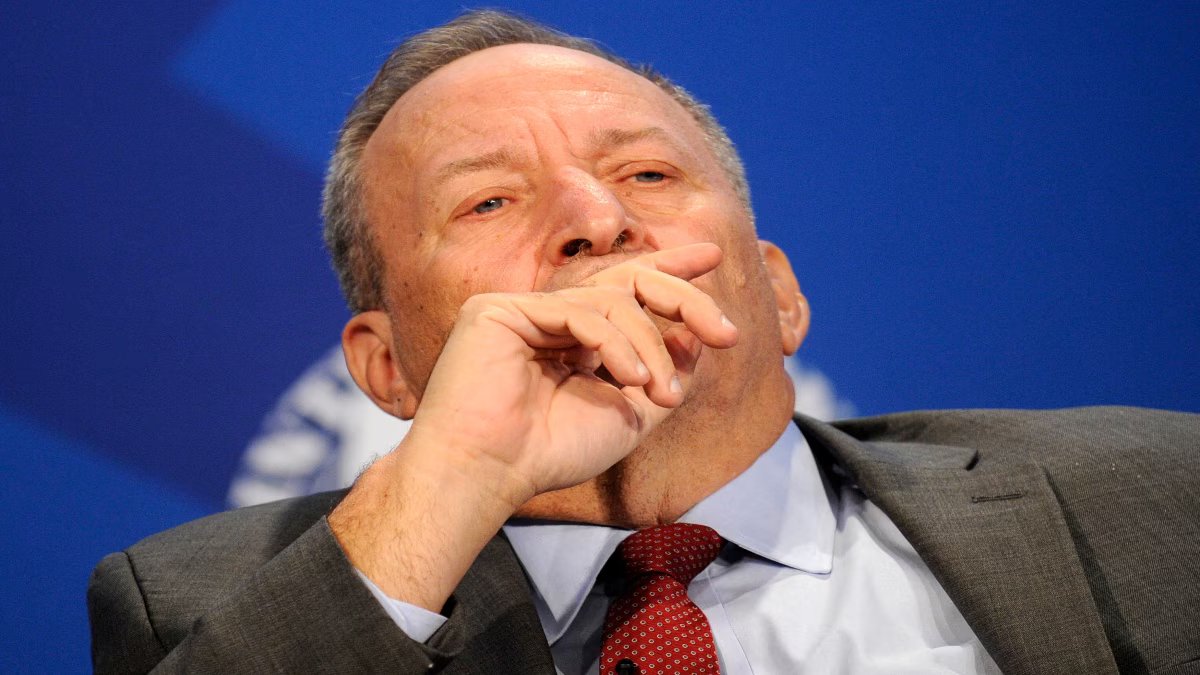
Former US Treasury Secretary and ex-Harvard President Larry Summers will relinquish his University Professorship and resign from key academic roles following revelations of extensive exchanges with Jeffrey Epstein
Former US Treasury secretary and ex-Harvard President Larry Summers will step down from his academic and faculty appointments at Harvard at the end of the academic year, relinquishing his University Professorship — the institution’s highest faculty distinction — and remaining on leave until then, a Harvard spokesperson confirmed to The Harvard Crimson, the university’s undergraduate student newspaper.
Summers also resigned on Wednesday from his position as co-director of the Mossavar-Rahmani Center for Business and Government at the Harvard Kennedy School, a role he had held since 2011, according to the spokesperson.
He will neither teach nor accept new advisees, added the report.
Summers, who ran the US Treasury under former president Bill Clinton, was revealed in the Epstein files released by the Department of Justice to have had extensive exchanges with the now deceased financier.
Clinton will testify before a congressional committee on Epstein on Friday while his wife, former secretary of state Hillary Clinton, will appear Thursday.
The move marks a dramatic turn for Summers, long regarded as one of the most influential figures in American economics, whose career has included award-winning research, service as US Treasury Secretary, and a tenure as Harvard president.
In a statement to The Crimson, Summers described the decision as “difficult” and said he remained “grateful to the thousands of students and colleagues I have been privileged to teach and work with since coming to Harvard as a graduate student 50 years ago.”
“Free of formal responsibility, as President Emeritus and a retired professor, I look forward in time to engaging in research, analysis, and commentary on a range of global economic issues,” he was quoted as saying.
Summers’ reputation took a beating in November after a cache of emails revealed a long-running personal relationship with convicted sex offender Jeffrey E. Epstein.
The correspondence showed that the two exchanged messages about women, politics, and Harvard-related matters for at least seven years, remaining in contact until July 2019 — a day before Epstein’s final arrest.
The backlash was swift. Initially saying he would continue teaching, Summers later stepped back from public engagements and his classes as additional emails surfaced. He subsequently parted ways with several organisations, including The New York Times, Bloomberg, and OpenAI. The American Economic Association later imposed a lifetime ban on him.
Harvard launched a formal review of Summers’ ties to Epstein as part of a broader investigation into the university’s historical links to the financier, extending to other affiliates and donors named in the documents.
In December, newly released Justice Department records showed Summers had been listed as a successor executor in a 2014 draft of Epstein’s will — a role his spokesperson said he “had absolutely no knowledge” of.
Thousands of emails and phone records suggested a relationship that went beyond professional boundaries, with Summers seeking Epstein’s advice on personal matters, including a romantic relationship with a woman he described as a mentee.
With inputs from agencies
End of Article