During the Ninth Congress of the Workers’ Party, Kim Jong Un has pledged to revitalise North Korea’s economy, describing the next five years as a “full-scale progress phase” focused on revolutionising technology and culture.
The ruling Workers’ Party in North Korea has convened for its Ninth Congress, a significant political event that serves as the blueprint for the nation’s strategic direction over the coming half decade. During the fifth day of this assembly, Kim Jong Un articulated a vision centred on domestic stability and industrial refinement.
While the nuclear armed state frequently commands global attention for its weapons testing, this particular gathering has focused heavily on internal restructuring and the consolidation of power within the Kim dynasty. The proceedings have not only set ambitious economic targets but also witnessed a notable elevation in the status of the leader’s sister, signaling a potential shift in how the country manages its external affairs.
Economic objectives for the next five years
In a major address on Monday, Kim Jong Un emphasised the necessity of enhancing the qualitative aspects of the national economy. The leader described the upcoming period as a “full-scale progress phase” and stressed that the country must undergo a significant transformation across several sectors.
This includes a comprehensive overhaul of industrial, agricultural, and military sectors to ensure the nation remains resilient against external pressures. To achieve these goals, Kim called for revolutionising thought, technology and culture so new projects will be well-managed over time.
The rhetoric used during the congress suggested a crackdown on internal inefficiencies and bureaucratic failures. Kim was firm in his stance against administrative negligence, issuing a stern alert to party members regarding their conduct.
He warned that “dereliction of duty, irresponsibility and other ingrained maladies of seeking only immediate gains” will be rooted out. This focus on domestic discipline indicates that the leadership is prioritising long term stability over short term fixes, particularly as the nation continues to navigate complex international sanctions and economic isolation.
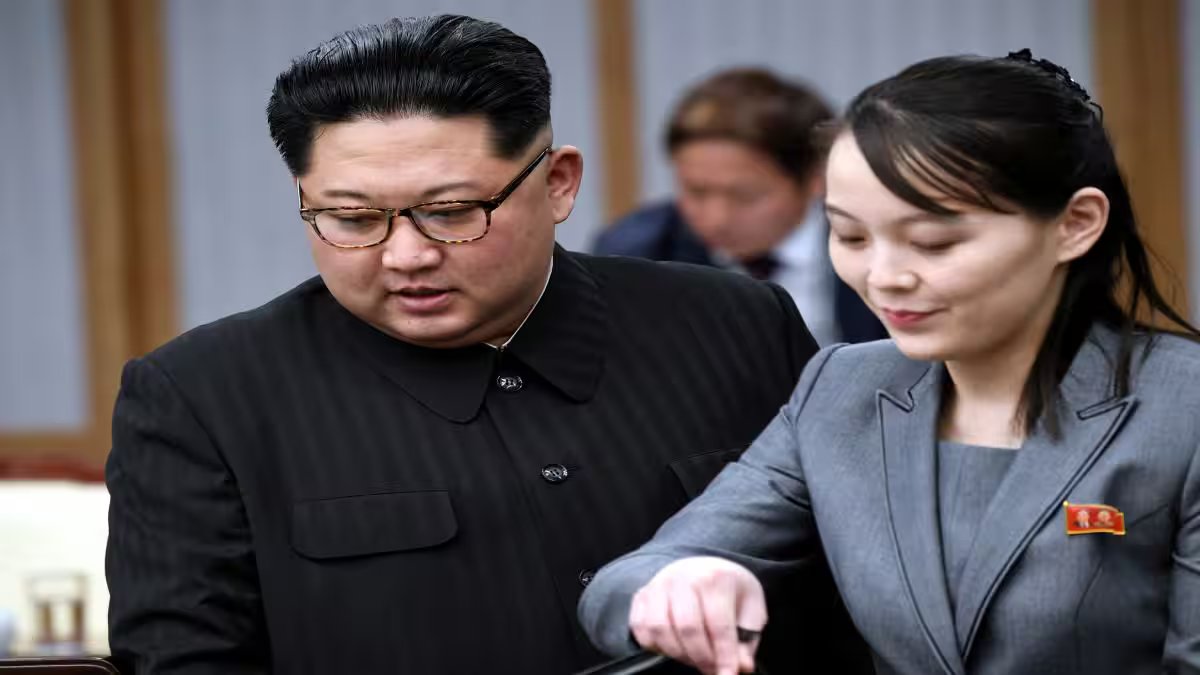
A central development of the Ninth Congress was the official promotion of the leader’s sister, Kim Yo Jong. Previously serving as a vice director, she has now been appointed as a party department director. Furthermore, she was reinstated as an alternate member of the Politburo of the Central Committee, reclaiming a position she had lost in 2021.
This move is seen by observers as a consolidation of her influence, particularly given her history of delivering aggressive rhetoric toward international adversaries. Her new standing suggests she will remain a pivotal figure in shaping the country’s interactions with the outside world.
While the congress has focused on the promotion of established figures, there has been no mention of Kim’s young daughter, Ju Ae, participating in the current proceedings. Despite her absence from this specific event, her frequent appearances at military functions have led to widespread theories that she is being prepared for a future leadership role. This would continue the hereditary line that began with the founding of the nation in 1948.
Foreign policy and international alignments
Interestingly, the congress has remained relatively quiet regarding direct provocations toward South Korea or the United States. Instead, the leadership appears to be reinforcing its bonds with traditional partners. Following his reelection as general secretary, Kim received a congratulatory message from Chinese President Xi Jinping.
This follows a high profile visit to Beijing last year, where Kim stood alongside the leaders of China and Russia during a significant military display. These alliances remain crucial for North Korea as it continues to resist diplomatic overtures from Washington and Seoul.
As the congress draws to a conclusion, many expect a large scale military parade to showcase the country’s latest technological advancements. Satellite imagery has already indicated preparations for such an event, which often serves as a platform for the state to unveil new conventional or nuclear assets. This display would serve as a final confirmation of the military strength built up over the previous five years.
End of Article